Innate Cell Responsiveness Linked to Influenza Severity in Humans
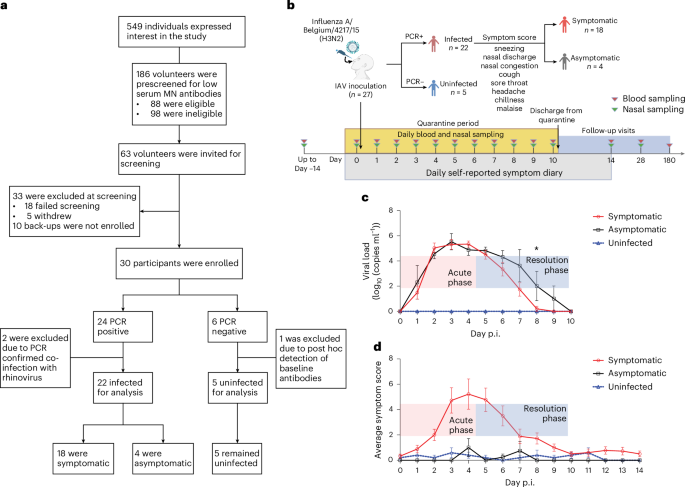
Participants with higher innate cell responsiveness are more likely to develop symptomatic disease following a controlled human influenza infection, according to a study published July 1, 2026, in Nature Medicine. The research indicates that while a robust innate immune response is necessary for viral clearance, an overactive initial response paradoxically predicts increased morbidity and enhanced cellular immunity.
- Innate Response Link: Higher baseline innate immune activity correlates with a greater likelihood of developing influenza symptoms.
- Cellular Immunity: Increased innate responsiveness predicts a more potent T-cell response during infection.
- Clinical Paradox: A stronger initial immune “alarm” does not prevent disease but may actually drive the symptomatic inflammatory process.
The study addresses a critical gap in respiratory pathogenesis: why individuals with similar vaccination histories or prior exposures react differently to the same viral strain. By utilizing a controlled human infection model (CHIM), researchers were able to profile systemic and local immune responses in a precise timeline, moving beyond the retrospective data typically found in observational flu studies. This approach allows for the identification of specific biomarkers that precede the onset of clinical symptoms.
How does innate responsiveness drive influenza symptoms?
The researchers found that the innate immune system—the body’s first line of defense—acts as a primary determinant of the clinical trajectory. In participants with high innate responsiveness, the rapid recruitment and activation of immune cells led to a more intense inflammatory environment. According to the Nature Medicine report, this heightened state is associated with increased cellular immunity, meaning the body mounts a more aggressive T-cell response to clear the virus.
However, this aggressive response is a double-edged sword. The same mechanisms that ensure viral clearance also trigger the systemic inflammation responsible for fever, malaise, and respiratory distress. This suggests that the “symptoms” of the flu are not caused by the virus itself, but by the host’s own immune system attempting to eradicate the pathogen. For clinicians managing high-risk populations, identifying these “high-responders” could be vital for tailoring anti-inflammatory interventions.
Because these inflammatory markers can escalate rapidly, patients with a history of hyper-inflammatory responses may benefit from early screening. It is highly recommended to consult with [Board-Certified Immunologists] to establish baseline immune profiles and develop personalized preventative strategies.
What are the biological mechanisms of the “Innate-Symptomatic” link?
The study utilized deep immune profiling to track the movement of cells from the blood into the respiratory tract. The data revealed that individuals who remained asymptomatic despite infection typically exhibited a more tempered innate response. This suggests a “goldilocks” zone of immunity: enough response to stop the virus, but not so much that the lung tissue suffers collateral damage from inflammation.
The biological pathway involves the rapid upregulation of interferon-stimulated genes (ISGs) and the mobilization of myeloid cells. When these pathways are over-active, the resulting cytokine storm—even on a micro-scale—irritates nerve endings and alters vascular permeability, leading to the classic symptoms of influenza. This mechanism mirrors the pathogenesis seen in more severe respiratory distress syndromes, though on a significantly smaller scale in this controlled cohort.
The research was funded by grants supporting the study of viral pathogenesis and human immunology, ensuring that the findings are grounded in rigorous, peer-reviewed clinical standards. The use of a controlled infection model is considered the “gold standard” for vaccine and therapeutic testing because it eliminates the variables associated with natural infection, such as unknown exposure timing or varying viral loads.
Why does this change the approach to influenza treatment?
Historically, the goal of influenza treatment has been to suppress the virus. This research shifts the focus toward the host’s immune temperament. If symptomatic disease is driven by innate responsiveness, then the “standard of care” may eventually evolve to include immunomodulators that dampen the innate response without compromising the eventual T-cell clearance of the virus.
This finding has significant implications for the development of next-generation vaccines. If a vaccine can prime the adaptive immune system (T-cells and B-cells) without triggering an over-reactive innate response, it could potentially reduce the morbidity associated with “breakthrough” infections. This is particularly relevant for elderly populations where the balance between immune senescence and hyper-inflammation is precarious.

For healthcare systems integrating these findings into clinical practice, the need for precise diagnostic tooling is paramount. Diagnostic centers and [Advanced Molecular Pathology Labs] are essential for the high-resolution profiling required to distinguish between innate and adaptive immune triggers in patients.
The study’s findings align with broader trends in precision medicine, where the focus moves from the pathogen to the patient’s unique biological signature. By understanding the statistical probability of symptomatic disease based on innate cell responsiveness, providers can better triage patients who are likely to experience severe inflammatory responses.
The future of immune-informed respiratory care
As the medical community moves toward 2027, the integration of “immune-typing” into routine respiratory care is likely to accelerate. The ability to predict who will suffer most from a viral infection—not based on their vulnerability to the virus, but on their vulnerability to their own immune response—opens a new frontier in prophylactic medicine.
Future research will likely investigate whether pharmacological agents can “tune” the innate response to a level that ensures clearance without inducing systemic illness. Until such therapies are standardized, the focus remains on early detection and the use of vetted specialists to manage complex immune profiles. Patients and providers should seek guidance from [Certified Infectious Disease Specialists] to navigate the complexities of viral immunity and vaccine efficacy.
Disclaimer: The information provided in this article is for educational and scientific communication purposes only and does not constitute medical advice. Always consult with a qualified healthcare provider regarding any medical condition, diagnosis, or treatment plan.