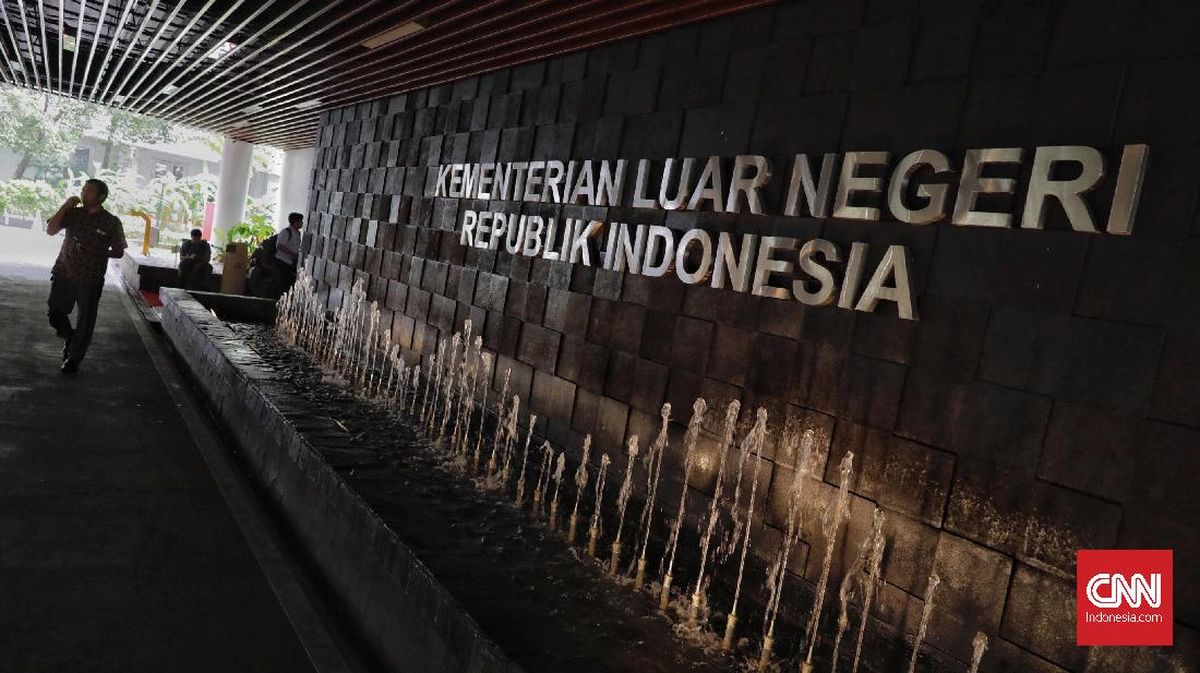
Indonesia Ministry of Foreign Affairs Addresses US Military Overflight Requests and National Sovereignty
Indonesia’s Ministry of Foreign Affairs has formally warned the Ministry of Defense against granting the United States “blanket overflight clearance.” The proposal, which would allow US military aircraft unrestricted access to Indonesian airspace, has sparked urgent concerns over national sovereignty and the risk of entanglement in South China Sea conflicts.
Let’s be clear: this is more than a paperwork shuffle between two government offices. It is a fundamental clash of strategic philosophies. On one side, we have a push for deeper, streamlined defense ties with a global superpower. on the other, a rigid adherence to Indonesia’s “free and active” foreign policy. When the very air above a nation becomes a point of contention, the implications extend far beyond aviation logs.
The core of the problem is the “blanket” nature of the request. Traditionally, foreign military aircraft must seek specific, case-by-case permits to enter Indonesian airspace. A blanket clearance would effectively remove these hurdles, granting a standing invitation for US military assets to transit the region without the usual diplomatic friction. This creates a legal and security vacuum that could abandon Indonesia vulnerable to geopolitical pressures it is not prepared to manage.
The Anatomy of a ‘Blanket’ Request
To understand why the Ministry of Foreign Affairs is sounding the alarm, one must look at what is actually being proposed. The request for blanket overflight clearance isn’t just about convenience; it’s about operational velocity. For the US military, this means the ability to move assets rapidly across the Indo-Pacific without waiting for diplomatic clearances that can take days or weeks.

However, for Indonesia, this “velocity” comes with a steep price. The Ministry of Foreign Affairs has highlighted several critical risks:
- Erosion of Sovereignty: Granting unrestricted access fundamentally alters the state’s control over its own territory.
- Conflict Entanglement: By facilitating uncomplicated movement for US assets, Indonesia risks being perceived as a strategic partner in US military operations, potentially dragging the nation into the volatile South China Sea disputes.
- The ‘Battlefield’ Risk: There is a documented fear that such permissions could inadvertently transform Indonesian territory into a staging ground or a “battlefield” should regional tensions escalate into open conflict.
Navigating these high-stakes diplomatic waters is a logistical and legal minefield. In such environments, state actors and affected private entities often rely on international law firms to analyze treaty obligations and ensure that national interests are not signed away in a “non-binding” agreement.
The Defense Ministry’s Counter-Narrative
Whereas the Ministry of Foreign Affairs is treating this as a red alert, the Ministry of Defense is maintaining a much cooler temperature. Brigjen TNI Rico Sirait, Head of the Defense Information Bureau, has dismissed the idea that any such policy is already in place. According to the Ministry of Defense, the current discussions are merely internal government deliberations.

“Communication between ministries or agencies is a productive matter in the policy formulation process. What is clear is that there is no policy that gives free access to foreign parties to leverage Indonesian airspace,” stated Brigjen TNI Rico Sirait.
The Ministry of Defense views the exchange of letters as a routine part of governance. They argue that the proposal is still being carefully studied with national interests as the priority. However, the very fact that a “Letter of Intent” exists—even if it has been adjusted from its original draft to be non-binding—suggests that the conversation has progressed further than a simple “internal deliberation.”
As Indonesia seeks to upgrade its defense capabilities through the Major Defense Cooperation Partnership, the pressure to concede on airspace access increases. This is where the need for vetted defense technology specialists becomes critical; the goal is to enhance capacity and technology without compromising the autonomy of the skies.
Geopolitical Stakes and the South China Sea
The timing of this proposal cannot be separated from the escalating tensions in the South China Sea. Indonesia, while not a primary claimant in the same way as some of its neighbors, maintains a significant interest in the North Natuna Sea. The region is a flashpoint for US-China rivalry, and any move that appears to tilt Indonesia’s neutrality could provoke a diplomatic or military reaction from Beijing.
By allowing US military planes to fly freely, Indonesia would essentially be providing a strategic corridor for the US to project power closer to contested waters. For the Ministry of Foreign Affairs, this is an unacceptable risk. The fear is that “efficiency” for the US military translates to “instability” for Indonesian diplomacy.
The tension between these two ministries can be summarized in the following comparison of their current positions:
| Perspective | Ministry of Foreign Affairs (Kemlu) | Ministry of Defense (Kemhan) |
|---|---|---|
| Primary Concern | National sovereignty and neutrality. | Defense cooperation and capacity. |
| View on Proposal | A risk that could make RI a “battlefield.” | A matter for internal government study. |
| Urgency | High; demands a delay/halt to the agreement. | Moderate; views it as a productive dialogue. |
| Legal Status | Warns against “blanket” permissions. | Confirms no final policy has been decided. |
The Path Forward: Parliament and Policy
The resolution of this dispute will likely not happen within the halls of the two ministries alone. The Ministry of Defense has indicated that any final decision regarding the proposal will require further discussion, including involvement from the House of Representatives (DPR). This adds a layer of political scrutiny that may act as a safeguard against hasty concessions.
.svg/1200px-Seal_of_the_Ministry_of_Defense_of_the_Republic_of_Indonesia_(2022).svg.png "Ministry Indonesia Defense")
The current framework of the Indonesia-US relationship remains the Major Defense Cooperation Partnership. This partnership focuses on capacity building and technology transfer, but it does not currently include any agreement on blanket overflight. The “Letter of Intent” mentioned in internal documents is described as non-binding, which provides a diplomatic exit ramp if the political cost becomes too high.
However, “non-binding” is a slippery term in international relations. Often, these documents serve as the foundation for future, binding treaties. For those managing regional assets or infrastructure, these shifts in airspace policy can impact everything from insurance premiums for aviation to the security protocols of geopolitical risk consultants monitoring the region.
The tension between the Ministry of Foreign Affairs and the Ministry of Defense is a microcosm of Indonesia’s larger struggle: how to embrace the security benefits of a superpower partnership without becoming a pawn in a global chess match. If the “blanket overflight” proposal moves forward, it will signal a historic shift in Indonesia’s approach to its own borders. Until then, the skies remain contested—not by aircraft, but by the very definitions of sovereignty and security. For organizations and leaders navigating these shifting geopolitical sands, finding verified professionals who understand the intersection of international law and national defense is no longer optional; it is a necessity for survival in an unpredictable era.