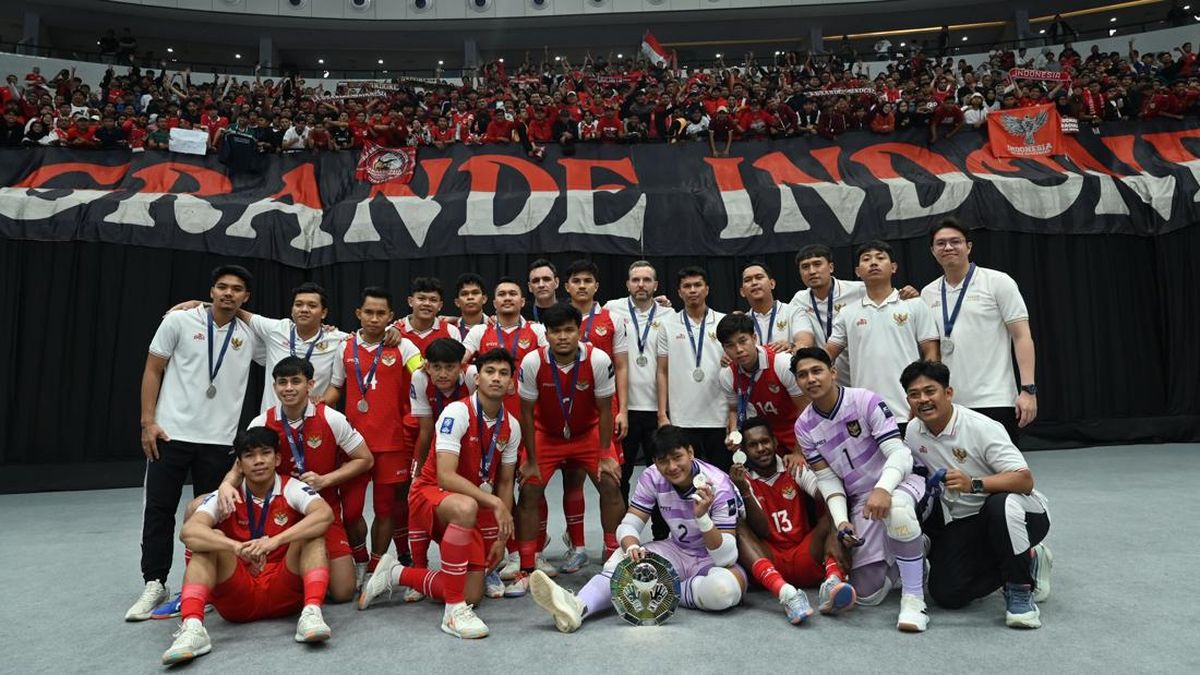
Indonesia Futsal Team Rises to 14th in FIFA World Rankings
Indonesia’s men’s national futsal team surged to 14th in the FIFA world rankings on May 8, 2026, jumping 10 spots. This ascent follows a deep run to the 2026 AFC Futsal Asian Cup final and a secondary final appearance in the ASEAN Futsal Championship, signaling a shift in continental power.
The climb from 24th to 14th is not a statistical fluke; It’s the result of a calculated tactical evolution under head coach Hector Souto. Accumulating 1,269.82 points, the Garuda squad now sits as the fourth-highest ranked team in Asia, trailing only Iran, Thailand, and Japan. While the ranking provides a psychological edge, the raw data from the 2026 AFC Futsal Asian Cup reveals a team that has mastered the transitional phase of the game but still struggles with the clinical execution required to secure silverware.
The trajectory was cemented by high-profile victories over Japan and Vietnam, proving that Indonesia can dismantle established defensive blocks. However, the final against Iran exposed a critical gap in late-game load management and psychological resilience. A 5-5 stalemate that stretched into a penalty shootout—eventually lost 4-5—highlights a recurring issue: the inability to close out high-leverage matches against the world’s top five. This pattern repeated in the 2026 ASEAN Futsal Championship, where a 1-2 loss to hosts Thailand capped another run to the final.
“The jump in rankings reflects an improved anaerobic threshold and a more sophisticated high-press system. But the difference between 14th and the top five isn’t just talent; it’s the ability to maintain tactical discipline during the final five minutes of a championship match when fatigue compromises decision-making.” — Technical Analysis, Performance Coaching Group
The Tactical Blueprint and Physical Toll
Souto has implemented a system predicated on rapid diagonal rotations and a flexible 4-0 offensive structure, reducing the reliance on a static pivot and forcing defenders into constant adjustment. This fluidity allowed Indonesia to overwhelm Vietnam (currently 22nd) and challenge the Japanese defensive shell. Yet, this high-intensity style demands an elite level of periodization to avoid mid-tournament burnout. The physical toll of back-to-back finals in the AFC and ASEAN competitions puts immense strain on the athletes’ connective tissues, particularly the ACL and meniscus, which are high-risk zones in the stop-start nature of futsal.

While the national team has access to world-class physiotherapy, the explosion of futsal’s popularity in Indonesia means a growing number of amateur and semi-pro players are attempting these same high-intensity rotations without proper conditioning. For local athletes facing similar joint instabilities or recovery hurdles, immediate access to local orthopedic specialists and rehab centers is the only way to prevent career-ending injuries.
The Divergence of the Srikandi Squad
The men’s ascent stands in stark contrast to the trajectory of the Indonesian women’s national team, known as the Srikandi futsal. The latest FIFA data shows a three-place slide, dropping from 18th to 21st with 1,033.44 points. In the Asian landscape, the Srikandi now sit in seventh place, trailing China and the top five—Japan, Thailand, Iran, Vietnam, and Taiwan.

This divergence suggests a disparity in the professionalization of the two programs. While the men’s team is benefiting from a cohesive tactical overhaul and high-stakes tournament experience, the women’s side is struggling to maintain its foothold in the top 20. The lack of a consistent, high-competition calendar for the women’s squad prevents the kind of “pressure-testing” that propelled the men into the global top 15.
Market Implications and Infrastructure Vacuum
Ranking just below Croatia on the global stage transforms the national team from a regional competitor into a marketable global asset. This shift creates an immediate demand for professionalized player management and more complex contract structures as international interest in Indonesian talent grows. The transition from amateur status to professional contracts often leads to legal friction regarding image rights and buyout clauses, necessitating the involvement of sports contract lawyers to protect athlete interests.
the “halo effect” of a 14th-world ranking is driving a surge in demand for high-specification futsal courts across the archipelago. The current infrastructure is largely insufficient for the technical demands of a top-15 ranked nation. This gap is creating a massive opportunity for specialized athletic facility consultants who can implement FIFA-standard flooring and lighting to match the team’s elite status.
The Road to the Top Five
To bridge the gap between 14th and the elite tier occupied by Brazil, Portugal, and Spain, Indonesia must evolve beyond tactical fluidity. The focus must shift toward “clutch” performance metrics—specifically reducing turnovers in the final third and improving penalty conversion rates. The 5-5 draw with Iran proves the Garuda squad has the firepower to compete; they now need the clinical precision to win.

As the team recalibrates for the next cycle, the focus will inevitably turn to scouting and the integration of youth prospects who can sustain the high-press system without compromising defensive integrity. The current momentum is undeniable, but the window to convert ranking points into trophies is narrow.
For those looking to mirror this professional trajectory—whether you are an athlete seeking elite recovery, a club owner upgrading facilities, or a player navigating a professional contract—the World Today News Directory provides a vetted gateway to the specialists driving the business of sports.
Disclaimer: The insights provided in this article are for informational and entertainment purposes only and do not constitute medical advice or sports betting recommendations.