Improv for Trial Lawyers: L.A. Class Teaches Persuasion Through Play
Los Angeles attorneys are learning courtroom persuasion through an unconventional acting class.
- Actor and attorney Brian Breiter teaches the “Improv for Trial” workshop.
- The class excludes most civil defense lawyers, the Los Angeles Times reported.
- Exercises include crawling on all fours and gibberish parties.
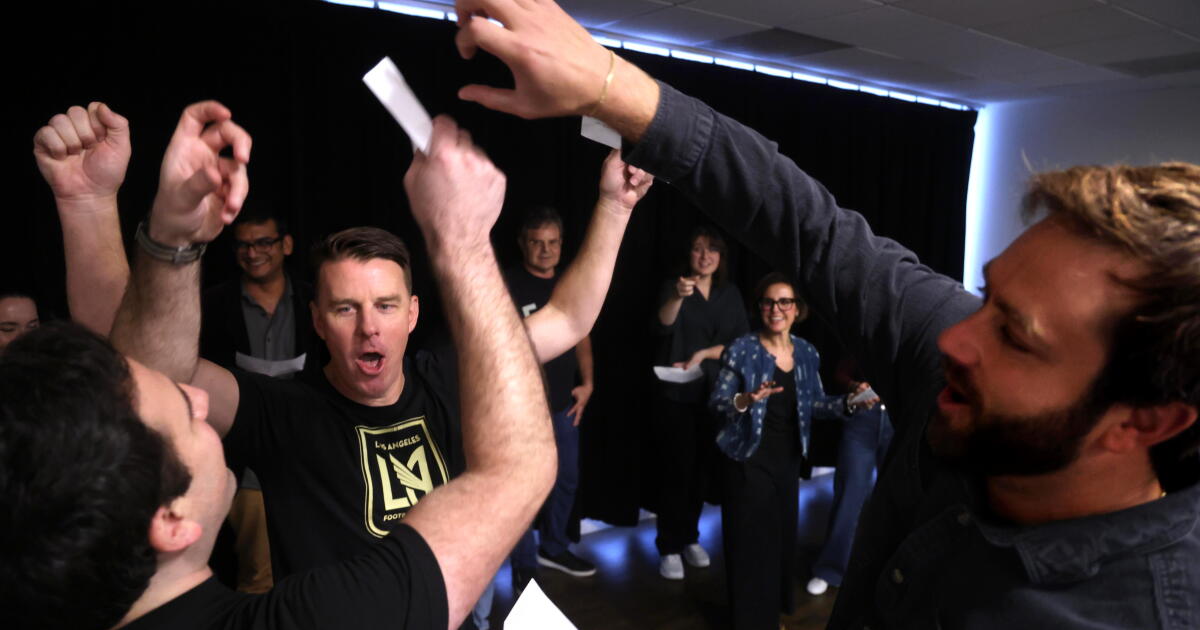
One recent afternoon, plaintiff’s lawyers in a Mid-Wilshire office tower crawled on all fours, held a cocktail party in gibberish, and exchanged invisible gifts. These improvisation exercises are part of a workshop led by actor and attorney Brian Breiter, designed to teach litigators how to influence jurors and master courtroom banter.
“Who hasn’t been made uncomfortable yet?” Breiter asked the class, according to the Los Angeles Times. Eugenia Bagdassarian, a personal injury lawyer, tentatively raised her hand.
While improv classes are common in Los Angeles for actors and corporate teams, “Improv for Trial” caters specifically to attorneys. The elite workshop teaches buttoned-up lawyers to “let go” and “just do” in service of winning civil cases and criminal convictions.
Over the last 15 years, Breiter and his co-teacher, Joseph Limbaugh, have conducted the class in a purpose-built theater complete with a movable witness stand and Muppet-style puppets. The puppets, Breiter said, “allow you to say and do things that you as a human can’t.”
The class is selective. Breiter has taught thousands of law students, prosecutors, public defenders, and plaintiff’s attorneys, but he generally bars civil defense lawyers. He considers them too risk-averse and aims to disadvantage the competition, a policy reported by the Los Angeles Times.
“This is my favorite thing to do,” Limbaugh told the Los Angeles Times. “Some of this stuff I’ve never tried with lawyers before.”
The exercises are not just for fun. After a gibberish party, Breiter used the activity to teach nonverbal communication, a key skill during jury selection. An exercise involving talking around certain letters helped lawyers handle motions about evidence admissibility.
“The most important thing is hyper-listening, being super observant and understanding how you are perceived,” Breiter explained. “I would do a trial 10 different ways depending on the audience I have.”
Unlike TV lawyers, who are trained performers, real attorneys are often rigidly analytical and bound by complex rules. Breiter’s goal is to loosen these binds to help lawyers connect with laypeople on a jury.
The American judicial system is adversarial, with trials serving as a war of narratives where lives and significant sums of money hang in the balance. Yet, real courtrooms are often dull, jurors are captive, and their attention must be maintained for weeks.
Los Angeles, with a metropolitan area gross product of over $1.295 trillion in 2024, hosts one of the busiest container ports in the Americas and remains a global hub for film and television production, driving high-stakes litigation.
The city’s diverse economy and sprawling scale, encompassing 12.9 million people in the metropolitan area as of 2024, create a competitive legal environment where civil cases involving significant sums are common, necessitating specialized skills to captivate jurors in trials lasting 8 to 25 days.
“Jurors dread going to court,” Breiter said. “If they’re going to take 8 to 25 days out of their life and sit there, you better make it entertaining.”