
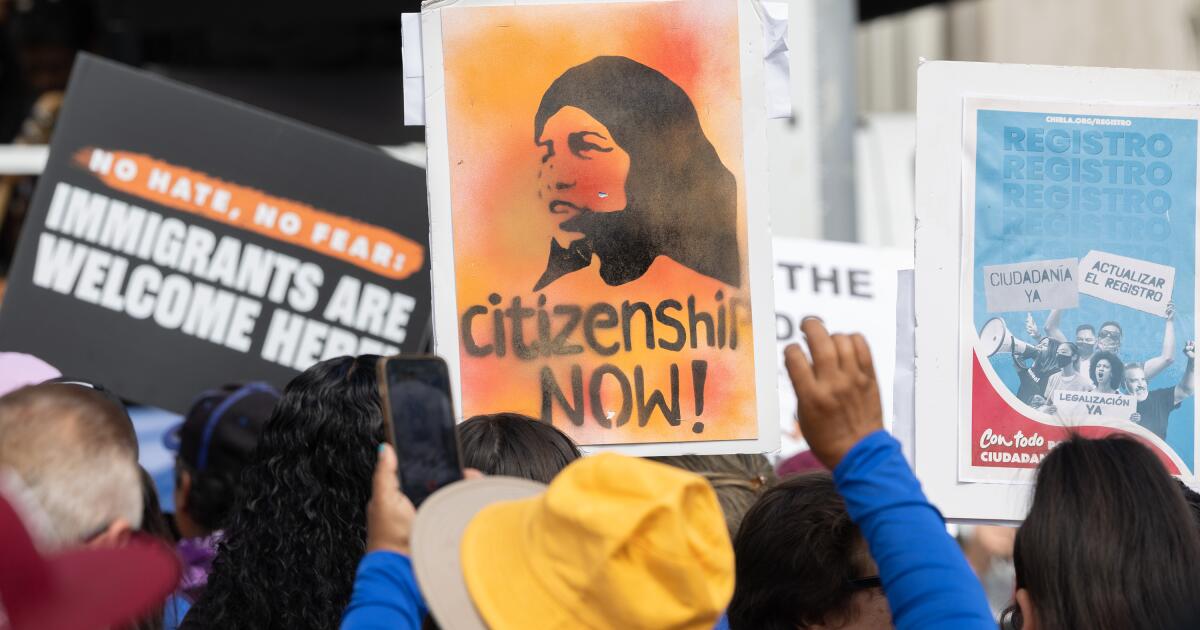
Immigration Shifts: Exodus from the U.S. Outpaces Arrivals for First Time in Decades
Table of Contents
A notable reversal in U.S. immigration patterns has emerged,with the number of individuals leaving the country exceeding those arriving for the first time in over half a century. This shift, observed between January and June of this year, signals a potential impact from recent immigration enforcement policies and evolving global circumstances.
decline in Foreign-Born Population
Analysis of U.S. Census data by the Pew Research Center revealed a decline of over one million people in the foreign-born population during the first six months of the year. While the U.S. reached a peak of 53.3 million immigrants in January, the population decreased to 51.9 million by June. This marks the first drop in the immigrant population since the 1960s.
California, historically a major destination for immigrants, was home to 11.3 million immigrants in 2023, representing approximately 28.4% of the national total, according to Pew. The recent influx of migrants seeking refuge between 2021 and 2023,following the COVID-19 pandemic,preceded this current trend.
Policy Changes and Enforcement
The shift coincides with policy changes implemented by both the Biden and Trump administrations. In June 2024, President Biden signed a proclamation restricting asylum claims at the U.S.-Mexico border during periods of high crossings. This aimed to curb unauthorized entries into the country. President Trump, upon taking office for his second term, issued an executive order declaring an “invasion” at the southern border, severely limiting asylum access for those arriving between ports of entry.
Increased immigration enforcement operations, particularly in Southern California, have also contributed to the changing landscape.Since June 6,Homeland Security agents have arrested 4,481 undocumented immigrants in the Los Angeles area. These operations prompted protests and a deployment of National Guard troops to the region.
did You Know? The U.S. experienced a similar net negative immigration during the Great Depression in the 1930s, with approximately 400,000 Mexicans and Mexican Americans leaving the country due to economic hardship and government repatriation programs.
Economic Implications and Labor Concerns
While some officials celebrate the decrease in the immigrant population, experts caution about potential negative economic consequences. A declining birth rate coupled with fewer immigrant workers could lead to labor shortages across various sectors. victor Narro, project director at UCLA Labor Center, emphasized the future reliance on immigrant labor to fill critical job roles. According to a report by the National Academies of Sciences, engineering, and Medicine, immigrants contribute significantly to the U.S.economy, boosting innovation and filling labor gaps (National Academies of Sciences, Engineering, and Medicine. 2016. The Integration of Immigrants in American Society. Washington, DC: The National Academies Press).
| Year | Immigrant Population (Millions) | Change |
|---|---|---|
| January 2024 | 53.3 | Peak |
| June 2024 | 51.9 | -1.4 Million |
| 2023 | N/A | 19% of U.S. workforce were immigrants |
Differing Perspectives
President trump lauded the exodus, stating “Promises Made. Promises Kept,” while Homeland Security Secretary Kristi Noem asserted the importance of reestablishing “law and order” at the border and removing “violent illegal immigrants.” Michael Capuano, research director at Federation for American Immigration Reform, views the trend as a “positive start,” suggesting that border enforcement is proving effective.
However, Toby Higbie, a professor of history and labor studies at UCLA, argues that removing immigrants is not a enduring solution. He predicts a cyclical pattern where the U.S. invites immigrants to address labor shortages, then reacts with deportation efforts, only to eventually require immigrant labor again. He suggests the possibility of future guest worker programs to address workforce needs.
Pro Tip: Understanding the ancient context of immigration patterns-such as the Bracero Programme during World War II-can provide valuable insights into current trends and potential future policies.
impact of Enforcement on Data Collection
Some experts suggest that the reported decline might potentially be partially attributed to reduced participation in surveys due to fear of deportation.Victor Narro notes that heightened enforcement activities can discourage immigrants from engaging with data collection efforts, potentially underreporting the actual population.
What factors do you beleive are most significantly influencing the current shift in U.S. immigration patterns? How might these changes affect the long-term economic and social landscape of the country?
Evergreen Context: U.S.Immigration History
U.S. immigration history is marked by cycles of welcoming and restricting immigration, often driven by economic conditions and political anxieties. From the early waves of European immigrants to the more recent influx from Latin America and Asia, the composition of the immigrant population has constantly evolved. Understanding these historical trends is crucial for interpreting current events and anticipating future challenges.The U.S. has historically relied on immigrant labor to fuel economic growth, particularly during periods of labor shortages. The Bracero Program (1942-1964), for example, brought millions of Mexican workers to the U.S. to address labor needs during World War II (Bracero history Archive, https://braceroarchive.org/).
Frequently Asked Questions
- What is driving the decrease in the U.S. immigrant population? The decrease is attributed to a combination of factors, including stricter immigration enforcement policies, policy changes regarding asylum claims, and economic conditions.
- What are the potential economic consequences of a declining immigrant population? Potential consequences include labor shortages,reduced economic growth,and decreased innovation.
- how dose the current situation compare to past immigration trends in the U.S.? The current decline is the first of its kind since the 1960s, but similar negative net immigration occurred during the Great depression.
- What is the role of policy in shaping immigration patterns? Immigration policies, such as those related to border security and asylum, have a significant impact on the number of people entering and leaving the country.
- What is the Bracero Program and how does it relate to current immigration debates? The Bracero Program was a guest worker program that brought millions of Mexican laborers to the U.S.during WWII, and it serves as a historical precedent for potential future solutions to labor shortages.
This is a developing story. We encourage you to share this article with your network and join the conversation in the comments below. Subscribe to our newsletter for the latest updates on this and other crucial news stories.
