
Hyundai Doubles Down on Georgia investment Despite Recent ICE Raid
Hyundai Motor Group announced a $2.7 billion investment in its Georgia EV battery plant, despite recent scrutiny following a large-scale Immigration and Customs Enforcement (ICE) raid at the facility. the proclamation, made during the company’s annual CEO Investor Day in New York City – a first for the event being held outside of South Korea - signals hyundai’s continued commitment to the US market.
The investment will be spread over three years and fund the second phase of growth at the Georgia Metaplant,aiming to increase vehicle production to 500,000 units annually by 2028. This production will focus on both electric vehicles (evs) and hybrid models, with Hyundai planning to introduce over a dozen hybrid vehicles alongside extended-range EVs by 2030. The company also intends to launch a mid-sized pickup truck specifically designed for the North American market in 2030.
The ICE raid on September 4th, which resulted in the detention of nearly 500 workers - including approximately 300 South Korean nationals – was addressed directly by Hyundai CEO Jose Muñoz.He began his presentation expressing “sincere sympathy for the workers from our facility,” acknowledging “the stress and hardship this has caused for them and their families.” Reports have surfaced alleging some workers were restrained and detained for several days, prompting an investigation by South Korean officials into potential human rights violations.
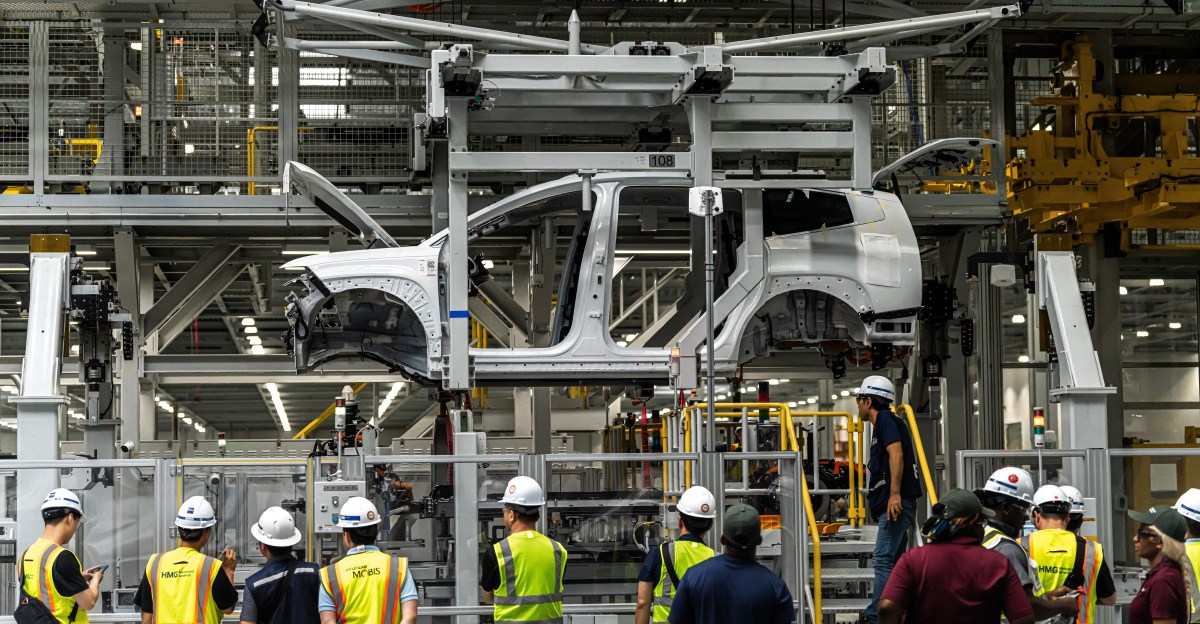
Despite the controversy, the Georgia Metaplant remains central to Hyundai’s North American manufacturing strategy. Muñoz emphasized its importance, calling it “the driving force” behind the company’s expansion plans. The expanded operations are projected to create 3,000 direct and indirect jobs in Georgia.
Hyundai aims to manufacture 80% of the vehicles it sells in the US domestically by 2030, increasing its supply chain content from 60% to 80%. This move is anticipated to align with US government policies encouraging domestic manufacturing.
Looking ahead, Hyundai forecasts global sales of 5.5 million vehicles annually by 2030, with 3.3 million of those being electric. This represents a notable increase of 1.2 million vehicles to the company’s current global capacity. However, Muñoz acknowledged that EV adoption in North America is expected to be slower than in Europe and China, characterizing the US market as “hybrid-driven.”
