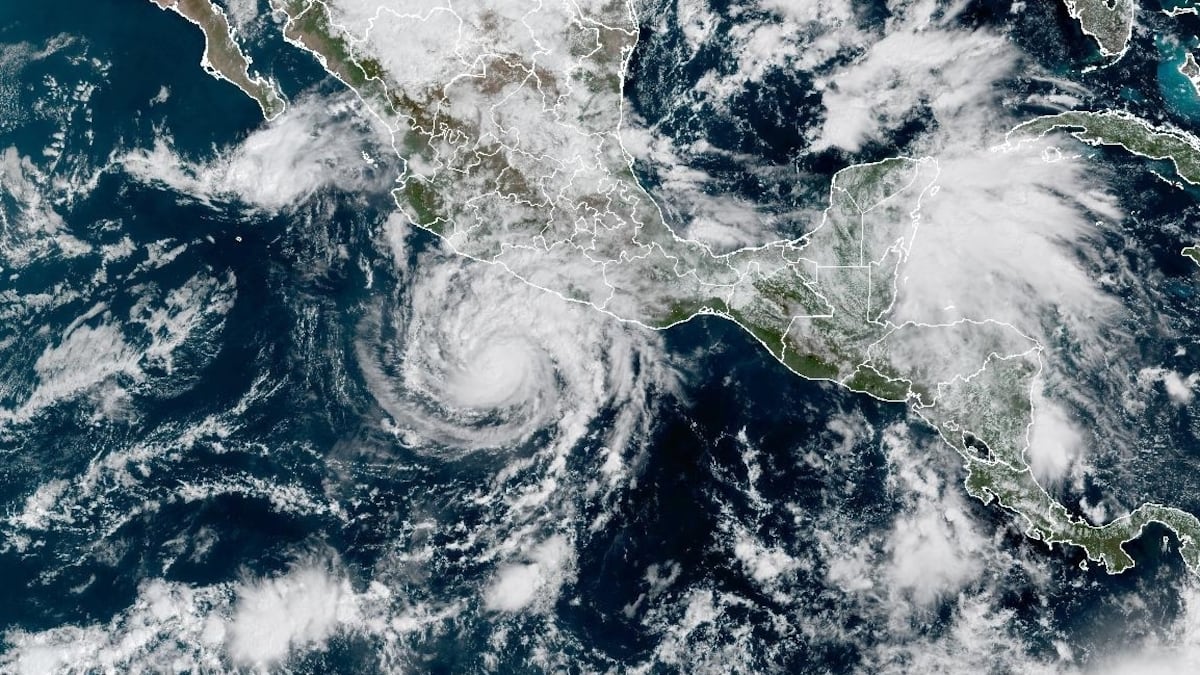
Hurricane Trudy Threatens Mexico Coast With Potential Category 4 Intensification
Hurricane Trudy weakened to a Category 1 storm in the eastern Pacific on Friday, October 16, 2026, after temporarily reaching Category 3 strength earlier in the day, threatening western Mexican coastal communities with heavy rain, high winds, and severe storm surge through the weekend.
Rapid Intensity Fluctuations Off the Pacific Coast
The cyclone shifted down the Saffir-Simpson scale to a Category 1 system by Friday afternoon, according to the Servicio Meteorológico Nacional (SMN). Earlier in the day, the system had intensified into a major hurricane. At 12:35 PM Central Standard Time, the storm was located roughly 225 miles (360 kilometers) from Acapulco, Guerrero, and 325 miles (525 kilometers) from Manzanillo, Colima, carrying maximum sustained winds of 85 mph (135 km/h) while moving slowly at 4 mph (7 km/h).
Despite its current weakening trend, meteorological agencies warn that Trudy is expected to reorganize and strengthen back into a powerful system as it tracks parallel to the coastline. Forecasters project the cyclone to near Category 4 intensity by Saturday, October 17, with sustained winds potentially reaching 143 miles per hour and higher gusts.
Severe Weather Risks Across Jalisco, Colima, and Michoacán
The primary threat centers on the coastal stretches of Michoacán, Colima, and Jalisco, where authorities anticipate severe wind gusts, rough seas, and torrential rainfall. Fabián Vázquez Romaña, coordinator general of the SMN, stated the hurricane could pass as close as 65 kilometers from the shoreline late Saturday or early Sunday. While direct landfall is not currently projected, forecasters emphasize that any minor wobble in the storm’s track could significantly alter local impact zones.
Rainfall totals through the weekend are expected to range between 4 and 8 inches, with isolated accumulations reaching up to 12 inches in mountainous and coastal zones. Such intense precipitation frequently triggers life-threatening flash floods and landslides in areas with steep terrain. Coastal residents in the path of the storm are advised to monitor local weather alerts and secure necessary property protections.
Interaction With Cold Front Number Two
The weather hazard extends far beyond the immediate Pacific coastline. The SMN reported that moisture streaming from Trudy is colliding directly with cold front number two, which is pushing southward across the national territory. This interaction generates severe downpours across the Gulf of Mexico watershed and the Huasteca region.
States including San Luis Potosí, Hidalgo, Querétaro, and Puebla face projected rainfall totals between 200 and 300 milimeters from Friday through Sunday. Additional heavy precipitation is forecast for southern Veracruz, Tabasco, Chiapas, Quintana Roo, and portions of Yucatán, accompanied by wind gusts reaching up to 120 kilometers per hour in Veracruz.

President Sheinbaum Urges Residents to Move to Shelters
Federal and state authorities have mobilized emergency protocols ahead of the weekend hazards. President Claudia Sheinbaum urged residents in high-risk areas, particularly those living near rapidly rising rivers or exposed coastlines, to heed warnings from civil protection agencies and move to designated temporary shelters. National Coordinator of Civil Protection Laura Velázquez is actively coordinating response efforts with regional governors.
Concurrently, authorities continue addressing recovery operations elsewhere in the country, including assistance for roughly 1,500 homes affected by Tropical Storm Rachel in Baja California. Federal officials maintain active warning zones along the coasts of Jalisco, Colima, Michoacán, Guerrero, and Nayarit as Trudy tracks northwestward.
Category 3 Hurricane #Trudy is still strengthening and taking a similar track to Hurricane Simon last week. It will pass very close to the coast of Mexico over the weekend. pic.twitter.com/bbl5lBa9Up
More on Hurricane Trudy
The sun rises on a churning, Category 3 Hurricane Trudy off the southwestern coast of Mexico. pic.twitter.com/oS06f7Tq0u