
Lions Seek Competitive Edge in Australia Tour
Insisting on Wallabies release for provincial games to sharpen series
The British and Irish Lions are in Australia, but their CEO, Ben Calveley, is making sure their tour isn’t just a walk in the park, seeking guarantees that key players will be available for provincial matches leading up to the Test series.
Demand for Competitive Games
Before the Lions even played their first tour game, Calveley stressed the importance of competitive provincial games, citing a “very clear”
pre-tour agreement with Rugby Australia mandating the release of Test players for these fixtures.
He argued that competitive games are essential, adding, “It’s also right for the fans and for the broadcasters and the partners who are all expecting competitive fixtures, and for the rugby-loving public here in Australia.”
While acknowledging the Wallabies’ preparations for their match against Fiji on July 6th, the core of Calveley’s argument is solid: competitive provincial matches benefit everyone.
Historical Context
Looking back, the Lions’ record in provincial games reveals a stark contrast across different nations. During two tours each of New Zealand, South Africa and Australia, the average scores were 30-16, 39-19, and a whopping 51-17, respectively. This historical imbalance fuels Calveley’s push for more competitive matchups. Nowadays, top rugby teams need to strategically manage player workloads to prevent injuries and ensure peak performance during crucial matches (World Rugby, 2024).
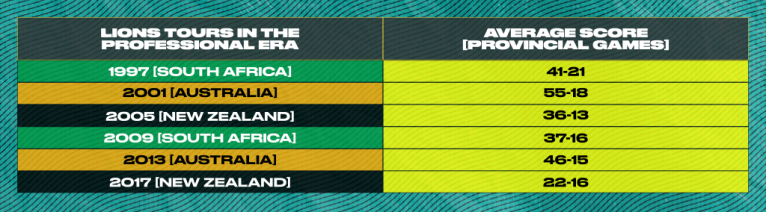
While the Brumbies have historically provided stiff competition, the cumulative record of the Force, Reds, and Waratahs shows an average score of 56-14 over seven matches.
To preserve the tour’s viability, the Lions need meaningful challenges from Australian provinces.
Future of the Lions Tours
Calveley hinted at potential future tours beyond the traditional Southern Hemisphere nations, stating:
“We remain open to having discussions about what the future for the Lions may hold, but those conversations are for another time.
“You can certainly understand why people will get excited about the concept [of a series in France].
“What’s not to like about some of those wonderful clubs you could play against, and some of those wonderful venues in the summer time as well?”—Ben Calveley, Lions CEO
Pundit Predictions and Tactical Misconceptions
Despite the historical challenges, Australian pundits like Morgan Turinui, Matt Burke, Tim Horan, and Michael Hooper are forecasting a 2-1 series victory for the Wallabies, with David Campese predicting a clean sweep.
Former Wallaby scrum-half Will Genia believes Australia’s athletic advantage will be decisive: “if we can play the game at pace and make it a bit loose… individually, we’ve got better athletes”.
That notion may be outdated, given the skill and fitness levels now prevalent in the English Premiership and the URC.
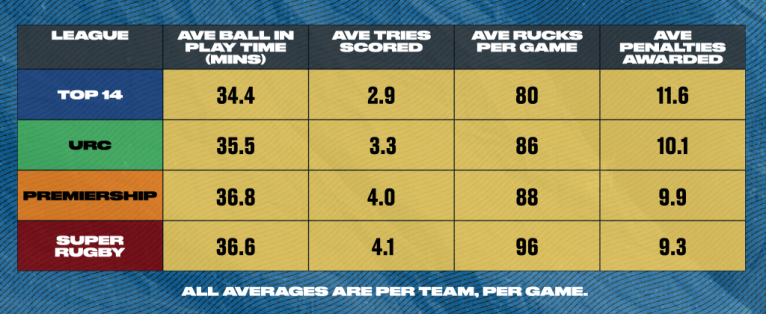
In their recent match, the Force lost to the Lions not in traditional areas like scrums and lineouts, but in open play and fatigue resistance, fading significantly in the second half.
Even with players away with the Wallabies, the Force scrum, bolstered by Oli Hoskins, Brandon Paenga-Amosa, and Tom Robertson, challenged the Lions’ starting front row.
Kiwi referee Ben O’Keeffe allowed play to continue, but the Force had the upper hand, with Lions hooker Dan Sheehan under pressure.
The Lions’ scrum dominance diminished when their top scrummaging props, Andrew Porter and Will Stuart, entered the game.
The Lions’ open-play agility was a major disruptive factor; one instance saw James Lowe involved in a 13-phase kick return, showcasing adaptability not typically associated with northern teams.
Lowe also spearheaded a counterattack try from within the Lions’ 22.
The selection of Henry Pollock, among five natural number sevens in the back-row, further challenges Genia’s assessment.
Pollock’s mobility and intelligence were on display when the Lions took a tap penalty 35 meters from the goal line; he combined with Josh van der Flier to create an opportunity for the Northampton player.
Pollock also exhibited unconventional skills, kicking and regathering the ball to gain valuable time.
The Allure of the Lions Tour
Former Wallaby Tim Horan recently described the unique atmosphere of a Lions tour.
He recalled the experience as a 19-year-old during the 1989 tour, riding on a bus that had to park far from the stadium because of the crowds.
“The second Test at Ballymore, when our bus couldn’t get down… couldn’t get into the stadium. There was that many people on the creek bank with barbecues and beers. The bus had to park out in the front of the road. And then we walked through this tunnel about 600 metres from the road, along the creek bank, through barbecues and beers…It was the most amazing thing.”
That charm underscores the importance of Australia maximizing the tour’s value both on and off the field.
If that necessitates the Lions roaring louder than they yawn, so be it.
