How Brandon McNulty Won the 2026 World Championships Road Race
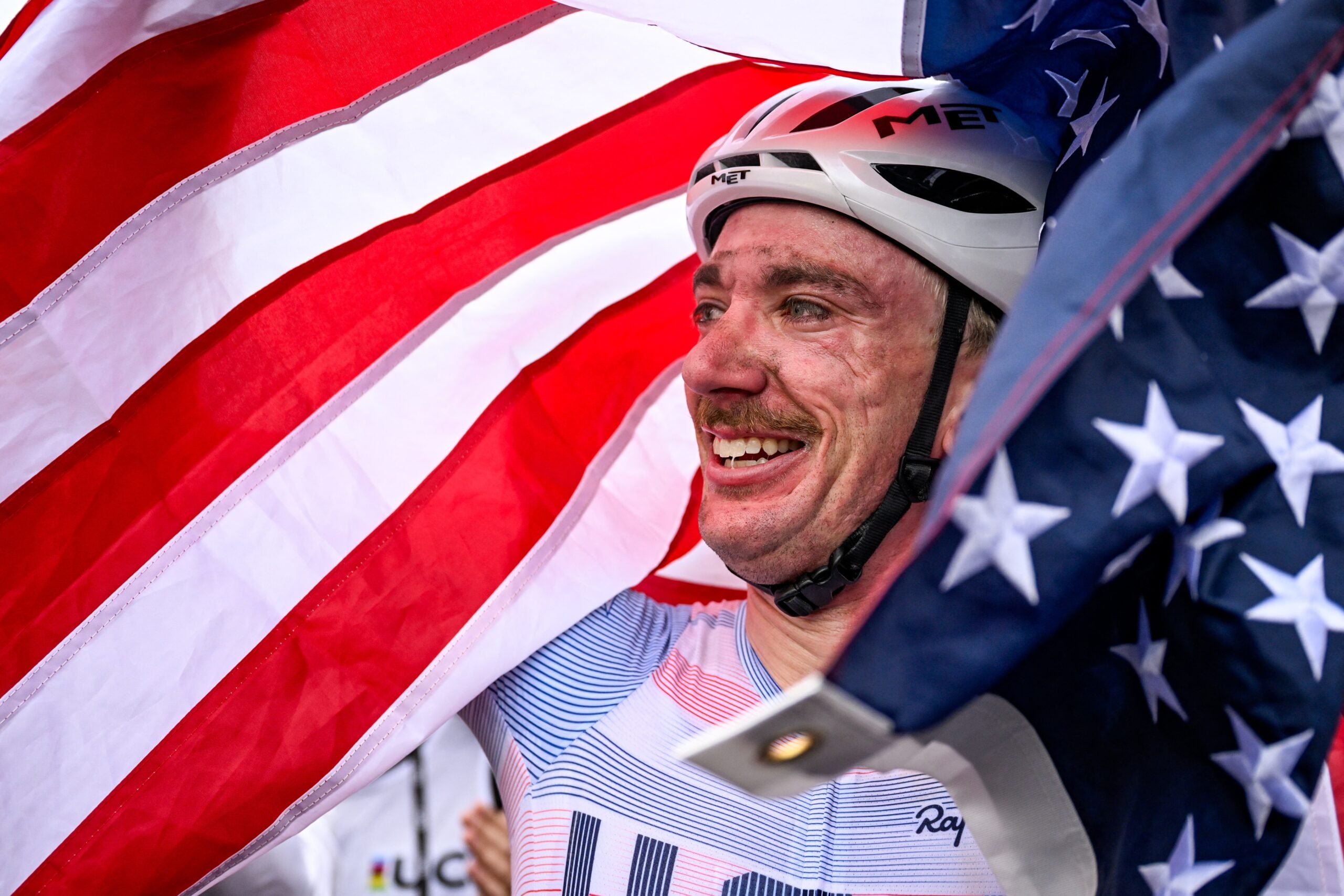
Brandon McNulty secured a historic victory at the 2026 UCI Road World Championships in Montreal on September 28, 2026, breaking a U.S. dry spell dating back to 1993. Launching a solo attack with 32 kilometers remaining on the demanding city circuit, the 28-year-old held off elite chasers to win by 13 seconds ahead of Michael Matthews and Mathieu van der Poel.
The Course and Physiological Demands
The 2026 World Championships route closely mirrored the Grand Prix Cycliste de Montréal, utilizing 12 laps of city circuits featuring the Voie Camillien-Houde, a four-minute climb averaging a 7.9% gradient. Organizers added 100 kilometers of flat road prior to the circuits, bringing the total race distance to 273.4 kilometers. Raw power files from the event reveal the stark contrast between the early flat section and the explosive circuits. Quinn Simmons finished fourth overall, recording a total time of 6 hours, 17 minutes, and 23 seconds with an average power output of 298 watts and a Normalized Power of 379 watts. However, a closer look at Simmons’ data shows he averaged just 204 watts (251w NP) for the first 100 kilometers before ramping up to 346 watts (415w NP) across the final 173 kilometers.
Wasted Watts on the Montreal Circuits
The intensity ratcheted upward when French rider Bruno Amirail moved to the front of the peloton to break apart the bunch. Amirail averaged more than 400 watts for 90 minutes, recording a Normalized Power of 440 watts on the hilly city circuit. Pressing the lap button on his head unit with the intention of executing a 90-minute time trial, Amirail successfully neutralized the early breakaway. Yet, the massive pull offered little tactical advantage, burning energy that left the French team depleted. Their designated leader, Paul Seixas, ultimately cramped out of the chase group in the finale, demonstrating how pure strength often yielded to tactical efficiency on the Montreal course.
The Decisive Selection on Voie Camillien-Houde
As the race narrowed with 80 kilometers remaining, a lead group of six formed, including Mathieu van der Poel, Wout van Aert, and Quinn Simmons. Following a mechanical mishap that forced Tom Pidcock to chase back, Isaac del Toro accelerated halfway up the Voie Camillien-Houde with Evenepoel, Seixas, and McNulty glued to his wheel. Ben Healy fought to stay attached as Del Toro drove the pace, recording a blistering 490 watts—roughly 7.9 watts per kilogram—for a 3:42 effort up the climb. Del Toro and McNulty matched that searing ~8w/kg output for 3:40, fracturing the selection down to just 10 riders over the summit.

When Van der Poel subsequently launched an attack that only Simmons and Oscar Onley could follow, the true cost of staying in contention became evident. Simmons’ power file captured the sheer explosiveness required to bridge that gap: 880 watts for 26 seconds with a peak output of 1,093 watts. Amidst this tactical attrition, McNulty made his decisive move with 32 kilometers left, riding solo to the finish line to capture the rainbow jersey.