
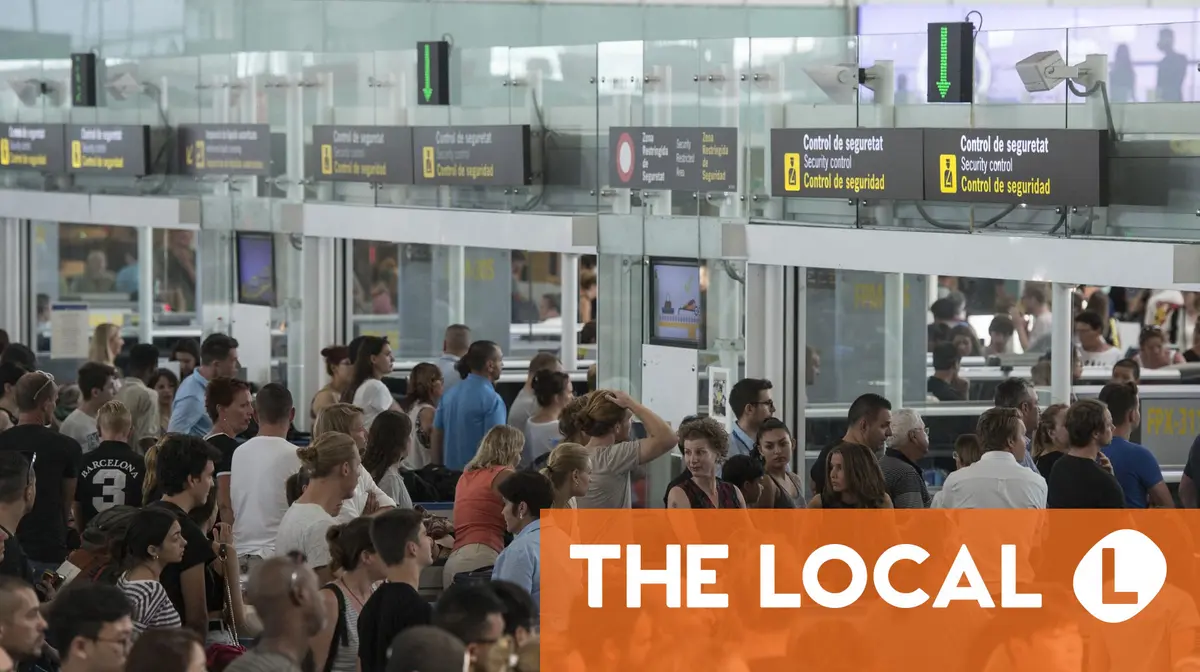
Spain Faces tourist Backlash as Airport Passport Control Struggles
January 14, 2026, 04:58:10
Spain’s tourism industry is sounding the alarm over notable delays at airport passport control, threatening to tarnish the country’s image as a premier travel destination. Hotel associations and tourism bosses are urgently calling on the Spanish government to increase police presence and fully operationalize new border control systems designed to manage the influx of international travelers, particularly in the wake of Brexit and the recent rollout of the EU’s entry/exit System (EES).
A Growing Crisis at Spanish Airports
The Spanish Confederation of Hotels and Tourist Accommodation (CEHAT) has formally appealed to the Ministry of the Interior, citing “structural problems” with passport control that are causing unacceptably long queues and wait times [[1]]. These delays are particularly acute at popular tourist destinations like Málaga,Tenerife south,and Lanzarote,where the sheer volume of international passengers is overwhelming current resources.
Jorge Marichal, president of CEHAT, emphasized the severity of the situation, stating, “Spain cannot afford for the first contact of millions of visitors with our country to be an endless queue at passport control.” He warned that these lengthy waits damage the “Spain brand” and negatively impact the overall tourist experiance.
The issue isn’t simply about the number of travelers; it’s a combination of factors. Reports indicate that many of the newly installed e-gates are not functioning correctly, and there’s a shortage of police officers to manage the flow of passengers.This leads to confusion among travelers, especially regarding which queue to join and how to provide the required biometric data.
The Impact of Brexit and the New EU Entry/Exit System
The surge in non-EU travelers, particularly from the United Kingdom following Brexit, has considerably increased the strain on Spain’s border control infrastructure. The introduction of the EU’s Entry/Exit System (EES) in October of last year, intended to streamline border procedures, has ironically exacerbated the problem.
The EES, which applies to 29 European countries within the Schengen Area, requires non-EU citizens to have their fingerprints and facial images recorded upon entry and exit [[3]]. While designed to enhance security, the system has demonstrably slowed down processing times. According to Olivier Jankovec, director general of ACI Europe, border control processing times have increased by as much as 70%, with peak wait times reaching three hours [[2]].
The EES gathers and stores crucial data points, including travel document details, entry/exit timestamps, biometric data (facial image and fingerprints), and any records of denied entry.While the system aims to eliminate passport stamps, the current implementation is causing significant disruption.
Who is Affected and What Can Travelers Expect?
The EES impacts travelers from countries outside the Schengen Area. This includes citizens of the United Kingdom, the United States, Canada, and many others. It’s important to note that non-EU citizens who are legal residents of Spain are exempt from registering with the EES, but they will still be required to use the third-country national queues when traveling from outside the Schengen Area.
Travelers should be prepared for:
- Longer wait times at passport control.
- The need to provide fingerprints and facial scans.
- Potential confusion regarding queue selection and procedures.
Looking Ahead: Addressing the Crisis
CEHAT is urging the Spanish government to take immediate and decisive action to address the current crisis. This includes increasing the number of police officers deployed to airports and ensuring that all e-gates are fully functional and operational. The confederation emphasizes the need for a long-term solution that can accommodate the growing number of international travelers and maintain Spain’s reputation as a world-class tourist destination.
The situation highlights the challenges of implementing new border control systems and the importance of adequate staffing and infrastructure to support them. Failure to address these issues could have significant consequences for Spain’s tourism industry and its overall economic outlook.
Key Takeaways
- Spanish airports are experiencing significant delays at passport control due to a combination of increased passenger volume (particularly post-Brexit) and issues with the new EU Entry/Exit System (EES).
- The Spanish Confederation of Hotels and Tourist Accommodation (CEHAT) is calling for urgent action to increase police presence and fix malfunctioning e-gates.
- The EES requires non-EU citizens to provide biometric data (fingerprints and facial scans) upon entry and exit from the Schengen Area.
- Travelers should be prepared for longer wait times and potential confusion at border control.
