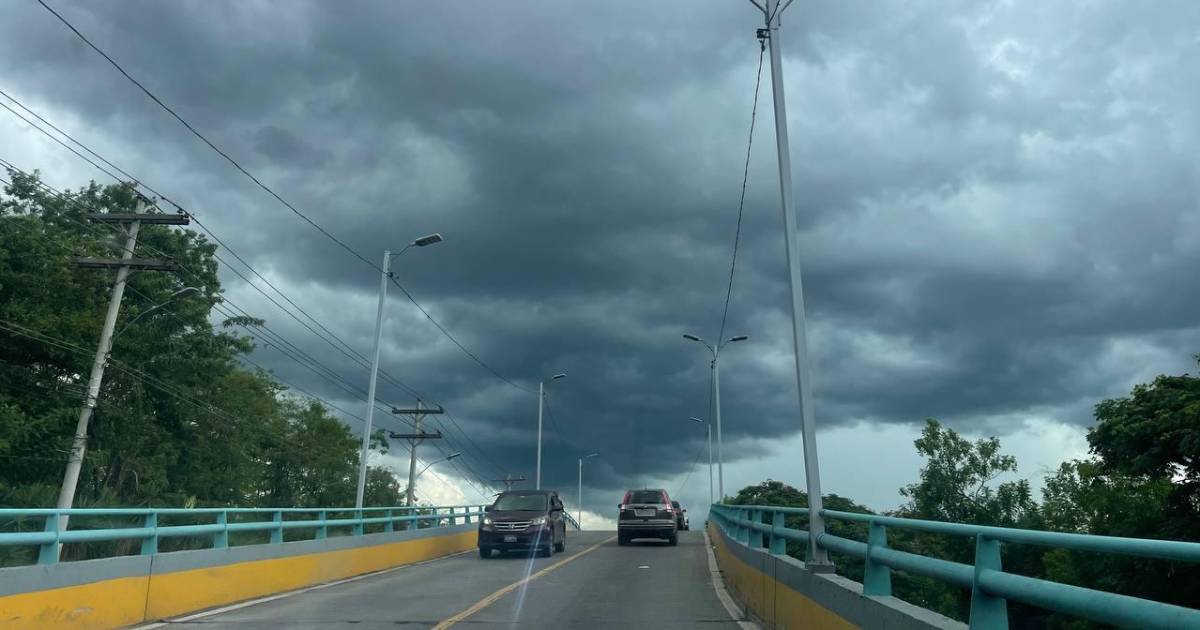
Honduras Weather Forecast: High Pressure System Brings Rain and Cooler Temperatures
A high-pressure wedge system spanning Honduras on Sunday, October 25, 2026, is driving northerly and northwesterly winds across the country alongside cooler temperatures and localized rainfall. The incoming weather pattern is shifting thermal averages downward, creating marked regional variations from daytime highs of 35 degrees Celsius in the south to overnight lows touching 13 degrees in western zones.
The atmospheric shift brings distinct meteorological impacts depending on geography. Moderate rainfall is concentrated over mountainous terrain in the northern and north-western regions, while lighter, scattered showers touch parts of the central and western zones. Wave heights in the Caribbean reach approximately three feet, with the Gulf of Fonseca registering swells between two and four feet.
Southern Region Records Highest Temperatures
Thermal conditions display sharp geographical contrasts. The southern region records the highest readings, reaching a maximum of 35 degrees Celsius and a minimum of 24 degrees. Northern and eastern areas register daytime highs around 29 degrees, while overnight lows dip to 20 degrees in the north and 19 degrees in the east. Central regions experience maximums of 28 degrees and minimums of 18 degrees, with Tegucigalpa capping at 23 degrees Celsius. Western Honduras maintains the coolest environment, with temperatures spanning from 13 to 24 degrees Celsius.
La influencia de una cuña de alta presión sobre el territorio nacional, continuará produciendo vientos del norte, leve descenso de la temperatura, lluvias y chubascos débiles dispersos y moderados, aislados de forma ocasional. pic.twitter.com/mx8RjORaKs
Jairo García, a forecaster for the Center for Atmospheric, Oceanographic and Seismic Studies, stated that residents would notice cooler conditions during morning and evening hours over the weekend. The system represents the first high-pressure wedge of the season, producing cloud cover across the center, north-west, and central territories alongside steady northern winds.
Precipitation Distribution Across Departments
Rainfall distribution remains uneven across the national territory. Light precipitation affects Atlántida, northern Cortés, and western sections of Colón, while very isolated loviznas develop in Santa Bárbara, Copán, northern Lempira, and northern Intibucá. Conversely, the Distrito Central within Francisco Morazán anticipates dry conditions.

Authorities urge residents in mountainous areas of the north and north-west to monitor updated forecasts as occasional moderate downpours persist.