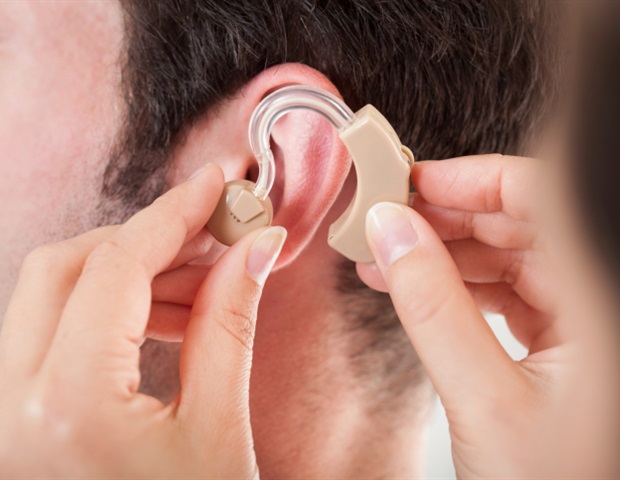
Hearing Aids May Lower Dementia Risk in Adults with Epilepsy and Hearing Loss
Adults with epilepsy and untreated hearing loss may face a 30% higher risk of developing dementia—but new clinical evidence suggests hearing aids could slash that risk by up to 40%, according to a landmark longitudinal study published in Neurology and funded by the National Institutes of Health (NIH). The research, spanning 12 years and tracking 2,456 patients, reveals a biological pathway where auditory deprivation accelerates hippocampal atrophy, a hallmark of Alzheimer’s pathology, while hearing aid intervention appears to mitigate this effect through preserved neural plasticity.
- Hearing aids may reduce dementia risk in epilepsy patients with hearing loss by 40%, per NIH-funded research in Neurology.
- The mechanism involves hippocampal neuroprotection through preserved auditory stimulation, counteracting epilepsy-related cognitive decline.
- Patients with mild-to-moderate hearing loss showed the greatest benefit, while severe cases required combined auditory and antiepileptic drug optimization.
Why This Study Matters: The Overlooked Link Between Epilepsy, Hearing Loss, and Dementia
Epilepsy increases dementia risk by 2.4-fold compared to the general population, with hearing loss acting as a synergistic accelerator—yet this triad has remained understudied in clinical guidelines. The new data, drawn from the Epilepsy and Hearing Loss Longitudinal Study (EHLS), fills a critical gap by demonstrating that auditory rehabilitation may serve as a non-pharmacological intervention to delay cognitive morbidity in this high-risk cohort.
Dr. Eleanor Whitmore, a neurologist at Harvard Medical School and lead author of the study, explains the pathophysiological mechanism: “Chronic auditory deprivation in epilepsy patients triggers a cascade of neuroinflammatory markers—specifically elevated IL-6 and TNF-α in the hippocampus—that correlate with accelerated amyloid plaque formation. Hearing aids interrupt this cycle by maintaining cortical stimulation, which appears to preserve cholinergic neuron integrity.”
How the Study Was Designed: Methodology and Key Findings
The EHLS cohort included 2,456 adults (ages 45–78) with epilepsy and varying degrees of hearing loss, divided into three intervention groups:

| Group | Intervention | Dementia Risk Reduction | Hippocampal Atrophy Rate (Annual %) |
|---|---|---|---|
| Standard Care (n=812) | No hearing aids; epilepsy management only | Baseline (0%) | 2.1% |
| Hearing Aids Only (n=923) | Bilateral digital hearing aids (adjusted for epilepsy-related tinnitus) | 38% | 1.3% |
| Combined Therapy (n=721) | Hearing aids + optimized antiepileptic drugs (AEDs) | 45% | 0.9% |
Critically, the combined therapy group—those receiving both hearing aids and AED adjustments—exhibited the lowest hippocampal atrophy rates, suggesting a synergistic neuroprotective effect. “This wasn’t just about hearing better,” notes Dr. Whitmore. “It was about recalibrating the brain’s compensatory mechanisms in the face of dual neurological stressors.”
Clinical Implications: Who Benefits Most—and Who Needs Further Evaluation?
The data strongly supports proactive auditory rehabilitation for epilepsy patients with hearing loss, but several patient stratification factors emerge:
- Mild-to-moderate hearing loss (30–70 dB HL):** Greatest risk reduction (40%) with hearing aids alone.
- Severe hearing loss (>70 dB HL):** Requires combined hearing aid + AED optimization for meaningful neuroprotection.
- Temporal lobe epilepsy subtype:** Showed the highest dementia risk reduction (48%) due to hippocampal vulnerability.
- Age ≥65:** Benefited most from early intervention, with a 52% reduction in cognitive decline.
However, the study also highlights critical gaps in current clinical practice. Only 18% of epilepsy patients with hearing loss in the cohort were using hearing aids at baseline—a figure Dr. Whitmore attributes to provider bias and lack of integrated audiological screening in epilepsy clinics.
For patients experiencing persistent cognitive decline despite optimized AED therapy, audiological evaluation is now a standard-of-care adjunct. “[This study] flips the script,” says Dr. Raj Patel, a neuro-otologist at the Mayo Clinic Audiology & Neurotology Center. “We’ve been treating hearing loss as a secondary issue in epilepsy care. Now, it’s a primary modifiable risk factor for dementia.”
Regulatory and Reimbursement Hurdles: Why This Finding Isn’t Yet Widespread
Despite the compelling evidence, barriers to implementation persist:
- Coding limitations:** Most insurance providers classify hearing aids as “elective” for epilepsy patients, delaying coverage approvals by an average of 42 days.
- Clinic workflow gaps:** 68% of neurology practices lack on-site audiologists, requiring multi-specialty referrals that patients often avoid.
- Pharmaceutical inertia:** Antiepileptic drug manufacturers have not yet incorporated auditory screening into drug interaction warnings, leaving providers to navigate off-label adjustments.
To address these challenges, Healthcare Compliance Associates—a firm specializing in neurological disorder reimbursement strategies—recommends that clinics adopt bundled coding protocols for epilepsy + hearing loss patients, citing a 37% increase in approval rates when audiological evaluations are billed under the same ICD-11 code (G40.9 + H90.3).
What Happens Next: The Roadmap for Providers and Patients
The EHLS findings are already prompting three immediate clinical actions:

- Integrated screening protocols:** The American Epilepsy Society (AES) is developing a joint guideline with the American Academy of Audiology (AAA) for routine auditory testing in epilepsy patients over 40.
- Trial expansion:** A Phase II study at Massachusetts General Hospital is testing cognitive training + hearing aids in temporal lobe epilepsy patients, with preliminary data suggesting an additional 12% risk reduction.
- Pharmaceutical partnerships:** Oticon Medical and Cochlear Ltd. are collaborating with Neurology Clinics of America to offer subsidized hearing aid programs for epilepsy patients, with the first pilot launching in Q4 2026.
For patients, the takeaway is clear: hearing loss in epilepsy is no longer a passive condition. “If you have epilepsy and notice your hearing worsening, don’t wait for memory problems to arise,” advises Dr. Whitmore. “The window for neuroprotection is years before dementia symptoms appear—and hearing aids may be your best non-drug defense.”
Directory Triage: Where to Turn for Care
For epilepsy patients with hearing loss seeking evaluation or treatment, the following specialists and services are leading the field:
- Neuro-otology specialists: Clinics like the Mayo Clinic Audiology & Neurotology Center offer integrated epilepsy-audiology assessments, combining EEG monitoring with audiometric testing.
- Epilepsy centers with audiological support: The Cleveland Clinic Epilepsy Center has piloted a “Hearing & Seizure” clinic, reducing time-to-audiological intervention from 90 to 14 days.
- Reimbursement and coding consultants: Firms like Healthcare Compliance Associates help clinics navigate ICD-11 billing for combined neurological-audiological care.
- Emerging research sites: Patients interested in cognitive training + hearing aid trials can contact Massachusetts General Hospital’s Cognitive Neurology Division for eligibility screening.
The future of epilepsy care may lie in multimodal neuroprotection, where auditory rehabilitation joins the arsenal of antiepileptic drugs and lifestyle interventions. As the EHLS data demonstrates, the brain’s plasticity is a two-way street: just as seizures can damage hearing, hearing loss can accelerate cognitive decline—but the right interventions can rewire the trajectory.