Google Unveils Results of AI-Driven Tuberculosis Screening Technology
Google unveiled field results from its artificial intelligence-driven tuberculosis screening technology at the IDWeek 2026 conference in Washington, D.C., running from October 21 to 24.
Key Clinical Takeaways:
- Nexus AI and Google deployed chest X-ray screening models across approximately 40 medical facilities in six African countries, analyzing over 25,000 scans.
- Processing times for high-risk lung disease identification dropped from weeks to under 45 seconds at point-of-care locations.
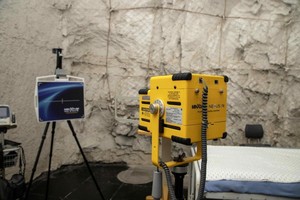
- In Mponeng Gold Mine in South Africa, a portable digital X-ray and offline AI system was installed 4 kilometers underground to screen miners exposed to silica dust.
Google Develops Algorithms to Reduce Tuberculosis Diagnostic Lag
Tuberculosis remains a leading infectious killer, claiming roughly 1.23 million lives globally each year. In regions with high disease burdens, diagnosing patients quickly remains difficult due to a shortage of radiology specialists and imaging equipment. Patients frequently travel long distances for chest radiographs and wait weeks for manual readings to confirm upper lung infiltrates or cavitary lesions.
Google developed chest X-ray reading algorithms to mitigate this diagnostic lag in limited-resource settings. A 2019 study published in Radiology demonstrated that deep learning algorithms could detect active pulmonary tuberculosis at a level comparable to trained radiologists. Subsequently, a 2021 evaluation by the Stop TB Partnership published in The Lancet Digital Health rated Google’s AI model among the top-performing automated tuberculosis triage algorithms worldwide. The World Health Organization subsequently recommended Computer-Aided Detection technology for tuberculosis screening. Further validation appeared in September 2024, when a prospective multicenter study in NEJM AI confirmed high sensitivity across diverse patient populations while spotting other thoracic abnormalities.
Regulatory Validation and Clinical Deployment in Africa
Deploying AI from research laboratories into actual clinical workflows requires strict adherence to medical device regulations, reliable handling of diverse hardware, and stable offline functionality. To bridge this gap, Google collaborated with Pretoria-based medical technology firm Nexus AI. Nexus AI turned the underlying analytical algorithms into a clinical diagnostic support tool.
The resulting software secured Class IIb certification under the European Union Medical Device Regulation (EU MDR 2017/745) alongside ISO 13485 quality management accreditation. Nexus AI also partnered with FIND to pursue WHO Prequalification while seeking United States Food and Drug Administration clearance.
The screening solution, titled Nexus Intelligence, operates in South Africa, Sierra Leone, and Côte d’Ivoire, and is expanding into the Democratic Republic of the Congo, Zambia, and Cameroon. Across six nations and roughly 40 health sites, over 90 clinicians have evaluated more than 25,000 chest X-rays. While the software flags abnormal lung patterns and prioritizes cases needing molecular testing, final clinical diagnoses rest entirely with human medical staff.
Underground Deployment at Mponeng Gold Mine
The deployment at Mponeng Gold Mine in South Africa places portable digital X-ray hardware and offline AI systems 4 kilometers underground. Miners working deep below the surface face prolonged exposure to silica dust, raising their baseline risk for occupational lung pathology.
Partnering with the Stop TB Partnership, Harmony Gold Mine, and the South African Department of Health, the initiative allows workers to complete chest imaging at the work site rather than traveling to surface facilities. The AI tool processes captures in seconds to isolate suspected tuberculosis cases, enabling immediate molecular diagnostic follow-up during a single clinic visit.
Google Shares AI Models to Support Worldwide Screening
Recognizing that individual corporate partnerships cannot satisfy worldwide screening demand alone, Google launched the Health AI Developer Foundations initiative to share baseline vision and language models. The lightweight vision-language model MedSigLIP connects chest radiographs with natural text descriptions, allowing developers to fine-tune local datasets for specific pathologies.
Google also released MedGemma, a multimodal clinical foundation model containing 4 billion and 27 billion parameters capable of analyzing medical images alongside clinical texts without requiring internet connectivity. Since launch, MedGemma recorded over 10 million downloads, though operational implementation requires local safety validation.
Indonesian health officials are utilizing these open models to underpin a national screening initiative targeting 50 million citizens annually. Rather than routing sensitive health records through foreign cloud servers, the Indonesian Ministry of Health fine-tunes MedGemma and MedSigLIP on domestic infrastructure, aligning with sovereign AI goals.
Acoustic Cough Analysis for Resource-Limited Settings
For communities lacking immediate access to radiographic machinery, Google is developing acoustic screening tools via its Health Acoustic Representations model. Trained on over 300 million audio segments, HeAR analyzes sound features captured via standard smartphone microphones to detect acoustic markers associated with illness.
Research organizations including CIDRZ in Zambia, the Aurum Institute in Ghana, and HELINA are running joint studies backed by grants from Google.org. While acoustic screening and cough pattern analysis function strictly as preliminary triage mechanisms rather than definitive diagnostics, they form part of a tiered screening continuum intended to bridge remote healthcare gaps.
Disclaimer: The information provided in this article is for educational and scientific communication purposes only and does not constitute medical advice. Always consult with a qualified healthcare provider regarding any medical condition, diagnosis, or treatment plan.