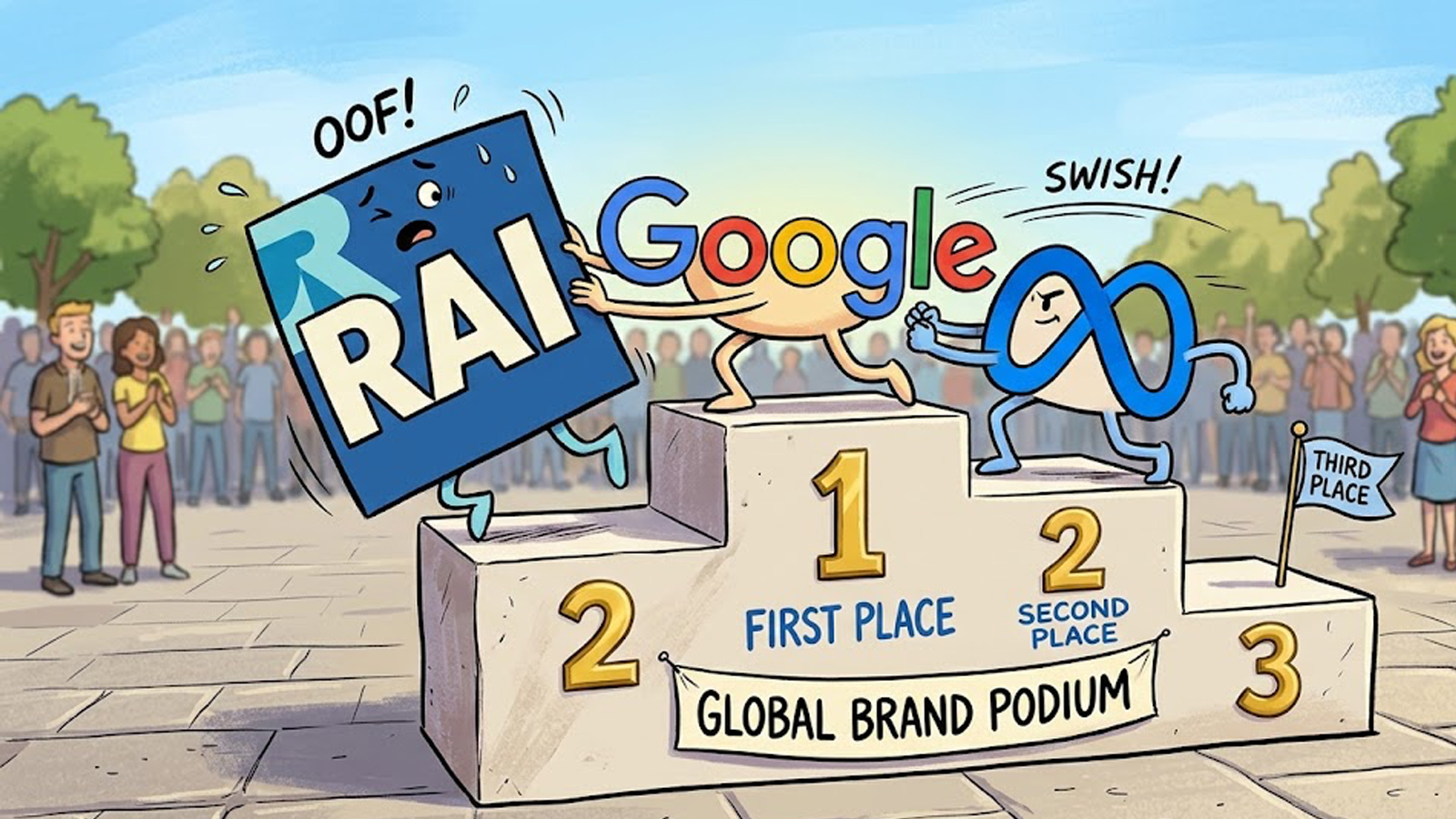
Google overtakes Rai in AGCOM data for 2024
Google has overtaken Italy’s public broadcaster Rai to capture the largest share of the country’s media economic resources for the first time, according to official regulatory data published on October 21, 2026. macitynet.it reported that Alphabet, Google’s parent company, claimed 12.4% of the Integrated System of Communications, known as the SIC, based on figures for the year 2024 certified by the Communications Authority, or AGCOM.
The Tech TL;DR:
- Alphabet reached 12.4% of Italy’s SIC in 2024, edging past state broadcaster Rai at 12%.
- Online advertising grew 12.6% to nearly 8 billion euros, driving total system value to 21.8 billion euros.
- Meta climbed to third place with 9.7%, surpassing both Sky and Fininvest in a rapidly shifting media market.
Shifting Economic Realities in the Italian Media Market
The AGCOM assessment measures total system revenues within a defined regulatory perimeter that includes television, radio, publishing, online advertising, cinema, and outdoor advertising. This transition ends decades of a traditional duopoly dominated by Rai and Mediaset, bringing online platforms to the forefront of economic power within the Italian media market. The total value of the sector reached 21.8 billion euros, representing 0.99% of Italy’s gross domestic product and marking a 6.9% increase compared to 2023.
Within these rankings, Alphabet gained 0.7 percentage points from the previous year to reach 12.4%. Meanwhile, Rai slipped to second place with 12%, down 0.3 points. Diego Ciulli, Head of Government Affairs and Public Policy for Google Italy, Greece, and Cyprus, wrote on LinkedIn that the SIC was originally designed 24 years ago to counter the risks of a media monopoly. Ciulli stated that today’s market features five distinct entities with close, significant shares ranging between 12.4% and 9.2%, reflecting a level of competition that was difficult to imagine previously.
Meta Rises as Traditional Broadcasters Face Pressure
Meta recorded the most substantial growth among major operators, climbing from fifth to third position with 9.7% of resources—an increase of 1.1 percentage points. This surge allowed Meta to surpass Comcast/Sky, standing at 9.4%, and Fininvest at 9.2%. Amazon, Netflix, and DAZN also secured notable positions at sixth, seventh, and ninth places with shares of 4.9%, 3.5%, and 2.5% respectively.
Despite these platform gains, traditional media sectors are experiencing divergent trajectories. The audiovisual and video-on-demand sector remains the largest segment at nearly 9.5 billion euros, growing by 6.8% and accounting for roughly 44% of SIC resources. Free-to-air television approaches 5 billion euros, supported by advertising and public funds. Conversely, traditional publishing—comprising newspapers, periodicals, and national news agencies—fell by 3.9% to 2.8 billion euros, with its overall share dropping to 13%.
Tech Platforms Clash with Legacy Publishers over Economic Dominance
The growing economic dominance of digital platforms has intensified friction between tech groups and legacy publishers. On the same day the AGCOM data circulated, Confindustria Radio Televisioni, Fieg, and Aie organized a joint meeting in Rome titled Articolo 21: il diritto di sapere
to address what they characterize as an existential threat to traditional media sectors.
Google’s Ciulli defended the company’s position by pointing to its engagement with local institutions, compliance with copyright regulations, efforts to combat piracy, and integration into measurement bodies such as Audicom. At the same time, regulatory oversight on digital advertising continues to evolve internationally, following US legal rulings regarding online advertising technologies.