GEF-Funded Project Restores Environment and Livelihoods in Kenya
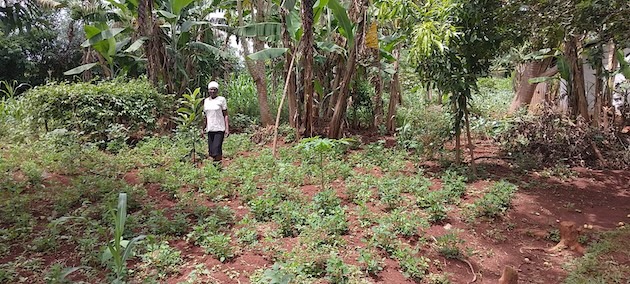
In Siaya County, Kenya, a 52-year-old smallholder farmer named Alice Onyango is transforming her land—one tree at a time. With support from a Global Environment Facility (GEF)-backed project, her farm is becoming a model for environmental restoration and economic resilience, proving that reforestation isn’t just an ecological imperative but a livelihood lifeline. As of May 26, 2026, her story underscores how targeted interventions can reverse decades of deforestation while empowering rural communities.
The Problem: Why Deforestation in Kenya’s Lake Victoria Basin Demands Urgent Solutions
Siaya County, nestled along Kenya’s Lake Victoria shoreline, faces a dual crisis: environmental degradation and economic stagnation. Over the past 30 years, the region has lost nearly 40% of its forest cover, according to the Food and Agriculture Organization’s 2025 State of Forests Report. This loss isn’t just an ecological tragedy—it’s a economic time bomb. Soil erosion has reduced arable land by 25% in some districts, while erratic rainfall patterns linked to deforestation have slashed agricultural yields by up to 30% for smallholders like Onyango. The ripple effects? Poverty rates in Siaya hover around 42%, among the highest in Kenya and youth outmigration to urban slums or neighboring Uganda is accelerating.
But here’s the twist: the same trees that once vanished are now returning. Thanks to a GEF-funded initiative launched in 2022, Siaya’s smallholders are planting over 5 million indigenous tree species annually, with Onyango’s farm alone hosting 12,000 saplings—a fraction of the county’s broader effort. The project, a collaboration between the Kenya Forest Service and the World Agroforestry Centre, isn’t just about reforestation. It’s a livelihood engine, turning degraded land into income streams through agroforestry, carbon credits, and non-timber forest products.
“We used to fight over land. Now, we fight to protect it. The trees aren’t just shade—they’re our bank accounts.”
How the GEF Project is Rewriting the Rules of Smallholder Survival
The GEF’s $18 million intervention in Kenya’s Lake Victoria basin is a case study in integrated restoration. Unlike top-down reforestation schemes that often fail, this project hinges on three pillars:

- Agroforestry Training: Farmers learn to interplant crops like maize and beans with fast-growing species like Grevillea robusta (silver oak) and Markhamia lutea (mushroom tree), which fix nitrogen and improve soil health.
- Carbon Credit Partnerships: Through verified emissions reductions (VERs), smallholders earn $5–$15 per ton of CO₂ sequestered, with Onyango’s farm projected to generate $2,000 annually once mature.
- Market Linkages: Cooperatives like the Siaya Forest Alliance connect farmers to buyers for honey, medicinal plants (e.g., Warburgia ugandensis), and sustainably harvested timber.
The results? In just four years, participating households have seen income rises of 35–50%, with women—who manage 70% of agricultural labor in Siaya—gaining disproportionate benefits. Onyango, for instance, now sells African black soap made from Shea butter trees she planted, adding $120 monthly to her household income.
Regional Spillover: How Siaya’s Model is Influencing East Africa’s Green Economy
Siaya’s success isn’t isolated. The GEF project’s blueprint is being replicated in three neighboring counties: Homa Bay, Kisumu, and Migori, where similar deforestation pressures exist. But scaling requires overcoming three critical hurdles:
| Challenge | Local Impact | Potential Solution |
|---|---|---|
| Land Tenure Insecurity | 40% of smallholders lack formal title deeds, discouraging long-term investments. | Land rights attorneys are partnering with county governments to fast-track communal land certifications under Kenya’s Community Land Act 2016. |
| Climate Risk Financing | Droughts and floods wipe out 20–30% of annual yields, despite restoration efforts. | Parametric insurance providers are piloting “pay-per-tree” policies tied to satellite rainfall data, offering payouts when thresholds are breached. |
| Youth Disengagement | 60% of Siaya’s youth (ages 18–35) see farming as “backward” and migrate to cities. | Agroforestry vocational programs, like those offered by Kenya’s TVET Authority, are integrating climate-smart techniques into curricula. |
Expert Voices: What’s Next for Kenya’s Restoration Economy?
“The GEF project proves that restoration isn’t charity—it’s capitalism. But to sustain it, we need to decouple success from donor funding. That means strengthening local institutions, like farmer cooperatives, to access green finance independently.”
Kinuthia’s warning highlights a funding cliff looming over Kenya’s restoration sector. While the GEF project runs until 2028, post-2026, smallholders will need alternative revenue streams. Enter blended finance: a mix of public grants, private impact investments, and results-based payments. For example, the African Development Bank is exploring a $50 million “Restoration Bond” for Lake Victoria, where investors earn returns tied to verified ecosystem services.
The Directory Bridge: Who Can You Turn To?
Siaya’s story reveals a systemic opportunity: restoration projects create demand for specialized services. Here’s where the gaps—and the solutions—lie:
- For Farmers: Need training in agroforestry or carbon credit applications? Certified agroforestry consultants can design farm-specific plans, while microfinance institutions offer low-interest loans for sapling purchases.
- For Investors: Interested in impact investing? Green finance advisors can navigate Kenya’s Capital Markets Authority regulations for sustainable asset classes.
- For Governments: Counties like Siaya need public policy experts to align restoration goals with national climate pledges, such as Kenya’s National Climate Change Action Plan.
The Kicker: A Warning and a Promise
Alice Onyango’s trees are more than a canopy—they’re a warning. Without scaling, Kenya’s restoration efforts risk stalling by 2030, when the GEF funding tap narrows. But they’re also a promise: proof that smallholders aren’t victims of climate change; they’re its solvers.
The question now isn’t if East Africa’s green economy will grow—it’s how fast. And the answer lies in connecting Onyango’s farm to the professionals who can turn her trees into a movement. Because in Siaya, the future isn’t just being planted. It’s being built—one root system at a time.