GBD Study: Global Measles Burden and Vaccine Coverage 1990-2023
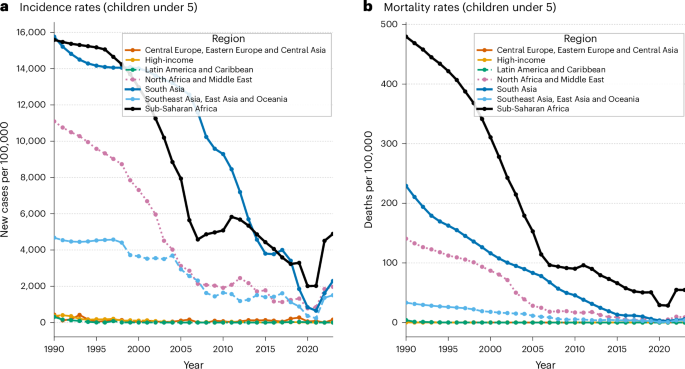
Global measles incidence and mortality climbed sharply between 2019 and 2023, reversing decades of steady progress against the vaccine-preventable disease, according to the Global Burden of Disease Study 2023 published in Nature Medicine on October 21, 2026. Researchers estimated 15.6 million cases and 118,000 deaths worldwide in 2023, marking a 40 percent increase in cases and a 12 percent increase in deaths compared to 2019.
-
Key Clinical Takeaways:
- Global measles cases rose by 40 percent between 2019 and 2023, reaching an estimated 15.6 million infections.
- First-dose measles-containing vaccine (MCV1) coverage fell from 83.6 percent in 2019 to 81.0 percent in 2023.
- Sub-Saharan Africa and South Asia continue to experience the highest burden of disease among children under five.
Global Measles Rebound Follows Decades of Decline
Between 1990 and 2019, global measles incidence and mortality dropped by approximately 80 percent and 90 percent, respectively, as routine immunization programs expanded worldwide. However, the latest analysis by the GBD 2023 Measles Collaborators shows a severe post-2020 resurgence driven by stalled vaccine coverage. Global coverage for the first dose of the measles-containing vaccine (MCV1) rose from 67.2 percent in 1990 to 83.6 percent in 2019, before declining to 81.0 percent by 2023. Second-dose coverage (MCV2) increased from 14.4 percent in 1990 to 68.4 percent in 2019, reaching 71.4 percent in 2023.
A separate study published by Weiyang Chen and colleagues analyzed Global Burden of Disease 2021 data and reported that while global incidence declined overall through 2021, the COVID-19 pandemic severely disrupted immunization efforts. That study found MCV1 coverage dropped in 68 countries, while MCV2 coverage fell in 50 countries. Mortality and disability-adjusted life year (DALY) rates in East Asia increased between 2019 and 2021, showing regional vulnerabilities during public health emergencies.

Fragile Health Systems Hinder Measles Vaccine Coverage Targets
Geographic disparities remain a central challenge in controlling the virus. Sub-Saharan Africa and South Asia bear the highest burden of measles cases and deaths among children under five. Low socio-demographic index regions show a negative correlation with measles incidence over time, as fragile health systems struggle to maintain routine outreach.
The Immunization Agenda 2030 sets a target of 90 percent coverage for both vaccine doses. Multiple regions remain well below this benchmark, leaving populations vulnerable to outbreaks. Public health authorities emphasize that restoring routine vaccination and closing immunity gaps are essential to reversing recent trends.
Parents and caregivers concerned about local immunization schedules or seeking catch-up vaccinations for young children can consult pediatricians, family medicine clinics, or local public health departments to verify vaccination status and review safety guidelines.
Disclaimer: The information provided in this article is for educational and scientific communication purposes only and does not constitute medical advice. Always consult with a qualified healthcare provider regarding any medical condition, diagnosis, or treatment plan.