
Gaza Café Bombing: Potential War Crime with US-supplied Weapon
Table of Contents
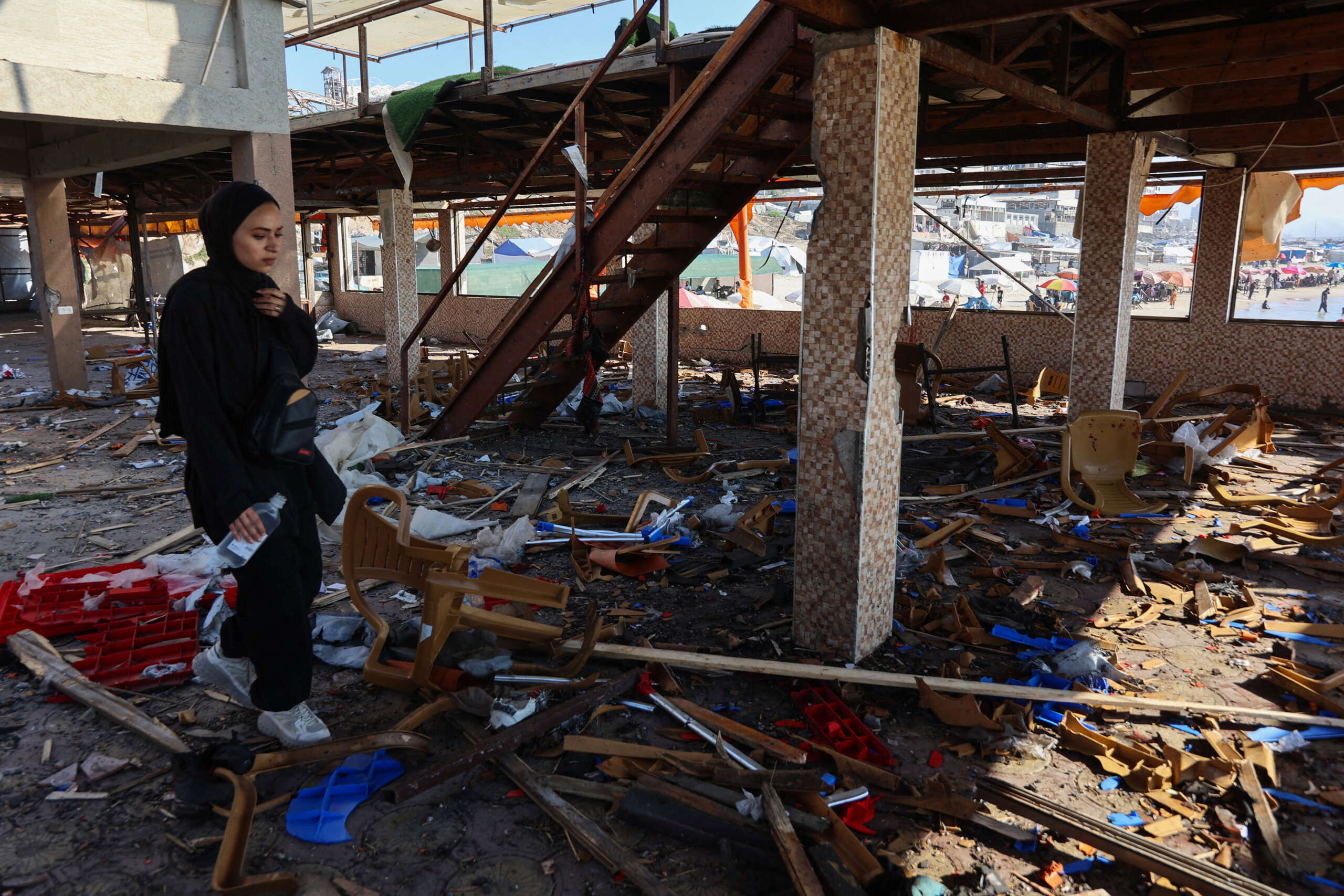
The bombing of a Gaza café is under scrutiny by international law experts as a potential war crime. The attack involved a 500-lb bomb supplied by the U.S. government. This incident has sparked widespread condemnation and renewed focus on civilian casualties in conflict zones.
Details of the Gaza Café Attack
reporters documented fragments of the bomb at the al-Baqa Café. Weapons experts identified the fragments as parts of an MK-82 general purpose bomb, a common U.S.-made weapon used in numerous bombing campaigns.The MK-82 bomb has a nominal weight of 500 pounds (227 kg) and is often used in air-dropped configurations. The attack resulted in the deaths of between 24 and 36 palestinians, with dozens more injured, including women, children, and the elderly.
Did You Know? The MK-82 bomb is part of the Mark 80 series of general-purpose bombs, which have been in service since the Vietnam War. These bombs can be fitted with various guidance systems to increase accuracy.
Legal and ethical Implications
The use of a powerful bomb in a civilian area raises serious questions about proportionality and adherence to international law. Gerry Simpson of Human Rights Watch criticized the justification provided by the Israel Defense Forces (IDF). Simpson noted that the IDF’s claim of using aerial surveillance to minimize civilian casualties suggests they were aware of the café’s crowded conditions. he argued that using such a large weapon in a crowded café risks an unlawful, disproportionate, or indiscriminate attack, warranting examination as a war crime.
Pro Tip: Under international humanitarian law, attacks must distinguish between military objectives and civilian objects.Attacks that cause disproportionate harm to civilians compared to the military advantage gained are prohibited.
Escalating Violence in Gaza
Attacks against civilians in Gaza have reportedly intensified. A recent report from the Gaza Government Media Office stated that more than 300 Palestinians have been killed in 26 massacres within a 48-hour period. These attacks have targeted shelters, displacement centers, homes, markets, and vital civilian facilities. According to the World Food Program, 1.1 million people in Gaza are facing catastrophic levels of food insecurity, the highest number ever recorded.
Reports also indicate attacks on aid distribution sites.At least 33 people were killed at a Gaza Humanitarian Fund (GHF) aid distribution site. A recent investigation described these sites as “killing fields,” where soldiers were allegedly ordered to fire on unarmed civilians.Two American contractors at a GHF site reported that their colleagues fired guns wildly, including in the direction of Palestinians seeking aid. A video shows aid-seekers crowded between metal gates, being assaulted with stun grenades and pepper spray, while gunshots echo in the background.
Calls for Intervention
Amnesty International and hundreds of other humanitarian NGOs have called for an end to the Israeli government’s blockade of food and other necessities entering the Gaza Strip. They also demanded an end to the “deadly Israeli distribution scheme” and a return of aid distribution to the United Nations and other international organizations. Agnès Callamard, the secretary general of Amnesty International, stated that the daily loss of life as Palestinians try to collect aid is a consequence of deliberate targeting by israeli forces and the foreseeable result of irresponsible and lethal distribution methods.
| metric | Value | Source |
|---|---|---|
| Palestinians Killed (48 hours) | Over 300 | Gaza Government Media Office |
| People Facing Catastrophic Food Insecurity | 1.1 million | World Food Programme |
| Deaths at Aid Distribution Site | At least 33 | Reports from Gaza |
Evergreen Insights: Background, Context, Historical Trends
The Israeli-Palestinian conflict is a long-standing dispute with roots in territorial claims and national aspirations. The Gaza Strip, a self-governing Palestinian territory, has been under blockade by Israel and Egypt since 2007, following hamas’s takeover of the region. This blockade has severely restricted the movement of people and goods, leading to a dire humanitarian situation. The use of force in densely populated areas, such as Gaza, frequently enough results in high civilian casualties, raising concerns about compliance with international humanitarian law. The ongoing violence and humanitarian crisis underscore the urgent need for a peaceful resolution to the conflict.
FAQ
- What are the obligations of parties in armed conflict under international humanitarian law?
- Parties in armed conflict must distinguish between military objectives and civilian objects, take precautions to minimize harm to civilians, and refrain from attacks that cause disproportionate harm to civilians compared to the military advantage gained.
- What is the role of the United Nations in addressing the humanitarian crisis in Gaza?
- The United Nations provides humanitarian assistance to the Palestinian population in Gaza through various agencies, including the United Nations Relief and Works Agency for Palestine Refugees in the near East (UNRWA) and the World Food Programme (WFP). The UN also advocates for the protection of civilians and a peaceful resolution to the conflict.
- What are the potential long-term consequences of the ongoing violence in Gaza?
- The ongoing violence in Gaza can lead to long-term physical and psychological trauma for the population, displacement, economic hardship, and further radicalization. It also undermines efforts to achieve a lasting peace between Israelis and Palestinians.
What steps should the international community take to address the crisis in Gaza? How can humanitarian aid be delivered safely and effectively to those in need?
Share your thoughts and help us foster a constructive dialogue.
