
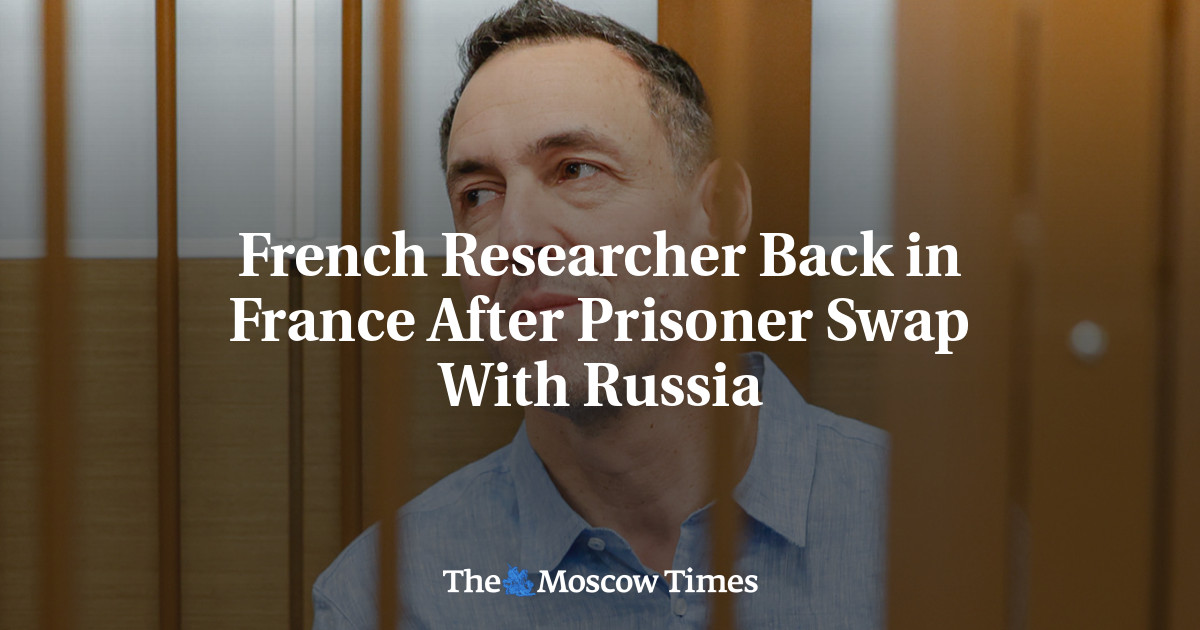
French Researcher Freed in Prisoner Swap with Russia Amidst Thawing Diplomatic Tensions
Paris,France – january 8,2026 – French researcher Laurent Vinatier has returned to France following a prisoner exchange with Russia,a move signaling a potential,albeit cautious,thaw in relations between Paris and Moscow. The exchange involved Daniil Kasatkin, a Russian basketball player sought by the United States on hacking charges. The event is unfolding against the backdrop of france’s call for dialog with Russia regarding the ongoing conflict in Ukraine, despite drastically deteriorated relations since the 2022 invasion.
The Exchange: A Diplomatic Maneuver
The release of Vinatier, secured after months of negotiations, was confirmed by French President Emmanuel Macron on X (formerly Twitter), expressing relief for the researcher’s family and loved ones. Vinatier was arrested in Russia in June 2024 while conducting research for the Centre for Humanitarian Dialogue, a Swiss-based NGO focused on conflict mediation, particularly concerning Ukraine. He was initially sentenced to three years in prison for failing to register as a “foreign agent,” a charge frequently leveled against individuals perceived as critical of the Russian government.The situation escalated with additional spying charges that threatened a potential 20-year sentence.
Kasatkin’s arrest occurred in Paris last year at the request of U.S. authorities, who accused him of involvement in a ransomware hacking ring – allegations he denied. The United States Department of Justice has been increasingly focused on disrupting ransomware operations originating from Russia and other nations, recognizing the significant economic and security threats they pose. [[1]]
The exchange demonstrates a willingness from both Moscow and Paris to engage, albeit carefully. The Kremlin had announced its offer regarding Vinatier last month, sparking hopes for his release. A video released by russian state television showed a smiling Vinatier departing from jail, carrying a duffel bag. Russia’s FSB security service confirmed that Vinatier was “pardoned” by presidential decree.
A Signal of Dialogue?
The prisoner swap comes as france, spearheaded by president Macron, has advocated for renewed dialogue with Russia to find a path towards ending the war in Ukraine. in December, vladimir Putin indicated a readiness to engage with Macron, a signal that moscow might potentially be open to, at least, discussing potential de-escalation strategies. However, French diplomats remained tight-lipped on Thursday when questioned about the prospect of formal bilateral talks.
This cautious approach is understandable given the deeply fractured state of Franco-Russian relations since the outbreak of the war.Moscow has consistently blamed Western nations, including France, for escalating the conflict, while France maintains that Russia bears sole responsibility. Despite this, the exchange highlights a potential channel for communication, even amidst ongoing disagreement.
The Broader Context of hostage Diplomacy
The case of Laurent Vinatier is not isolated.Western governments have repeatedly accused Russia of employing “hostage diplomacy” – the practice of detaining foreign nationals to secure the release of individuals held abroad. [[2]] This pattern has raised concerns about the vulnerability of citizens traveling or residing in countries with adversarial relationships.
Experts suggest that these detentions serve multiple purposes for the Kremlin: they can be used as leverage in negotiations, to deter criticism of Russia’s policies, and to signal resolve to the West. The release of Kasatkin likely serves Moscow’s interests in securing the release of its own citizens abroad.
Vinatier’s Background and Work
Laurent Vinatier is a seasoned researcher specializing in Russia and the former Soviet Union. Before his arrest, he had authored over a dozen academic papers and held positions at organizations such as NATO and the European Parliament. His work with the Centre for Humanitarian Dialogue focused on facilitating discreet negotiations and mediating conflicts outside conventional diplomatic channels.
The Centre for humanitarian Dialogue welcomed Vinatier’s release, stating that its colleagues and friends were “overjoyed” and expressed solidarity with him and his family.His lawyer, Frederic Belot, who also represented Kasatkin, described the release as a “huge relief,” particularly coinciding with the Orthodox Christmas celebrations on January 7th.
Looking Ahead
The prisoner exchange represents a small but potentially significant step towards re-establishing communication channels between France and Russia. However, significant obstacles remain in resolving the conflict in Ukraine and rebuilding trust between the two nations. whether this exchange will pave the way for more ample dialogue remains to be seen, but it offers a glimmer of hope amidst a complex and volatile geopolitical landscape.
the case also underscores the risks faced by researchers and humanitarian workers operating in challenging environments, and the importance of diplomatic efforts to secure the release of those unjustly detained.
