
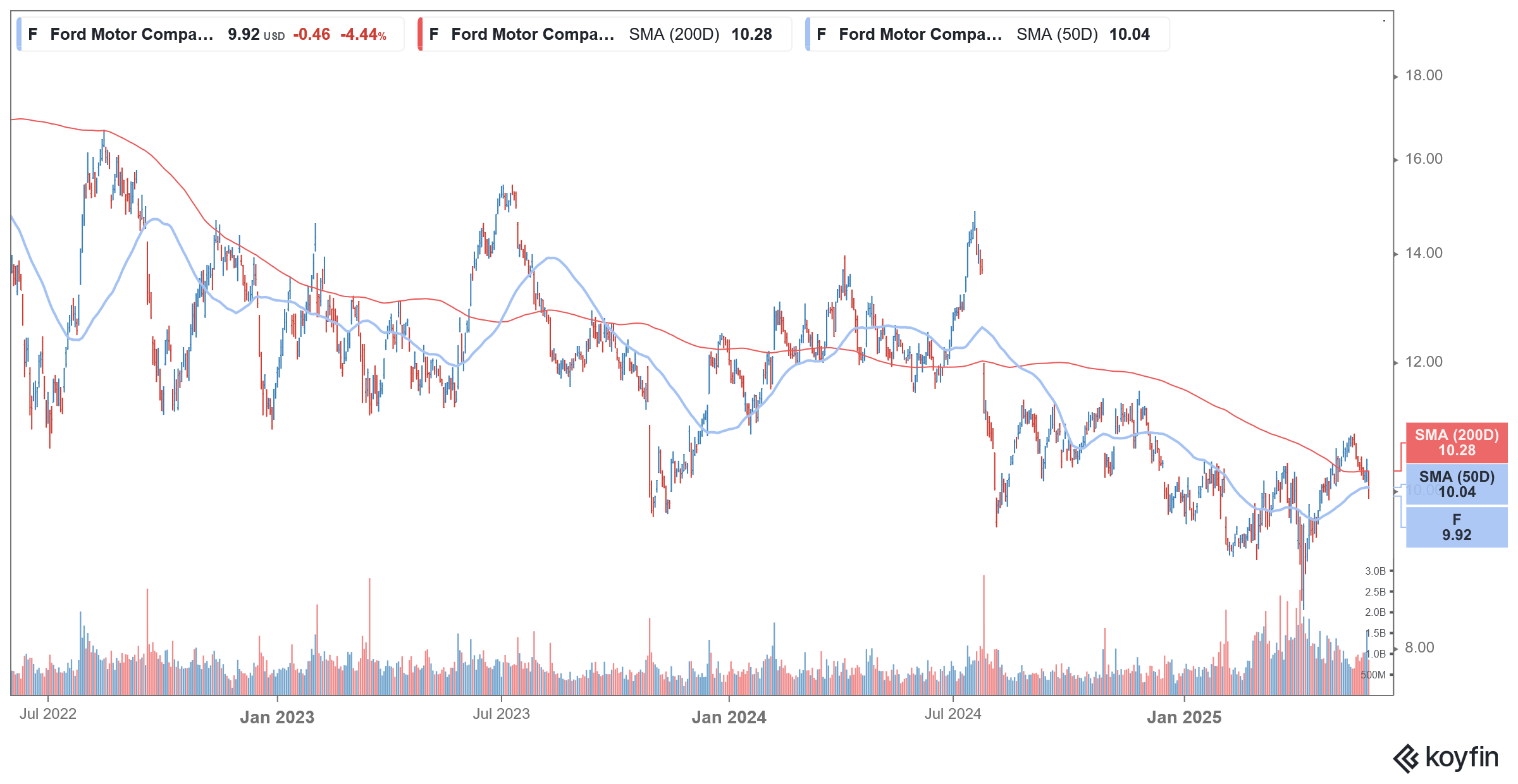
Trump’s Steel Tariff Hike Rattles Automakers; Ford & GM Stocks Dip
Table of Contents
Please note that we are not authorized to provide any investment advice. the content on this page is for details purposes only.
Shares of Ford (NYSE: F) and General Motors (NYSE: GM) experienced a sharp decline following President Donald Trump’s decision to double tariffs on steel and aluminum imports to 50%. The tariffs, slated to take effect tomorrow, are projected to elevate prices across the United States, consequently increasing input costs for domestic automakers. Meanwhile,steel stocks are surging as a result of the announcement.
The President unveiled the tariff increase at a U.S. Steel Corporation facility in Pennsylvania, subsequent to endorsing the company’s acquisition by Japan’s Nippon Steel, a move he had previously opposed. Beyond the immediate impact on steel and aluminum costs for American industries, these significant tariffs could potentially trigger an escalation in global trade tensions, especially with the European Union.
EU Vows Retaliation Against Steel Tariff Increase
The European Union has pledged to retaliate against the tariffs. According to a statement, “If a mutually agreeable resolution is not achieved, both existing and additional EU measures will automatically be implemented on July 14-or sooner, should circumstances necessitate,” according to Reuters reporting.
Since Donald Trump’s inauguration as the 47th U.S. President, tariff policies have been a source of considerable uncertainty. While it initially appeared that this uncertainty might diminish after a World Trade Institution ruling challenged the President’s authority to impose “reciprocal tariffs,” recent developments suggest a potential resurgence of trade conflicts.
In a setback for the Trump administration, a U.S. judge temporarily blocked the reciprocal tariffs late last month, a decision that the administration has appealed. The U.S. Court of Appeals for the Federal Circuit has granted a temporary pause to the lower-court ruling, pending further review.
Automakers Brace for Impact of Higher Steel Prices
The automotive industry is already navigating challenges stemming from existing tariffs on car imports and specific auto parts. The newly imposed increase in steel and aluminum tariffs presents an additional hurdle. steel prices in the U.S. are already among the highest worldwide, and these tariffs are expected to further incentivize domestic steel producers to raise prices, thereby increasing manufacturing costs for cars within the United States.
Did You Know? The United States is a net importer of steel, relying on foreign supplies to meet domestic demand.
According to a recent analysis by the Peterson Institute for International Economics, tariffs on steel imports ultimately harm U.S. consumers and businesses by raising costs and reducing competitiveness. The Peterson institute estimates that past steel tariffs have cost American jobs and reduced economic output.
While automakers have not yet issued formal profit warnings in response to these tariffs,Ford Motor Company previously estimated a $1 billion impact between 2018 and 2019 due to the steel and aluminum tariffs implemented during President Trump’s initial term. At that time, tariffs were set at 25% on steel imports and 10% on aluminum imports.This time around, the president is escalating the initial 25% tariff on both metals to 50%.
Automakers Reassess Financial Outlook Amid Tariff Uncertainty
Considering the prevailing tariff uncertainty, several automakers are revising or suspending their financial guidance.
General Motors (GM) withheld its 2025 guidance during its Q1 earnings release. Subsequently, the company projected a $4 billion to $5 billion impact from the tariffs, leading to a reduction in its adjusted pre-tax earnings guidance to a range of $10 billion to $12.5 billion, down from the previous range of $13.7 billion to $15.7 billion.
Similarly, GM adjusted its automotive free cash flow forecast to between $7.5 billion and $10 billion, compared to the earlier projection of $11 billion to $13 billion.
During the earnings call, CEO Mary Barra highlighted that GM has increased its direct purchases in the U.S. for North American production by 27% as 2019, with over 80% of the content in its U.S.-assembled vehicles being USMCA compliant.
Ford has also withdrawn its 2025 guidance due to the uncertainty surrounding tariffs. The company indicated that, absent the tariffs, it was on track to achieve its 2025 target of adjusted pre-tax earnings between $7 billion and $8.5 billion.
Stellantis has also suspended its guidance, citing tariff uncertainty compounded by company-specific challenges, including the departure of its CEO, Carlos Tavares, in December 2024. The company recently appointed Antonio Filosa, a company veteran who previously led its Americas business, as its next CEO.
Potential for further Escalation of Trade War
While the steel tariffs introduce additional uncertainty for the U.S. manufacturing sector,there are indications that the U.S.-China trade relationship remains strained. Treasury secretary Scott Bessent, in an interview with Fox News, stated that U.S.-China trade talks “are a bit stalled” and may require intervention from the top leaders of both countries.
“I think that given the magnitude of the talks, given the complexity, that this is going to require both leaders to weigh in with each other,” said Bessent. He added, “They have a very good relationship and I am confident that the Chinese will come to the table when President Trump makes his [preferences] known.”
In a post on Truth Social, President Trump asserted that his tariffs have significantly impacted the Chinese economy. Simultaneously occurring, JPMorgan Chase CEO jamie Dimon has expressed skepticism about the notion that China will succumb to President Trump’s tariffs.
Pro Tip: Monitor official statements from automakers and industry associations for the most up-to-date information on the impact of tariffs.
| Company | Previous Guidance | Revised/Suspended Guidance | reason |
|---|---|---|---|
| General Motors | $13.7B – $15.7B (Adjusted Pre-Tax Earnings) | $10B – $12.5B (Adjusted Pre-Tax Earnings) | Tariff Impact |
| Ford | $7B – $8.5B (Adjusted Pre-Tax Earnings) | Withdrawn | Tariff uncertainty |
| Stellantis | Not Specified | Suspended | Tariff Uncertainty & CEO Change |
How do you think these tariffs will affect the price of new cars? Will this lead to more manufacturing jobs in the US?
The history of US Steel Tariffs
The United States has a long history of using tariffs to protect its domestic steel industry. These tariffs have varied in scope and intensity over time,often implemented in response to economic downturns or perceived unfair trade practices by other countries. the rationale behind these measures is typically to safeguard American jobs, bolster domestic production, and ensure national security.
However,the effectiveness of steel tariffs has been a subject of ongoing debate. Proponents argue that they provide a crucial lifeline to struggling domestic industries, allowing them to compete against cheaper imports. Opponents, on the other hand, contend that tariffs ultimately harm consumers and downstream industries by raising prices and distorting market dynamics. They also raise the specter of retaliatory measures from other countries, potentially leading to broader trade wars.
According to data from the Congressional Budget Office, tariffs tend to increase domestic production in the short term but can lead to higher prices and reduced overall economic activity in the long run. The CBO regularly analyzes the economic effects of trade policies.
Frequently Asked Questions About Steel Tariffs
- What are steel tariffs and why are they imposed?
- Steel tariffs are taxes imposed on imported steel. They are typically implemented to protect domestic steel industries from foreign competition, boost domestic production, and safeguard jobs.
- How do steel tariffs affect the price of cars?
- Steel tariffs can increase the cost of manufacturing cars in the U.S. as steel is a major component. This can lead to higher prices for consumers.
- Which countries are most affected by U.S. steel tariffs?
- Countries that export important amounts of steel to the U.S., such as Canada, Mexico, and countries in the European Union, are most affected by U.S. steel tariffs.
- What is the EU’s response to the increased steel tariffs?
- The EU has vowed to retaliate against the increased steel tariffs, potentially leading to a trade war between the U.S. and the EU.
- How do steel tariffs impact the overall U.S.economy?
- While steel tariffs may benefit domestic steel producers,they can also harm consumers and downstream industries by raising prices and reducing competitiveness. They can also lead to retaliatory measures from other countries.
- What alternatives are there to steel tariffs for supporting the domestic steel industry?
- Alternatives to steel tariffs include government subsidies, investments in research and progress, and negotiations with other countries to address unfair trade practices.
Disclaimer: This article provides general information and should not be considered financial advice. Consult with a qualified financial advisor before making any investment decisions.
Stay informed about the latest developments in the auto industry and global trade. Share this article and join the discussion in the comments below!
