Financing Manchester United’s New Stadium: A Model for Elite Sports Infrastructure
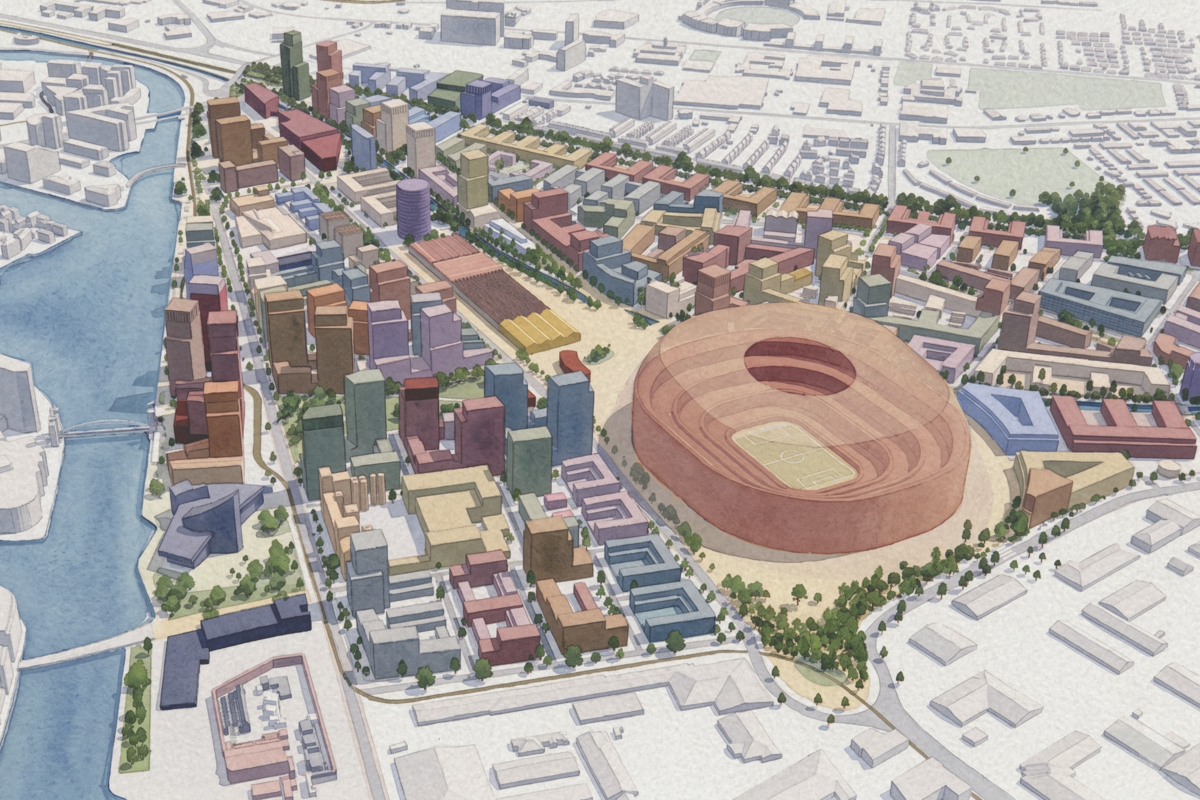
Manchester United’s proposal for a 100,000-seat stadium at Old Trafford marks one of the most ambitious sports infrastructure undertakings in Europe, serving as the anchor for a broader regional regeneration plan. According to project outlines, the development blends a state-of-the-art sporting venue with commercial, residential, and entertainment zones. For financial markets, the core test lies not in the architectural scale, but in how an asset requiring multi-decade capital deployment is financed, structured, and commercialized over time.
Capital Structure Complexity and Existing Debt Obligations
A project of this magnitude demands a sophisticated capital package capable of balancing substantial upfront expenditures against a multi-decade operating horizon. The financial blueprint must harmonize the competing interests of the club, current creditors, construction syndicates, institutional backers, municipal authorities, and future commercial tenants.
Manchester United’s existing balance sheet adds a layer of structural complexity. Like many legacy football institutions, the club has historically utilized debt instruments secured directly against core club assets and incoming cash flows. Any incoming stadium financing mechanism must establish clear legal priorities between legacy lenders and fresh capital providers. This requires airtight security arrangements and robust governance protections to manage cash flow waterfalls.
To navigate these intricate capital allocations, corporate finance teams frequently rely on specialized advisory services. Organizations executing multi-billion-dollar infrastructure plays often retain corporate finance advisory firms to model debt-to-equity ratios and ring-fence liabilities.
Institutional investors typically demand strict transparency, predictable yields, and enforceable governance rights regarding major strategic decisions.
The Evolution of Stadiums into Year-Round Commercial Assets
Modern sports economics have fundamentally shifted how venues generate revenue. Contemporary stadiums operate far beyond traditional fortnightly matchday fixtures, functioning instead as diversified, year-round commercial hubs.
Revenue streams now span broadcasting contracts, premium hospitality suites, tiered seating models, large-scale concerts, global corporate conferences, and lucrative naming rights partnerships. For Manchester United, the global reach of the club’s brand provides an initial springboard. However, brand equity alone does not satisfy institutional credit committees.
Investors require demonstrable predictability in cash flows, clear risk allocations, and rigorous legal protections. As stadiums increasingly resemble complex infrastructure assets rather than simple sports arenas, the investor demographic has expanded rapidly. Traditional bank lending and owner equity are now frequently supplemented by private credit funds, specialized infrastructure investors, and long-term pension capital.
Integrating the Wider Old Trafford Ecosystem
The financial viability of the Old Trafford overhaul is deeply intertwined with its surrounding real estate. Incorporating residential units, retail spaces, and entertainment venues into the master plan creates multiple value drivers.
At the same time, mixed-use developments introduce severe execution risks, including planning hurdles, construction supply chain friction, and complex revenue-sharing agreements.
The final financial package for the Old Trafford redevelopment will likely demand a hybrid mix of construction debt, long-term institutional bonds, and private equity injection. The exact proportions will hinge on broader macroeconomic conditions, interest rate trajectories, and the club’s willingness to absorb leverage.
Ultimately, the Old Trafford project tests whether elite sporting brands can successfully bridge the gap into institutional-grade infrastructure assets. If properly structured, the development could establish a new benchmark for how major sports organizations access long-term capital without compromising operational flexibility.