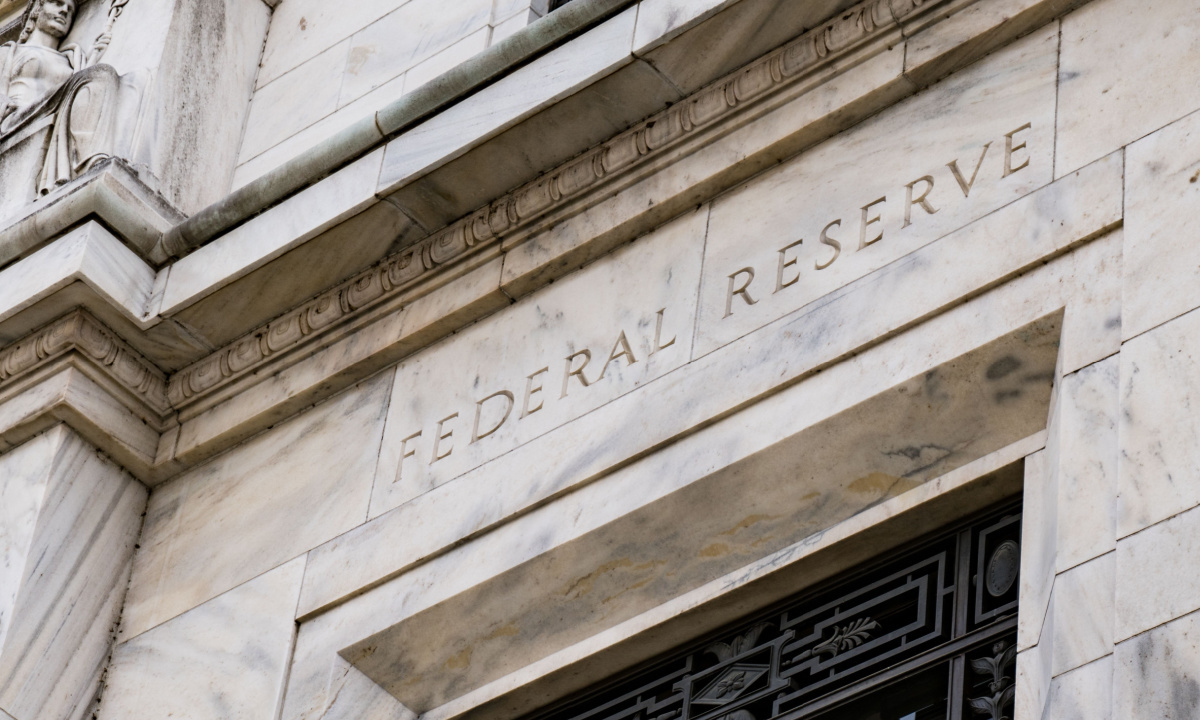
Federal Reserve’s New Payment Accounts: What FinTechs Must Prove Before Access
The White House’s May 2024 executive order forcing the Federal Reserve to evaluate FinTech access to payment infrastructure has triggered a policy reckoning: if granted, direct settlement rights could slash transaction costs by 30-40% for payments-focused FinTechs—but only if they can meet the Fed’s new AML, liquidity, and operational resiliency benchmarks. The Fed’s May 2026 proposal for “special-purpose payment accounts” offers a compromise: real-time clearing without full banking privileges, but with $1B balance caps and mandatory compliance frameworks. The catch? Firms like Stripe and Square—already processing $1.2T+ annually through correspondent networks—must now prove they can handle direct FedNow® settlement without relying on sponsor banks. For enterprise treasury and risk management, this isn’t just a regulatory shift; it’s a liquidity and governance overhaul.
The Fed’s Payment Account Proposal: A Lower-Risk Path with Higher Compliance Costs
The Federal Reserve’s May 2026 proposal for “special-purpose payment accounts” isn’t just a technical adjustment—it’s a strategic pivot that redefines the cost structure of real-time payments. By excluding interest earnings, discount window access, and intraday credit, the Fed has effectively created a two-tiered settlement system: one for traditional banks with full liquidity backstops, another for FinTechs and digital asset firms operating under stricter governance. The move reflects a broader trend in central banking: de-risking innovation by funneling it into controlled payment rails rather than extending full banking privileges.
For payments processors, the math is clear. A 2025 analysis by McKinsey projected that direct Fed access could reduce per-transaction costs by 30-40% for firms currently routing payments through correspondent banks. The catch? Those savings hinge on meeting the Fed’s new Bank Secrecy Act/AML compliance thresholds, which now require real-time transaction monitoring for all payment activity—regardless of volume. “This isn’t just about cutting fees,” says Sarah Chen, Head of Treasury at Ant Group. “It’s about proving you can operate like a bank without being a bank.”
The $1.2T Question: Can FinTechs Handle Direct Settlement?
The Fed’s proposal targets a critical pain point for payments-focused FinTechs: correspondent bank dependency. Firms like Stripe, Square, and PayPal currently process over $1.2 trillion annually through sponsor banks, incurring fees that eat into EBITDA margins. Direct Fed access would eliminate those intermediaries—but only if applicants can demonstrate operational resiliency under the Fed’s new Payment System Risk Policy. The proposal explicitly ties account access to:
- Automated overdraft prevention for Fedwire Funds and FedNow® services.
- $1B balance caps per Reserve Bank, with intraday credit prohibited.
- Real-time AML screening for all transactions, including cross-border flows.
- Liquidity stress testing aligned with the Fed’s discount window standards.
The stakes are highest for digital asset firms, which the White House order explicitly included in the scope of eligible participants. A 2025 report by the Bank for International Settlements noted that 42% of crypto payment processors currently rely on traditional banks for settlement, creating concentration risk. Direct Fed access could diversify that risk—but only if firms can navigate the Fed’s sanctions compliance frameworks, which now require blockchain-level transaction tracing for all account holders.
The Compliance Crunch: Where FinTechs Need B2B Partners
Here’s the rub: most FinTechs aren’t built for direct Fed infrastructure participation. Their existing risk and compliance stacks are optimized for correspondent banking relationships, not the Fed’s real-time settlement and liquidity controls. The proposal forces them to address three critical gaps:
- Liquidity management: Without intraday credit, firms must pre-fund settlement balances, requiring dynamic liquidity pools tied to transaction volumes. [Relevant B2B Firm/Service: J.P. Morgan Treasury Services offers real-time liquidity optimization for FinTech clients transitioning to direct settlement.]
- AML and sanctions screening: The Fed’s proposal mandates transaction-level monitoring, not just batch processing. [Relevant B2B Firm/Service: FIS Global specializes in real-time AML solutions for payments processors, with clients seeing a 25% reduction in false positives after implementation.]
- Operational resiliency: The Fed’s Payment System Risk Policy now requires 24/7 failure-mode testing for all settlement participants. [Relevant B2B Firm/Service: Accenture’s Financial Services practice helps firms audit their infrastructure against Fed resilience benchmarks, with a focus on cross-border payment continuity.]
The timeline for adoption is equally tight. The Fed’s request for comment closes in Q3 2026, with pilot programs expected by Q1 2027. For FinTechs, So 12-18 months to overhaul compliance and liquidity infrastructure—or risk being locked out of the fastest-growing segment of the payments economy.
“The Fed’s proposal isn’t about opening the doors—it’s about setting the rules for who gets to play in the big leagues. Firms that can’t demonstrate they can handle the liquidity and compliance demands won’t just lose access; they’ll lose relevance in real-time payments.” — Mark Weber, Managing Director, PwC Financial Services Regulatory Group
The Macro Shift: From Correspondent Banking to Direct Settlement
The Fed’s move accelerates a decades-long trend: the unbundling of banking. Traditional banks have long acted as gatekeepers for payment infrastructure, charging fees that FinTechs now see as unnecessary overhead. Direct Fed access flips that model by:
- Reducing intermediation costs by cutting out correspondent banks.
- Increasing settlement speed via FedNow®’s real-time rails.
- Shifting liquidity risk from banks to FinTechs—if they can manage it.
The winners will be firms that can combine direct settlement with embedded treasury services. Imagine a payments processor offering always-on liquidity pools tied to transaction flows, or a digital asset platform settling trades in sub-second intervals without bank intermediaries. The losers? Firms that treat compliance as an afterthought or fail to future-proof their liquidity models.
The Road Ahead: Who Will Lead the Charge?
The next 12 months will separate the FinTechs that embrace direct settlement from those that cling to correspondent banking. Early movers like Stripe and Square are already testing FedNow® integrations, but the real inflection point will be Q3 2026, when the Fed finalizes its account access guidelines. For firms still evaluating their options, the question isn’t if they’ll need direct settlement—it’s when.
The World Today News Directory’s Financial Services Compliance Solutions and Treasury Optimization Providers sections are tracking the top firms helping FinTechs navigate this transition. Whether you’re a payments processor, digital asset platform, or traditional bank eyeing FinTech partnerships, the time to prepare is now.
The Fed’s payment account proposal isn’t just a regulatory tweak—it’s a liquidity and governance reset for the payments industry. Firms that master the new rules will rewrite the cost structure of global transactions; those that don’t will find themselves dependent on the very intermediaries they sought to bypass. The clock is ticking.