
Moon Faces Slim Chance of Asteroid Impact in 2032
Newly Refined Calculations Show 4.3% Probability of Collision with Earth’s Satellite
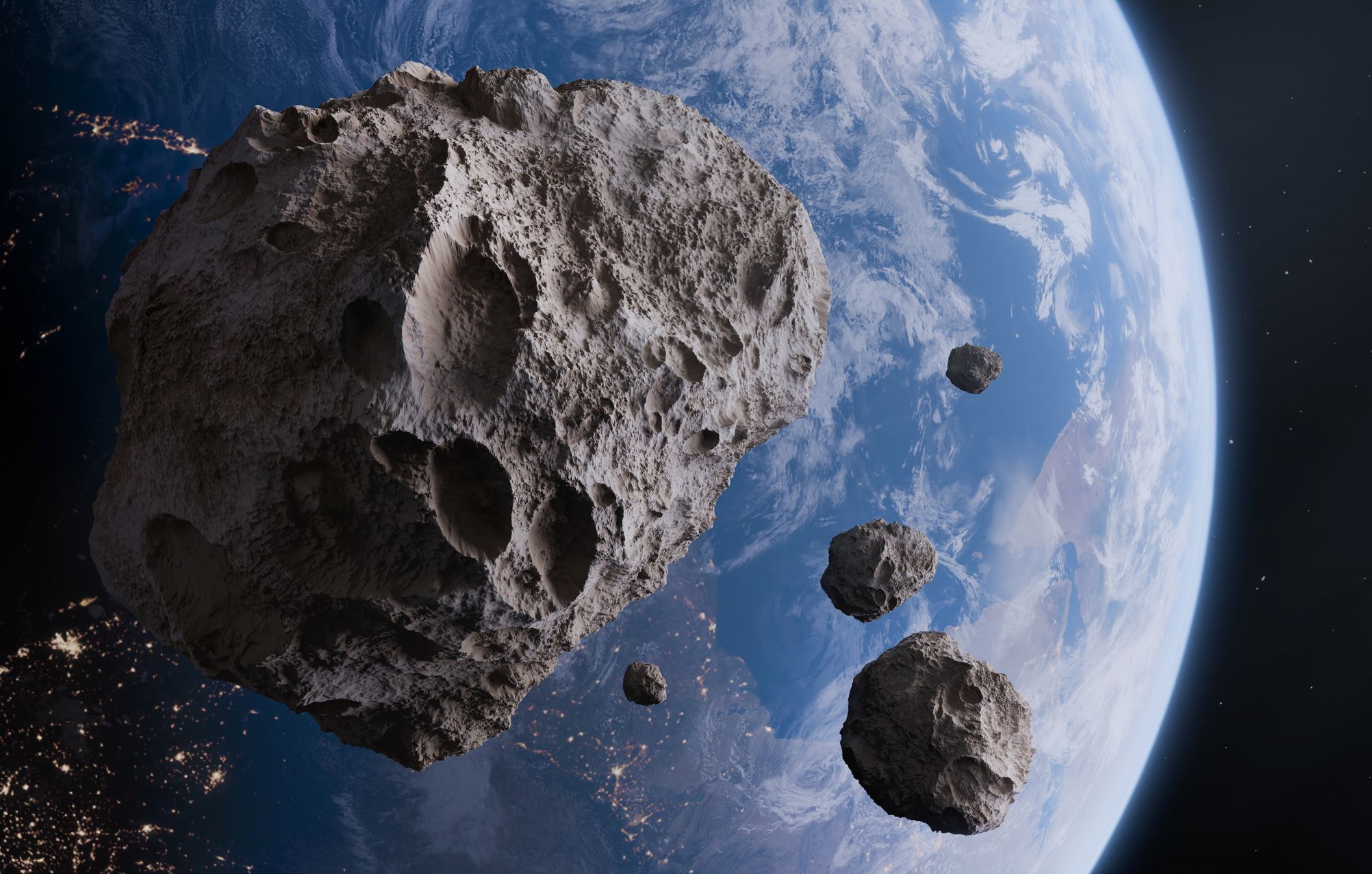
A celestial body once flagged as a potential threat to Earth is now more likely to collide with the Moon, according to updated assessments. Asteroid 2024 YR4, nicknamed the “city killer,” presents a 4.3 percent chance of impacting our lunar companion in December 2032.
Refined Trajectory Thanks to Webb Telescope
The asteroid, currently obscured from view by the sun, was briefly observed by the James Webb Space Telescope. This fleeting glimpse allowed a team led by Andy Rivkin of the Johns Hopkins Applied Physics Laboratory to refine predictions of its path by nearly 20 percent. The revised calculations increased the probability of a lunar impact.
“As the data comes in, it is normal that the probability of impact evolves,” NASA stated on their website.
Should 2024 YR4 strike the Moon, the impact would create a crater ranging from 500 to 2000 meters in diameter. Without an atmosphere to slow it down, the asteroid would collide at approximately 50,000 kilometers per hour. The resulting explosion would be roughly 343 times more powerful than the atomic bomb dropped on Hiroshima, according to Live Science.
From High Risk to Lunar Threat
Discovered on December 27th of last year by the Atlas telescope, the sixty-meter asteroid initially raised significant concerns about a potential Earth impact. At one point, the risk of collision with our planet reached 3.1 percent, making it the highest-risk asteroid ever recorded. Subsequent calculations reduced that probability to a negligible 0.28 percent.
Despite the diminished threat to Earth, astronomers remain keenly interested in 2024 YR4. Classified as an Apollo asteroid, its orbit regularly intersects Earth’s, with a close approach occurring roughly every four years. This makes it a valuable target for future asteroid research missions. However, further observations will be needed, expected around 2028, when the asteroid returns to a favorable position in its orbit.
According to NASA, over 1,500 near-Earth asteroids are currently known, and new ones are discovered frequently. NASA’s Planetary Defense Coordination Office actively tracks these objects to assess and mitigate any potential impact hazards.
While a lunar impact wouldn’t alter the Moon’s orbit, it would add another dramatic feature to its heavily cratered surface. Scientists will continue to monitor 2024 YR4 as it journeys through space, refining our understanding of its trajectory and potential future interactions with Earth and its celestial neighbor.
