Factor Sarana tests heavy build limits in gravel cycling report
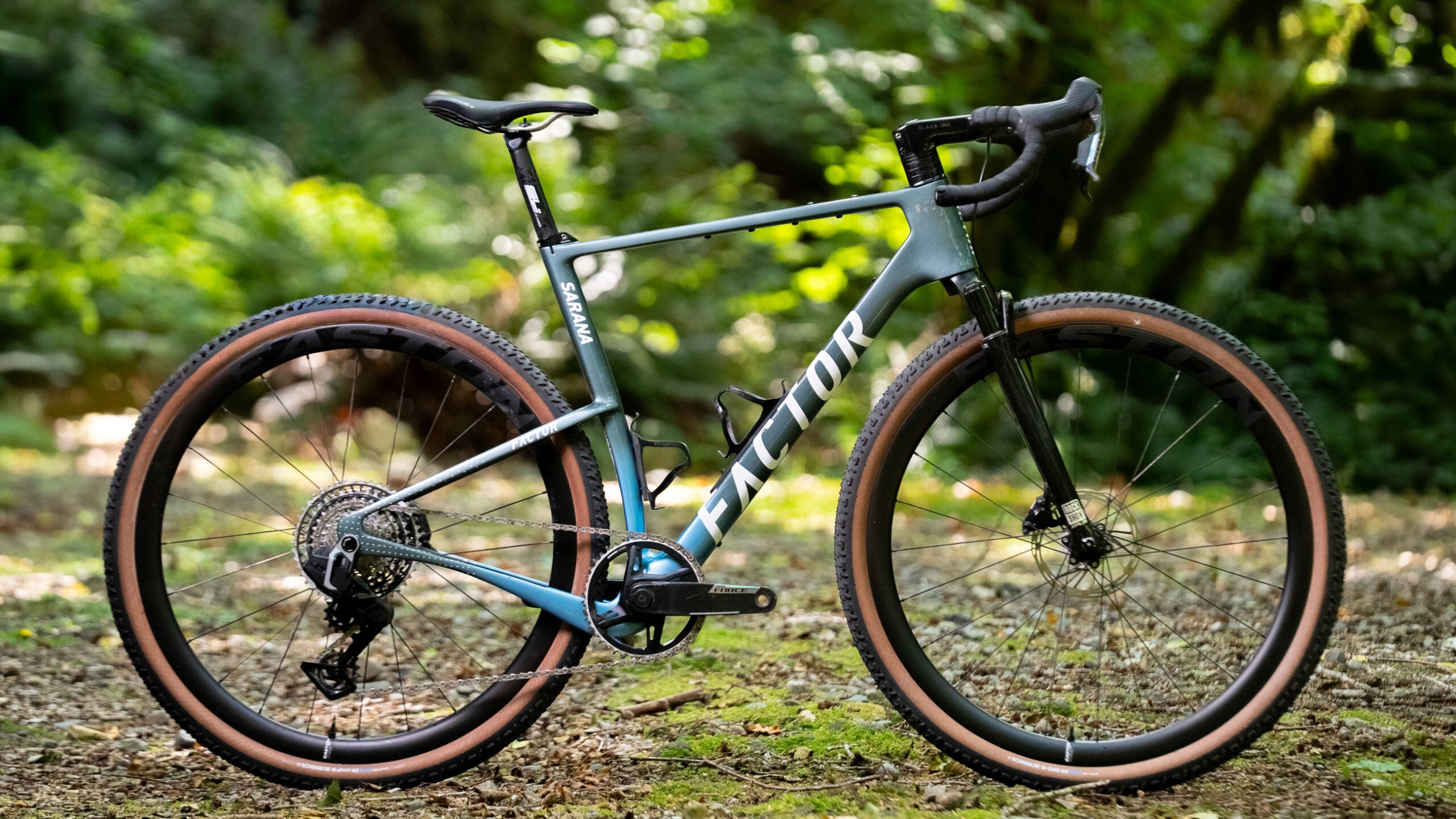
Weighing in at 9.58 kilograms ready to ride without pedals, the Factor Sarana carbon chassis tests the limits of heavy builds in modern gravel cycling, according to a Velo Future of Gravel Field Test report published on October 28, 2026. Designed for ultra-endurance racing, the bike pairs optional front suspension and 57mm tire clearance with a specialized leaf-spring rear triangle intended to absorb vibrations without relying on heavy mechanical shock systems.
Sarana Build Weighs 9.58 Kilograms with RockShox Fork
The tested model features a SRAM Force XPLR drivetrain with a 44-tooth chainring paired to a 10-46 cassette, a Black Inc integrated barstem, and Black Inc 46 wheels. When tested with Easton control wheels in Squamish, the complete build hit 9.58 kilograms, or roughly 21.1 pounds. Swapping the heavier RockShox suspension fork for a rigid 550-gram alternative drops the frame build down toward 8.87 kilograms, though the bare frame itself still accounts for approximately 1,200 grams.
This places the Sarana heavier than a 32-inch metal-framed Salsa Fargo and comparable to the Pivot Les SL drop-bar mountain bike. Against the Cannondale Topstone Carbon 1 AXS Lefty, the Factor option is slightly lighter at 9.58 kilograms compared to 9.8 kilograms, but costs $2,000 more while running SRAM Force instead of Rival.
Flattened Rear Triangle Reduces Vibration and Adds Travel
To deliver vertical compliance without a rear shock, Factor engineers dropped the chainstays near the bottom bracket to allow space for 57mm tires within a 425mm chainstay length. The stays curve upward before dropping toward the rear axle, featuring an intentionally flattened and thinned apex that maximizes mechanical advantage and flex. Combined with a curved seat tube and deeply dropped seatstays, the system yields a reported 18 percent reduction in vibration amplitude and roughly 10 millimetres of travel.
The layout keeps the chassis laterally stiff for power transfer while absorbing vertical impacts passively. This design choice targets the ultra-endurance racing sector, aligning with events like the Tour Divide. Riders seeking lightweight climbing responses find themselves trading off snappiness for stability and vibration dampening across rough terrain.
Internal Routing and Storage Mounts Suit Endurance Riding
The chassis incorporates fully internal cable routing through a one-piece aero-ish handlebar and stem combination. Additional frame provisions include a threaded T47 bottom bracket, downtube storage, an out-front computer mount with light integration, and a round dropper-compatible seatpost. Mounts located above and below the top tube accept custom storage bags, while a third bottle mount sits on the downtube.
Intended primarily for riders logging 50 to 100 miles on rough roads, the Sarana prioritizes predictability over short-duration weeknight criteriums. The build suits endurance participants willing to accept a heavier platform in exchange for high-volume tire clearance and active frame compliance.
Disclaimer: The insights provided in this article are for informational and entertainment purposes only and do not constitute medical advice or sports betting recommendations.