Evaluating the Necessity of Follow-Up Colonoscopy After Acute Diverticulitis: A Retrospective Cohort Study
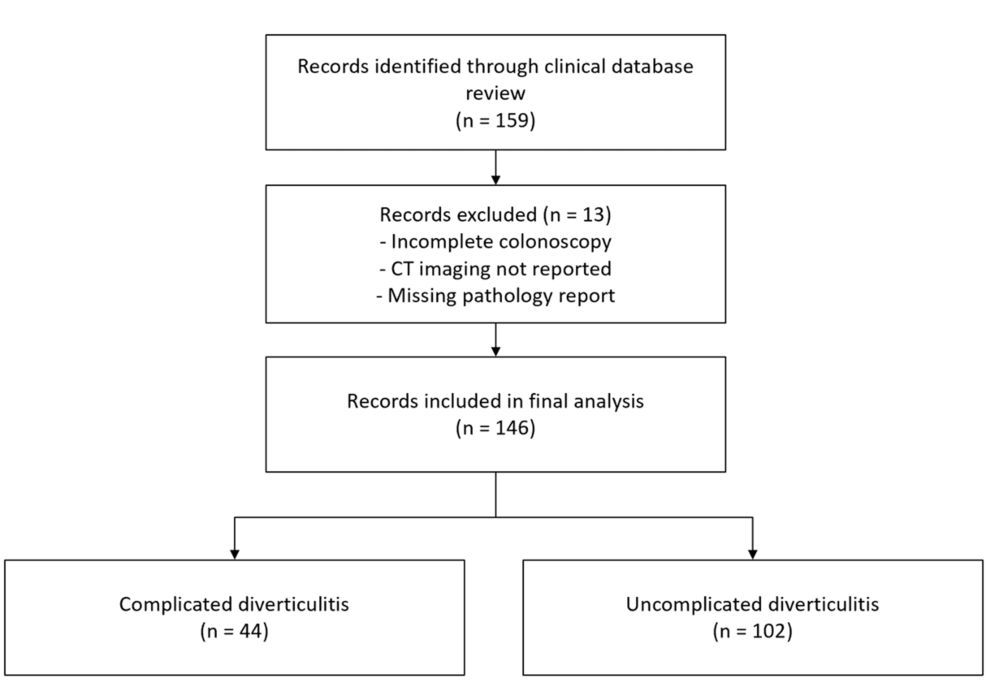
Routine follow-up colonoscopies after uncomplicated acute diverticulitis uncovered zero instances of colorectal cancer across a cohort of 146 patients diagnosed at the Hôpital Montfort emergency department between January 1, 2016, and December 31, 2022.
Key Clinical Takeaways:
- A retrospective study of 146 patients at Hôpital Montfort found no colorectal cancer in patients who underwent follow-up colonoscopy after acute diverticulitis.
- Complicated diverticulitis cases accounted for 30.1% of the cohort, while uncomplicated cases made up 69.9%.
- Study authors suggest healthcare professionals weigh individual risk assessments rather than enforcing a universal post-diverticulitis endoscopic examination policy.
Contrasting Rates in Uncomplicated Versus Complicated Diverticulitis Cohorts
The retrospective study analyzed 146 patients divided into two distinct clinical groups. Out of the total cohort, 102 patients representing 69.9% of the study population were classified as having uncomplicated diverticulitis. Meanwhile, 44 patients accounting for 30.1% presented with complicated diverticulitis defined by abscess, fistula, perforation, obstruction, or bleeding.
Demographic breakdowns within the study showed notable differences between the two groups. In the uncomplicated diverticulitis category, 68 patients were female and 34 were male. The complicated diverticulitis group included 20 female patients and 24 male patients. Fisher’s exact test calculations demonstrated a statistically significant difference in gender distribution (p=0.026).
| Demographic Characteristic | Uncomplicated Diverticulitis (n=102) | Complicated Diverticulitis (n=44) | Statistical Significance |
|---|---|---|---|
| Age (years, Mean ± SD) | 59.37 ± 13.02 | 55.66 ± 12.49 | Welch’s t(84.83)=1.626; p=0.108 |
| Female Patients | 68 (66.7%) | 20 (45.5%) | Fisher’s exact test p=0.026 |
| Male Patients | 34 (33.3%) | 24 (54.5%) | Fisher’s exact test p=0.026 |
| Family History of Digestive Malignancy | 13 (12.7%) | 5 (11.4%) | Fisher’s exact test p>0.999 |
| Personal History of Benign Neoplasms | 15 (12.4%) | 0 (0%) | Fisher’s exact test p=0.006 |
Diverging Guidelines and the Debate Over Routine Endoscopy
Historical clinical guidelines recommended universal follow-up colonoscopies following an acute diverticulitis episode to rule out malignancies that mimic diverticular disease. High-resolution computed tomography, boasting a specificity exceeding 98%, has largely replaced older imaging modalities and changed diagnostic confidence. International professional societies now issue divergent recommendations regarding post-diverticulitis endoscopies.
The European Society of Coloproctology states that colonoscopies may be unnecessary for symptom-free patients who recover from a single episode of CT-verified uncomplicated diverticulitis. The European Association for Endoscopic Surgery and the Society of American Gastrointestinal and Endoscopic Surgeons published a 2018 consensus conference statement recommending against routine colonoscopy after treating uncomplicated acute diverticulitis in the absence of high risk factors for colon cancer.
Abdominal Pain Is the Most Common Symptom
Abdominal pain served as the most common presenting complaint across the Hôpital Montfort cohort, occurring in 91.2% of uncomplicated patients and 79.5% of complicated patients. Other documented symptoms included hematochezia or melena, which appeared in two patients with uncomplicated diverticulitis and one patient in the complicated group.
Because the study found no instances of colorectal cancer among the evaluated patients, investigators point to the lower yield of routine screening in uncomplicated cases. Performing follow-up colonoscopies on every patient introduces unnecessary healthcare expenditures and exposes individuals to procedural risks such as bowel perforation. The researchers emphasize that clinicians should prioritize individual risk assessments and patient-specific histories over universal post-diverticulitis endoscopic examination policies.
Disclaimer: The information provided in this article is for educational and scientific communication purposes only and does not constitute medical advice. Always consult with a qualified healthcare provider regarding any medical condition, diagnosis, or treatment plan.