
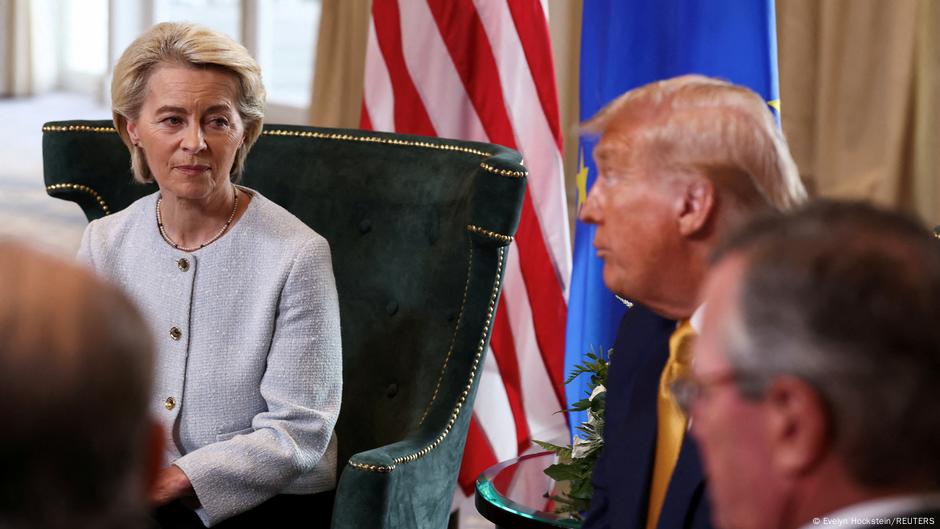
European Leaders Seek Dialog with Trump Ahead of Putin Meeting
Table of Contents
Leaders from European nations are actively seeking discussions with United States President donald Trump prior too his scheduled meeting with Russian Federation President Vladimir Putin on August 15 in Alaska. This effort comes after a period of intense diplomatic activity involving officials from the United States, Ukraine, and Europe, according to reports from Bloomberg on Sunday, August 10.
The flurry of diplomatic engagement included meetings between Ukrainian and European ministers with U.S. Vice President James David Vance in the United Kingdom. While the specifics of these meetings remain undisclosed, Bloomberg reports they likely centered on persuading Moscow to relinquish control of portions of the Lugansk and Donetsk regions that Russian forces have been unable to fully capture during the ongoing conflict.
territorial Concessions as a Potential Negotiation Point
NATO Secretary General Mark Rutte, speaking on ABC’s “This week,” suggested that Kyiv should consider the possibility of territorial concessions to Russia as part of potential peace negotiations. Rutte stated that the upcoming Trump-Putin meeting in Alaska will serve as a test of Putin’s commitment to ending the war in Ukraine.
According to Rutte, security guarantees will be a key topic of discussion at the summit. He believes that if negotiations progress, Ukrainian territory “should be on the negotiating table.” Rutte acknowledged that Russia already controls a portion of Ukrainian territory, and Kyiv may need to acknowledge this reality. However, he emphasized that formal recognition of Russia’s annexation of these territories is not currently under consideration.
The situation remains fluid as international actors attempt to navigate a path toward a resolution of the conflict in Ukraine. The outcome of the Trump-Putin meeting and the willingness of all parties to engage in meaningful negotiations will be crucial in determining the future of the region.
Historical Context: The ongoing conflict in Ukraine has roots in the complex geopolitical relationship between Russia and the West, dating back to the collapse of the Soviet Union. Russia’s annexation of Crimea in 2014 and its support for separatists in eastern Ukraine marked a important escalation of tensions. The current full-scale invasion, launched in Febuary 2022, represents a dramatic intensification of this conflict.
Geopolitical Trends: The war in Ukraine has reshaped the European security landscape, leading to increased military spending and a renewed focus on collective defence within NATO. It has also highlighted the vulnerabilities of European energy supplies and the importance of diversifying energy sources. The involvement of the United States and other international actors underscores the global implications of the conflict.
Diplomatic Efforts: Numerous diplomatic initiatives have been undertaken to mediate a ceasefire and find a peaceful resolution to the conflict. these efforts have included direct talks between Russia and Ukraine, and also mediation attempts by international organizations and individual countries. However, progress has been limited due to deep-seated disagreements and a lack of trust between the parties.
Frequently Asked Questions
- What is the purpose of the Trump-Putin meeting?
- The meeting is intended to assess Putin’s sincerity in seeking an end to the war in Ukraine and to discuss potential security guarantees.
- What are the potential territorial concessions being discussed?
- Discussions may involve Russia relinquishing control of parts of the Lugansk and Donetsk regions that it has not fully captured.
- What is NATO’s position on territorial concessions?
- NATO Secretary General Mark Rutte has suggested that Kyiv should consider the possibility of territorial concessions as part of peace negotiations, while stopping short of formal recognition of Russian annexation.
