
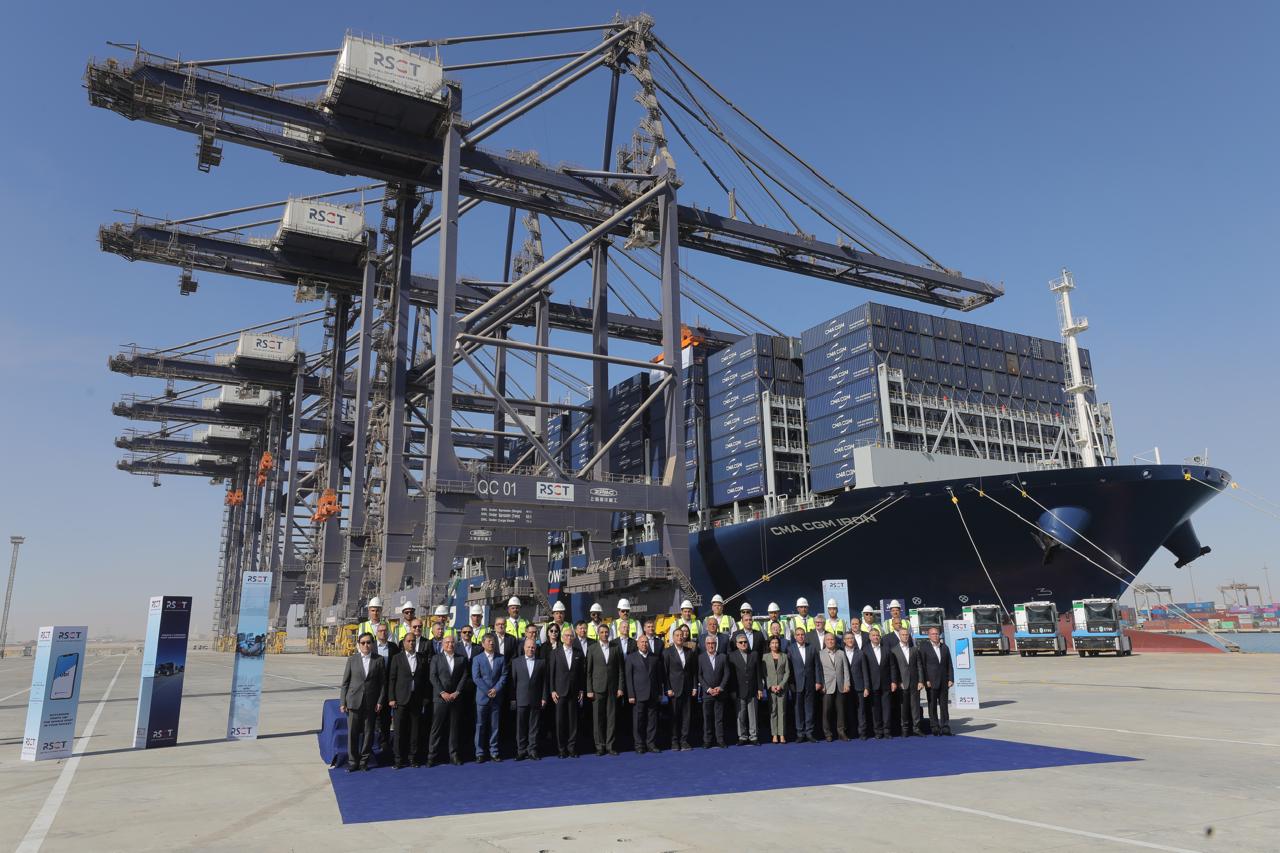
Sokhna Port, Egypt – In a landmark achievement for Egypt’s maritime infrastructure and its ambitions as a global logistics hub, Red Sea Container Terminals (RSCT) officially opened its doors on January 19, 2026. This newly inaugurated facility represents the nation’s first semi-automated container terminal, strategically positioned at Sokhna Port on the Gulf of Suez. backed by a substantial 30-year concession agreement with the Egyptian government,RSCT is poised to substantially enhance Egypt’s role in international trade and attract further foreign investment.
A Strategic Gateway for Global Commerce
Developed through a powerful consortium of industry leaders – Hutchison Ports, CMA Terminals (a subsidiary of CMA CGM Group), and COSCO SHIPPING Ports – RSCT serves as a critical link connecting Asia, Africa, and Europe. Its prime location within the Suez Canal Economic Zone (SCZone),just kilometers south of the Suez Canal itself,optimizes shipping routes and streamlines transport efficiency for businesses throughout the region. The terminal’s design specifically addresses the growing demands of international shipping, offering unparalleled access for major shipping lines and creating a more fluid flow of goods between East and West.
Beyond its strategic location, RSCT is seamlessly integrated with Egypt’s expanding transportation network. Direct highway and railway connections to key industrial zones facilitate the swift and efficient movement of cargo, reducing transit times for imports, exports, and transshipments alike.This interconnectedness is a key component of Egypt’s Vision 2030, aiming to establish the country as a leading global logistics and maritime center.
Government and Industry Leaders Celebrate the Inauguration
The Grand Opening Ceremony drew a distinguished gathering of government officials and industry stakeholders. Among those in attendance were Dr. Mostafa Madbouly, Prime Minister of the Arab Republic of Egypt; Mr. Kamel El-Wazir, Deputy Prime Minister for Industrial Development and Minister of Transport, trade and industry; and Mr. Walid Gamal Eldin, Chairman of the Suez Canal Economic Zone. The event highlighted the collaborative efforts driving this pivotal project and underscored Egypt’s commitment to building world-class port infrastructure.
Guests were given exclusive tours of the state-of-the-art facilities, witnessing firsthand the advanced cargo handling systems that set a new standard for port operations in Egypt. The launch was widely praised as a testament to Egypt’s dedication to fostering industrial and trade growth, creating skilled employment opportunities, and solidifying its position on the global stage.
Visionary leadership and Investment
“The inauguration of Red Sea Container Terminals represents a historic milestone that reflects our profound commitment to Egypt,” stated Mr. Clemence Cheng, Managing Director, Europe, Hutchison Ports. “With an investment exceeding USD 1.8 billion in the country, we recognize Egypt as a pivotal market at the intersection of key global trade routes.”
Ms. Christine Cabau, Executive Vice President Assets, CMA CGM, emphasized the terminal’s advantages: “This new terminal in Sokhna combines world-class automated infrastructure with unrivalled North / South rail connectivity… Built for scale and speed, it offers Egyptian exporters and importers a powerful gateway to all global markets, boosting productivity and competitiveness.”
Mr. Zhu Tao, Chairman, COSCO SHIPPING Ports, added, “The grand opening of the Red Sea Container Terminals is marked as an essential pathway for trade, enabling seamless goods movement and strengthening ties between Egypt, China, and the broader global market.”
revolutionizing Port Operations with Technology and Sustainability
RSCT isn’t simply a new port; it’s a leap forward in port technology and lasting practices for egypt. Located within the world’s deepest man-made port basin – recognized by Guinness World Records – Phase I of the terminal boasts a 1,200-meter berth, an 18-meter water depth, and an initial handling capacity of 1.7 million TEUs (Twenty-foot Equivalent Units).Future expansion plans include increasing this capacity to 3.5 million TEUs across 2.6 kilometers of quay.
The terminal is equipped with six state-of-the-art remote-controlled ship-to-shore cranes and 18 automated rubber-tyred gantry cranes – the first of their kind to operate in Egypt. Thes systems, integrated with the proprietary nGen Terminal Operating System, provide precise, real-time container tracking, optimizing efficiency and enhancing safety. Auto-gate operations and data-driven practices further streamline processes,creating a more efficient and secure working environment for employees.
Demonstrating a strong commitment to environmental responsibility, RSCT aligns with Hutchison Ports’ global sustainability strategy by utilizing fully electric-powered cargo handling equipment, including e-trucks and e-reach stackers. This significantly reduces carbon emissions, minimizing the terminal’s environmental impact and contributing to a cleaner, greener future for Egyptian ports.
The Future of Trade in Egypt
Red Sea Container Terminals represents more than just a new logistical asset; it embodies Egypt’s ambition to become a dominant force in global trade. By attracting investment, fostering innovation, and prioritizing sustainability, RSCT is paving the way for enhanced trade opportunities and deeper international cooperation. The project stands as a testament to the strong economic ties between egypt and its international partners, signaling a positive trajectory for the nation’s economic growth and its role in shaping the future of global commerce.
Key takeaways:
- strategic Location: RSCT’s location at Sokhna Port provides a key advantage for global shipping, linking Asia, Africa, and Europe via the Suez Canal.
- Technological Advancement: The semi-automated terminal boasts state-of-the-art equipment and a proprietary operating system, increasing efficiency and safety.
- Sustainability Focus: RSCT utilizes fully electric equipment, reducing carbon emissions and promoting environmentally kind operations.
- Economic Impact: The project represents a significant investment in Egypt’s infrastructure and is expected to drive economic growth, create jobs, and attract further foreign investment.
