
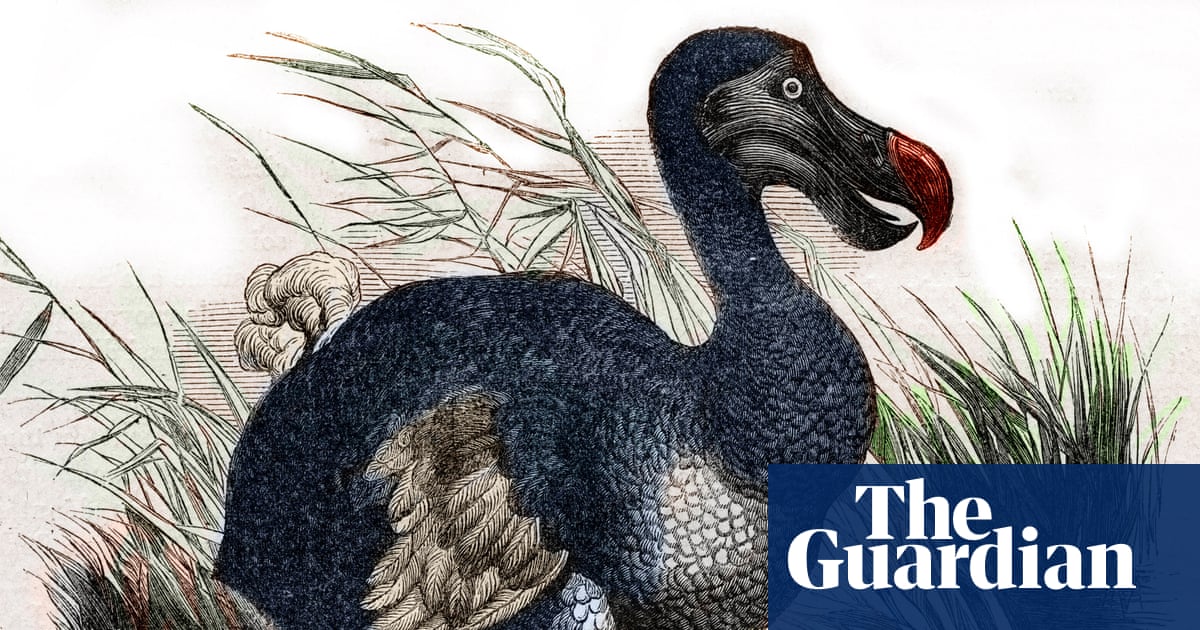
Scientists Announce Major Advance in Dodo Revival Project
Texas-based genetic engineering company Colossal Biosciences announced Wednesday a significant breakthrough in its efforts to resurrect the dodo bird, marking the first time a genome has been successfully edited to closely resemble that of the extinct species. The company claims to have created cells with dodo DNA, representing a “pivotal step” toward bringing the bird back to life for the first time in over 300 years.
The project, alongside Colossal’s work on de-extinction of the woolly mammoth and dire wolf, highlights a growing field of scientific endeavor focused on utilizing advanced genome editing technologies to potentially restore lost biodiversity. While the ethical and ecological implications of de-extinction remain debated, Colossal’s recent $120 million funding extension, valuing the company at $10.2 billion, demonstrates increasing investor confidence in the viability - and potential impact – of this ambitious science.
Colossal’s approach involves comparing the dodo genome to its closest living relative,the Nicobar pigeon,and then using CRISPR gene editing to make targeted changes to pigeon cells,effectively rewriting their DNA to more closely match that of the extinct dodo. the company has successfully created cells containing dodo DNA, though a fully functional dodo bird remains years away.
“This isn’t just about bringing back a bird,” said Colossal’s CEO Ben Lamm. ”It’s a monumental feat of genome engineering that has never been achieved before…it is indeed literally a testament to science, it’s a Dolly-esque moment full stop.”
The company’s high-profile investors include celebrities like Tom Brady, Paris Hilton, and Tiger Woods, and also filmmaker Peter jackson, who recently appeared in a Colossal video promoting their effort to de-extinct the moa, a large flightless bird native to New Zealand.Lamm emphasized that Colossal’s work should complement existing conservation efforts and inspire public engagement with science.
Despite potential controversy surrounding the project – and even debate over what to call the resurrected bird – Lamm stated, “Whatever you want to call them, as long as you’re calling them somthing.” The next steps involve developing the cells into a complete dodo genome and ultimately creating a living bird, a process Colossal anticipates will take several more years.
