Designing a Brand: How Apple Built an Architectural Language of Glass and Order
Apple’s physical footprint is not retail; it is a high-fidelity physical interface. By treating architecture as a deployable extension of its brand identity, Apple has effectively moved its “closed ecosystem” philosophy from the silicon layer to the urban layer, optimizing for total control over the user journey.
The Tech TL;DR:
- Spatial UX: Apple utilizes a rigid architectural language of glass and symmetry to eliminate “noise” and guide user movement, mirroring the streamlined flow of its software interfaces.
- Material Convergence: The transition from standalone retail nodes to hybrid urban environments and finally to the Apple Park “mainframe” represents a scaling of corporate identity.
- Closed-Loop Environments: By controlling every material and proportion, Apple reduces the friction between the product and the environment, creating a seamless physical-to-digital transition.
For most firms, a storefront is a utility. For Apple, it is a hardware deployment. The obsession with glass, openness, and symmetry isn’t merely an aesthetic choice—it is a system of behavioral engineering. In the same way that Apple optimizes the kernel of iOS to reduce latency and maximize efficiency, its architectural approach minimizes the cognitive load on the consumer. By stripping away the clutter of traditional retail, they create a sterile, high-contrast environment where the only “active” elements are the products and the staff.
This level of spatial orchestration requires a massive investment in material science and precision engineering. The reliance on massive, seamless glass panels is a physical manifestation of the company’s desire for transparency without accessibility—you can see everything, but you can only enter through the designated ports. This “glass-and-order” strategy creates a psychological boundary that separates the chaotic urban environment from the curated Apple experience. For enterprises attempting to replicate this level of brand cohesion, the bottleneck is rarely the budget, but the lack of a unified design system. Many organizations are now deploying specialized commercial design consultants to audit their physical touchpoints for similar UX inconsistencies.
The Architecture Stack: From Retail Nodes to Corporate Mainframe
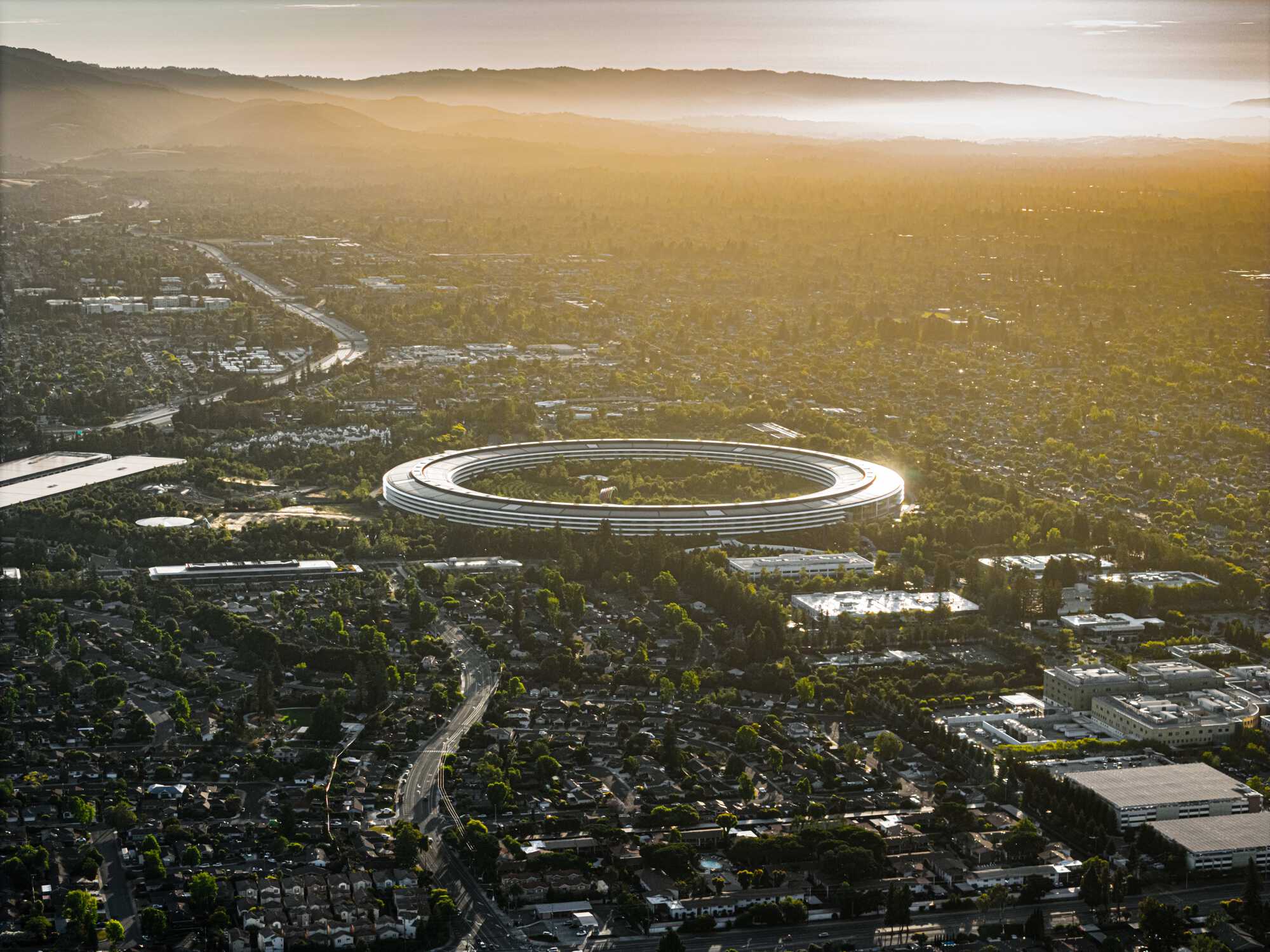
According to Diogo Borges Ferreira, Apple’s architectural evolution has followed a specific deployment trajectory: starting with the redefinition of the retail store, expanding into hybrid urban spaces, and culminating in the corporate campus. This is essentially a scaling operation. The retail store is the edge node—the point of contact where the user interacts with the brand. The corporate campus, specifically Apple Park, serves as the central hub, consolidating the brand’s architectural language at a massive scale.
This evolution mirrors the way a software product moves from a Minimum Viable Product (MVP) to a full enterprise suite. The early stores established the “design language” (the CSS of the physical world), which was then iterated upon to handle more complex urban integrations. The result is a consistent “architectural API” that ensures a user feels the same brand pressure whether they are in a mall in Dubai or at the headquarters in Cupertino.
“The integration of architecture and brand identity is essentially the creation of a physical operating system. When the environment is perfectly calibrated, the user stops noticing the building and starts experiencing the brand as a seamless utility.” — Lead Spatial Designer, Urban Systems Lab
From a technical standpoint, this “physical OS” is maintained through an economy of means. By using a reduced palette of materials and clear geometries, Apple conceals the immense coordination required to maintain these spaces. The symmetry is not just for show; it is a method of framing interaction. By controlling the lines of sight and the flow of circulation, Apple reduces the “latency” of the customer’s path to purchase.
The “Closed Glass” vs. Open-Standard Environments
When comparing Apple’s architectural approach to other tech giants, the difference in “system architecture” becomes clear. While companies like Google or Amazon often opt for campus environments that mimic traditional collegiate or industrial parks—prioritizing flexibility and “serendipitous” collision—Apple prioritizes order and control. This is the architectural equivalent of a proprietary connector versus a USB-C standard.
| Metric | Apple “Glass & Order” | Open-Campus Model |
|---|---|---|
| Design Philosophy | Symmetrical / Closed-Loop | Modular / Organic |
| User Flow | Curated / High-Control | Flexible / Distributed |
| Materiality | High-Spec Glass/Stone | Mixed Use / Industrial |
| Brand Integration | Architecture = Identity | Architecture = Utility |
This rigid adherence to a specific architectural language creates a high barrier to entry. It is not something that can be “patched” or updated easily. If a store’s symmetry is off by a few centimeters, the entire UX is compromised. This is why Apple maintains such a tight grip on the construction and maintenance of its sites, often bypassing traditional contractors in favor of highly vetted retail technology integrators who can execute to sub-millimeter tolerances.
Implementation: Mimicking the Apple Aesthetic in Code
For developers looking to translate this “Glass and Order” philosophy into digital interfaces, the key is “glassmorphism”—the use of background blur, semi-transparency, and thin borders to create a sense of depth and cleanliness. This is the software equivalent of Apple’s physical glass walls.
Below is a CSS implementation of a “Glassmorphism” container that replicates the architectural transparency and order described in the primary sources:
.apple-glass-container { background: rgba(255, 255, 255, 0.2); backdrop-filter: blur(15px) saturate(180%); -webkit-backdrop-filter: blur(15px) saturate(180%); border: 1px solid rgba(255, 255, 255, 0.3); border-radius: 20px; box-shadow: 0 8px 32px 0 rgba(31, 38, 135, 0.15); padding: 2rem; text-align: center; max-width: 500px; margin: auto; } /* Ensuring symmetry and order in the layout */ .layout-grid { display: grid; grid-template-columns: repeat(auto-fit, minmax(250px, 1fr)); gap: 2rem; justify-items: center; align-items: center; } This approach to design—whether in CSS or in reinforced glass—is about reducing visual noise to highlight the core object. For more on implementing high-performance UI patterns, the Human Interface Guidelines remain the gold standard for this specific brand of minimalism. For those looking to push these boundaries with WebGL or Three.js, the Three.js GitHub repository provides the necessary primitives to build these types of symmetrical, translucent 3D environments.
The trajectory of Apple’s architecture suggests a future where the distinction between the “device” and the “room” disappears. As we move toward spatial computing, the physical store becomes a prototype for the digital environment. The “Glass and Order” philosophy is simply the first iteration of a world where the brand doesn’t just sell you a product—it provides the very air and light you encounter while using it. For companies struggling to bridge this gap between their physical and digital presence, the solution usually starts with a comprehensive audit by digital transformation consultants who understand that UX doesn’t stop at the screen’s edge.
*Disclaimer: The technical analyses and security protocols detailed in this article are for informational purposes only. Always consult with certified IT and cybersecurity professionals before altering enterprise networks or handling sensitive data.*
Keep reading