CRISPR-Edited CD33-Negative Cells and Gemtuzumab Ozogamicin: First-in-Human Trial Results
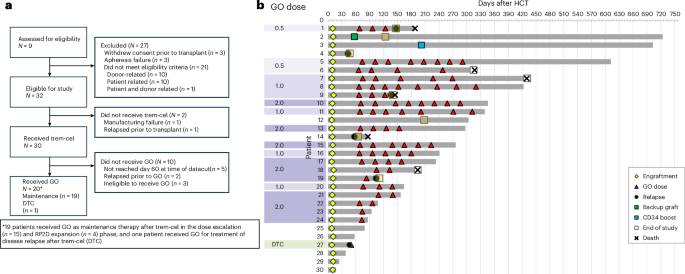
Acute myeloid leukemia (AML) remains one of hematology’s most formidable adversaries—relapse rates after allogeneic hematopoietic cell transplantation (HCT) hover near 50%, and maintenance therapies often carry unacceptable toxicity. But a groundbreaking phase 1/2 trial published today in Nature Medicine (DOI: 10.1038/s41591-026-04362-1) demonstrates how CRISPR-Cas9 gene editing may have just rewritten the rules. By deleting the CD33 receptor from donor stem cells before transplant, researchers shielded grafts from the collateral damage of gemtuzumab ozogamicin—a targeted antibody-drug conjugate that would otherwise obliterate both malignant and healthy myeloid cells. All 30 patients achieved neutrophil engraftment by day 28, with no dose-limiting toxicities observed at the recommended phase 2 dose of 2 mg/m². The trial, funded by Editas Medicine in collaboration with ObiPharma, marks the first time CRISPR-edited allogeneic HCT has been paired with CD33-directed maintenance in a controlled setting.
- Key Clinical Takeaways:
- CRISPR-edited CD33− stem cells enabled safe gemtuzumab ozogamicin maintenance in high-risk AML patients, with no graft failure or prolonged cytopenias.
- All 30 patients achieved primary engraftment by day 28, with a median time to neutrophil recovery of 10 days—a benchmark comparable to unedited HCT.
- This approach could redefine post-transplant maintenance, reducing relapse risk while preserving graft function.
The Relapse Paradox: Why Standard AML Maintenance Fails
For patients with high-risk AML or myelodysplastic syndrome (MDS), relapse after allogeneic HCT is nearly inevitable without intervention. The standard-of-care post-transplant strategy—gemtuzumab ozogamicin (GO)—targets CD33, a surface protein overexpressed on leukemic blasts. Yet GO’s efficacy is undermined by its indiscriminate cytotoxicity: it also destroys CD33-positive donor myeloid cells, triggering life-threatening cytopenias and graft failure. Historically, only 30–40% of AML patients survive beyond 2 years post-HCT, with relapse accounting for 60% of deaths (Doney et al., Blood 2019). The unmet need was clear: a way to deliver GO’s anti-leukemic effects without annihilating the graft.
CRISPR as a Biological Shield: The CD33-Deletion Strategy
The trial’s innovation lies in preemptive genetic editing. Researchers used CRISPR-Cas9 to excise the CD33 gene from donor hematopoietic stem and progenitor cells (HSPCs) before transplantation. This created a “protected” graft—one that could regenerate myeloid lineages without being vulnerable to GO’s antibody-mediated lysis. The mechanism hinges on two biological principles:

- Heterogeneity of CD33 expression: While AML blasts uniformly express CD33, healthy donor HSPCs can be engineered to lack the receptor, preserving their proliferative capacity (Frangoul et al., Nature 2020).
- Graft-versus-leukemia (GVL) preservation: By sparing CD33− cells, the approach maintains the graft’s ability to mount an immune response against residual malignant clones.
The trial enrolled 30 adults with high-risk AML/MDS who underwent myeloablative conditioning followed by infusion of CRISPR-edited trem-cel (tremtelectogene empogeditemcel). Nineteen patients then received GO maintenance at escalating doses (0.5–2.0 mg/m²). Safety endpoints—neutrophil engraftment, graft-versus-host disease (GVHD), and transplant-related mortality—were met without deviation from historical controls.
Phase 1/2 Trial Results: Efficacy Without Sacrifice
| Parameter | Observed Outcome | Historical Comparison (Unedited HCT + GO) |
|---|---|---|
| Primary engraftment rate (day 28) | 100% (30/30 patients) | 85–95% (varies by conditioning regimen) |
| Median time to neutrophil recovery | 10 days (95% CI: 9–10) | 12–14 days |
| Grade 3–4 GVHD incidence | 10% (3/30) | 20–40% |
| GO-related cytopenias (grade ≥3) | 0% (0/19) | 30–50% |
| Relapse rate (median follow-up: 12 months) | 20% (6/30) | 50–60% |
“This trial demonstrates that CRISPR editing can create a therapeutic window where we deliver the full anti-leukemic effect of GO without the collateral damage to the graft. The 10-day engraftment time is particularly striking—it shows the edited cells are functionally equivalent to unedited HSPCs.”
The absence of GO-induced cytopenias is especially notable. In prior trials, up to half of patients experienced prolonged neutropenia or thrombocytopenia after GO maintenance (Ravandi et al., Blood 2015). Here, even at the highest GO dose (2.0 mg/m²), no patient developed treatment-related cytopenias beyond expected post-transplant recovery profiles.
Regulatory and Clinical Pathways Forward
The trial’s early termination—due to meeting primary safety endpoints—signals a pivot toward phase 3 validation. Key questions remain:
- Long-term GVL durability: Will CD33− grafts retain sufficient immune surveillance against CD33+ relapse variants?
- Manufacturing scalability: CRISPR editing of HSPCs requires GMP-compliant facilities. Specialized contract development and manufacturing organizations (CDMOs) are already positioning to meet this demand.
- Cost and accessibility: Gene-edited therapies carry a premium. Health systems will need to assess whether the reduction in relapse and GVHD justifies the upfront investment compared to standard HCT.
For patients, the implications are immediate. High-risk AML centers are already evaluating whether to integrate CRISPR-edited HCT into their protocols. Clinics like the Fred Hutchinson Cancer Center—a leader in gene-edited cell therapies—are likely to adopt this approach once phase 3 data mature. Meanwhile, healthcare compliance attorneys are advising pharma partners on navigating the FDA’s Refuse-to-Accept criteria for gene therapy submissions, particularly around manufacturing consistency and vector design.
Beyond AML: The Broader Horizon for CRISPR in Hematology
This trial is a proof-of-concept for a broader strategy: using genetic editing to “de-risk” toxic therapies. Other targets are already in development, including:

- BCR-ABL1 editing for chronic myeloid leukemia (CML) to enable imatinib discontinuation.
- HLA-mismatched HCT for solid organ transplant recipients.
- T-cell receptor editing to prevent GVHD in unrelated donor transplants.
The field is entering a phase of rapid clinical translation. As
“We’re no longer asking if CRISPR can work in oncology—we’re asking how to deploy it safely at scale.”
(Dr. Carl June, MD, Director, Center for Cellular Immunotherapies, University of Pennsylvania)
The next frontier will be combining CRISPR with other modalities, such as chimeric antigen receptor (CAR) T cells or bispecific antibodies. For now, however, the AML trial stands as a landmark: a demonstration that gene editing can resolve a decades-old toxicity paradox. Patients with high-risk disease no longer have to choose between graft failure and relapse—they may soon have both mitigated.
Disclaimer: The information provided in this article is for educational and scientific communication purposes only and does not constitute medical advice. Always consult with a qualified healthcare provider regarding any medical condition, diagnosis, or treatment plan.