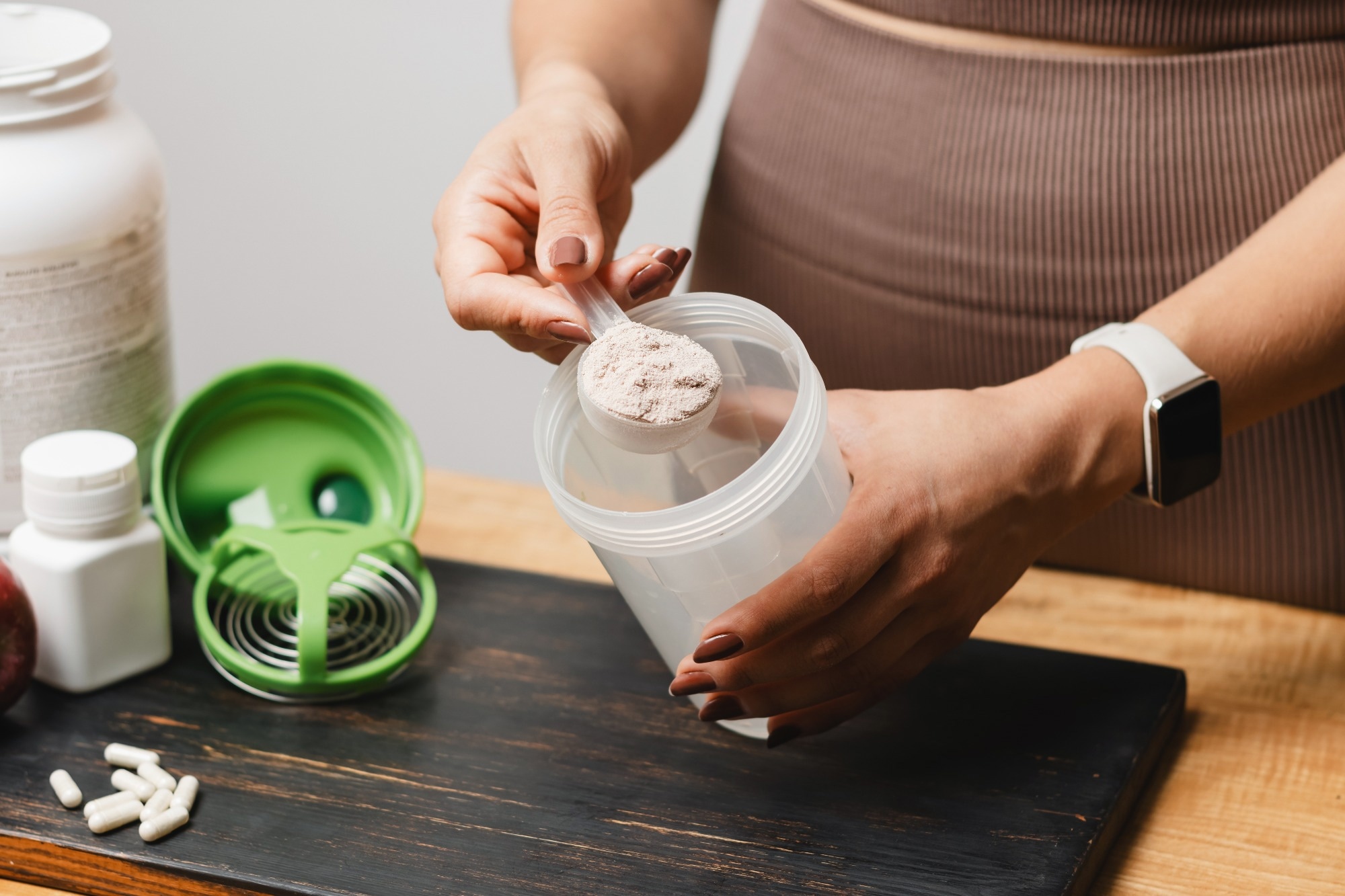
Creatine for Women’s Brain Health: Lower Stores May Yield Greater Cognitive Benefits
Women store 70 to 80 percent less creatine in their bodies than men and typically consume fewer dietary sources such as red meat and seafood, according to EatingWell.
That gap may explain why emerging research suggests women, particularly those over 40, could see more pronounced benefits from supplementation than men.
“Women tend to have lower creatine stores than men, which means they may experience even greater benefits from supplementing,” Marie Spano, a registered dietitian and certified strength and conditioning specialist, told EatingWell.
Historically, creatine studies have centered on men. Now researchers are examining how hormonal fluctuations and shifting energy demands across a woman’s life cycle influence the supplement’s effect on brain health, News-Medical reported.
Creatine supports cellular energy metabolism by helping regenerate adenosine triphosphate (ATP) during periods of high neural demand. Pooled clinical trials have not shown a uniform benefit for executive function or global cognition, but exploratory data point to specific gains.
A review of 16 randomized controlled trials involving 492 adults found creatine monohydrate supplementation associated with improved memory and faster completion times on tasks measuring attention and processing speed, News-Medical reported.
The compound may also buffer cognitive decline during acute stress. In one small trial, 15 participants received a single dose of 0.35 g/kg of creatine or a placebo during sleep deprivation. Those who took creatine showed better word-memory performance and faster processing times on language, logical reasoning, and numerical tasks compared with the placebo group, News-Medical reported.
Creatine monohydrate remains the most extensively studied form, yet optimal protocols for women are unsettled. Common practice uses a loading phase of 20 grams per day for up to a week, followed by a maintenance dose of 3 to 5 grams daily.
A 2021 review on creatine in women’s health proposed a higher maintenance range of 5 to 10 grams per day to support brain uptake, though that protocol has not been validated for cognitive outcomes, News-Medical reported.
Safety concerns persist. Studies generally support kidney safety in healthy individuals, but researchers caution that supplementation can raise serum creatinine levels, potentially complicating standard kidney function tests, according to News-Medical. Water-related weight gain is also frequently reported.
Marie Spano, a registered dietitian and certified strength and conditioning specialist, explains creatine’s role in energy production for high-intensity exercise, noting it’s one of the most extensively studied supplements on the market.
As a certified specialist in sports dietetics and consulting major league sports dietitian, she confirms creatine is safe for healthy individuals and recommends a standard dose of 5 grams daily for most people, with results visible in approximately 30 days.
The impact of creatine on mood regulation and its interaction with hormonal shifts throughout the menstrual cycle and menopause remain areas requiring further clinical trials. The most effective daily dose and the specific duration required to reach significant brain creatine concentrations remain unknown.
Worth a look
- Headaches Affect 95% of People at Some Point, According to the Brazilian Headache Society (SBCe)
- Incheon Clinic Details Causes, Treatments for Upper Arm Sagging
- Ansoumana Dione Honors Receives Doctorate For Mental Health Work (archyde.com)
- Heavy Snowfall Triggers Over 800 Emergency Calls in Lower Austria (newsy-today.com)