
Researchers in Connecticut have found evidence that the SARS-CoV-2 virus is losing its ability to infect animals, offering a potential safeguard against the re-emergence of new human variants through spillback. A collaborative study conducted by the Connecticut Veterinary Medical Diagnostic Laboratory (CVMDL) at the University of Connecticut, Yale University, and the Connecticut Agricultural Experiment Station, revealed a decline in the virus’s prevalence and transmissibility within animal populations.
The CVMDL first detected SARS-CoV-2 in a dog in Connecticut in 2021, highlighting the virus’s capacity to jump species. This ability, inherent in coronaviruses, was the initial trigger for the COVID-19 pandemic, according to researchers. Concerns grew as the virus spread within certain animal populations, like white-tailed deer and mink, and subsequently mutated before re-entering the human population.
The recent surveillance study, published in Scientific Reports, involved analyzing samples from 889 animals representing 27 species in the Northeastern United States. These included domestic animals like cats, dogs, and ferrets, as well as wildlife such as woodchucks and cattle. Samples consisted of fecal swabs, oral swabs, and stool specimens. Researchers focused particularly on white-footed mice and deer, collecting samples through the CT Agricultural Experiment Station and Yale researchers.
While the study identified a range of other coronaviruses in seven different species, SARS-CoV-2 was not detected in any of the animals tested. Complementary laboratory experiments at Yale involved infecting white-footed mice with both the original strain of SARS-CoV-2 and the Omicron variant. The mice were susceptible to both variants, but shed less of the Omicron variant and were unable to transmit it to each other. The original strain, however, did spread among the mice, but could not be transmitted to other species, like hamsters.
“This is good news as this reduces the chance of spillback of newly evolved animal variants into humans,” said Caroline Zeiss, professor of comparative medicine and of ophthalmology and visual science at Yale School of Medicine, and senior author of the study. “Ongoing monitoring is essential, particularly for viruses that are capable of infecting many species such as corona and influenza viruses. Long-term surveillance of wildlife and animals living close to humans gives us a unique chance to spot new pathogens that might spread to humans or affect animal health.”
Guillermo Risatti, director of the CVMDL and professor of pathobiology and veterinary science at UConn, explained that the study’s focus on wildlife stemmed from the greater likelihood of human-animal interaction with these species in Connecticut. “We looked at a large number of wildlife [samples],” Risatti said. “We have very limited agriculture in Connecticut. But there could be a risk because of the wildlife infringement we have.”
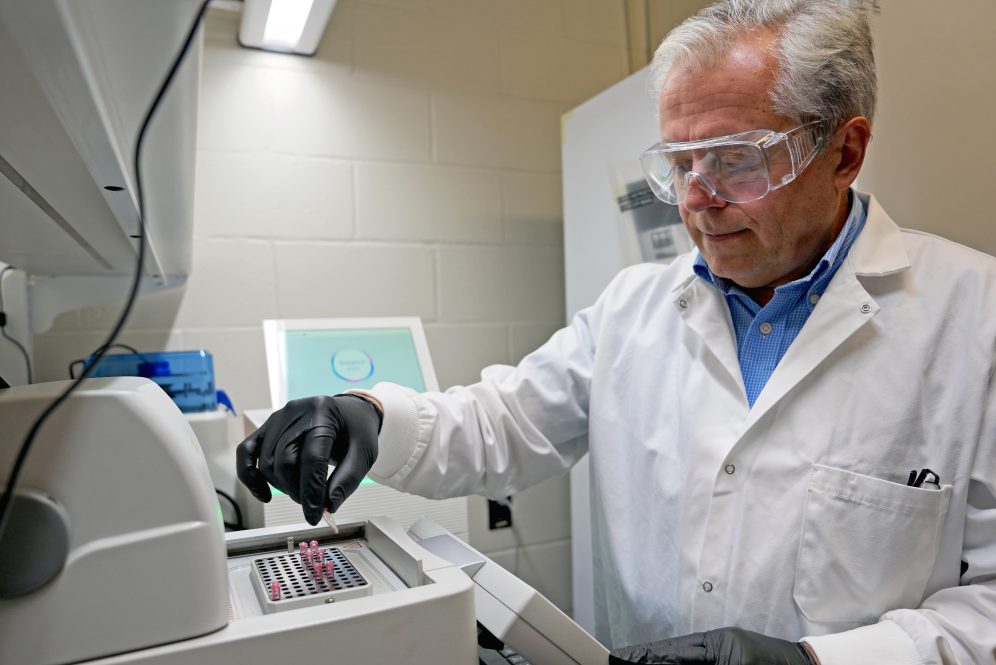
The CVMDL sent samples to Yale for analysis, where researchers used an assay method to detect a broad range of coronavirus types. Positive samples were then sequenced to identify the specific coronavirus species. Researchers believe the findings suggest that as SARS-CoV-2 continues to evolve in humans, successive variants may be losing their ability to infect non-human animals.
Risatti expressed hope that the CVMDL will be able to adopt the expertise developed at Yale during the project, establishing a regional center for emerging disease surveillance. “The idea is to bring this to UConn and make it a center for the northeast for emerging diseases in animal health and public health, a concept known as One Health,” he said. The research was funded by the United States Department of Agriculture and the Centers for Disease Control and Prevention.
