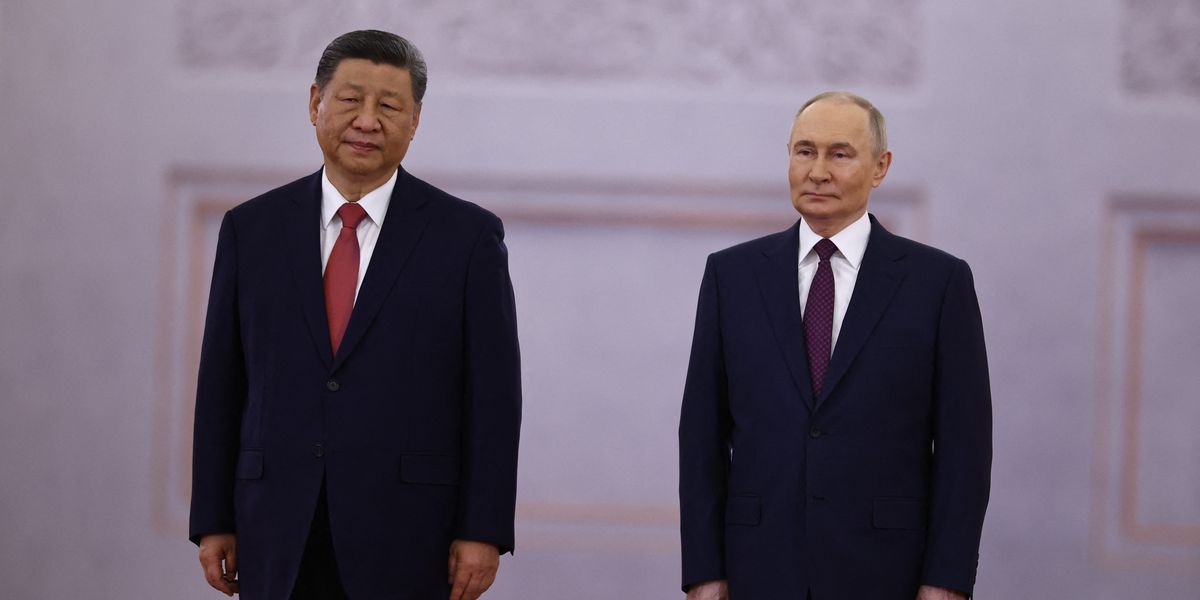
Could Russia and China Exploit U.S. Distractions in a Simultaneous Baltic-Taiwan Crisis?
Russia and China pose a dual threat to global stability through parallel opportunism. As the United States manages ongoing conflicts in Iran, these rivals may strike the Baltics and Taiwan simultaneously or sequentially. This risk stems not from a formal war plan, but from intelligence miscalculations and shared strategic windows.
The strategic landscape of May 2026 is defined by a chilling possibility: the emergence of a multi-front crisis that could stretch American and allied resources to a breaking point. While military planners often run war games focusing on whether Moscow and Beijing will officially coordinate an attack, the reality may be far more unpredictable. The true danger lies in “parallel opportunism”—a scenario where two expansionist powers, acting independently but sensing the same moment of weakness, decide to move against the established global order.
The Myth of the Integrated Command
A common misconception in Western defense circles is that a simultaneous crisis in Eastern Europe and the Taiwan Strait would require a formal, integrated Sino-Russian military command. History suggests that great powers with converging interests do not need a shared headquarters to complicate global strategy. They only need to recognize a window of opportunity.
We have seen this pattern before. On the eve of World War II, the alliance between Nazi Germany and Imperial Japan was far from a synchronized machine. When Japan attacked the United States following the events in Pearl Harbor, Adolf Hitler declared war on the U.S. Within days, despite having had virtually no consultation or joint planning with his Japanese allies. Both powers were acting on their own perceptions of opportunity and their own independent strategic conclusions.

“The most dangerous adversary is not the one following a predictable, coordinated script, but the one acting on a sudden, independent impulse to exploit a perceived vacuum of power.”
This lack of coordination does not make the threat any less potent; in fact, it makes it harder to defend against. If the United States is heavily committed to a prolonged campaign in Iran, the sudden appearance of a Russian move against the Baltics—or a Chinese blockade of Taiwan—could create a cascading series of crises that no single nation is prepared to manage alone.
The Intelligence Trap: Politicization and Peril
The engine driving this potential opportunism is not just military might, but the internal mechanics of the intelligence communities in both Moscow and Beijing. In both nations, the drive to please leadership can lead to a catastrophic “acceleration” of conflict, where decisions are based on what leaders want to hear rather than the reality on the ground.
In Russia, the intelligence landscape is a volatile mix of competition and pressure. The three primary services—the Federal Security Service (FSB), the Foreign Intelligence Service (SVR), and the Main Intelligence Directorate (GRU)—are often at each other’s throats, competing for the favor of the Kremlin. This environment of constant one-upsmanship creates an incentive to provide overly optimistic assessments. We have already seen the consequences of such failures, where intelligence services provided assessments that did not reflect the true weakness of opposing forces.

The pressure on these agencies is intense. Following perceived failures in foreign ventures, such as those in Venezuela, leadership has faced public scrutiny and dissatisfaction from the highest levels of the Russian government. When an intelligence director is publicly challenged to “speak plainly,” the resulting atmosphere can lead to a desperate need to demonstrate utility through escalatory actions, such as hybrid warfare in Europe, which could inadvertently trigger a larger conflict with NATO.
China faces a parallel struggle. Recent purges within the People’s Liberation Army (PLA) and the broader security apparatus have shaken institutional confidence. For analysts tasked with determining China’s readiness for a conflict over Taiwan, the pressure to validate political timelines may outweigh the duty to provide objective military data. When intelligence becomes a tool for political validation, the risk shifts from simple miscalculation to active, dangerous acceleration.
While these two nations share a common intelligence culture rooted in Cold War-era training, they lack the deep, institutionalized sharing seen in the “Five Eyes” alliance. There is a profound lack of trust between the SVR and the Chinese Ministry of State Security. They are allies of convenience, not partners in a shared intelligence architecture.
A Cascading Global Crisis
The most plausible nightmare scenario is one of sequential opportunism. In this model, Russia might initiate a limited land grab or a move against the Baltics under a false pretext, creating a massive diplomatic and military crisis for the NATO alliance. As Europe and the United States pivot to stabilize the Eastern Flank, Beijing might conclude that the moment to coerce Taiwan—perhaps through a blockade or a direct move for reunification—has arrived. This timing would coincide with significant milestones, including the 100th anniversary of the PLA’s founding in 2027.
The economic ramifications of such a dual-front crisis would be unprecedented. The disruption of maritime routes in the South China Sea and the potential closure of Baltic shipping lanes would send shockwaves through global markets, affecting everything from semiconductor availability to energy security.
As these geopolitical shifts move from theoretical war games to potential realities, the private sector must prepare for extreme volatility. For multinational corporations, the complexity of navigating sudden sanctions, maritime blockades, and shifting trade alliances is immense. Many are now proactively engaging [Global Risk Management Consultants] to stress-test their supply chain resilience against these specific “black swan” scenarios.
the legal landscape will change overnight. Companies operating in contested regions or those reliant on international waters will find themselves in a legal minefield. Legal departments are increasingly seeking specialized counsel from [International Trade Law Firms] to ensure they can navigate the sudden imposition of complex sanctions regimes and maritime law disputes.
The challenge for the United States and its allies is to maintain a deterrent that is both credible and flexible enough to address multiple, independent threats. We must ensure that the era of the 21st century is not defined by the expansionist ambitions of a few, but by the collective resolve of a global community prepared for the unexpected.
In an era where intelligence can be a tool of deception rather than a source of truth, the ability to discern reality from political theater is the most critical asset a nation—or a business—can possess. To navigate this uncertain future, staying informed through verified channels and securing professional expertise is no longer optional; We see a requirement for survival. For those looking to safeguard their interests in this evolving landscape, finding vetted [Strategic Security Advisors] via our directory is a vital first step in building long-term resilience.