
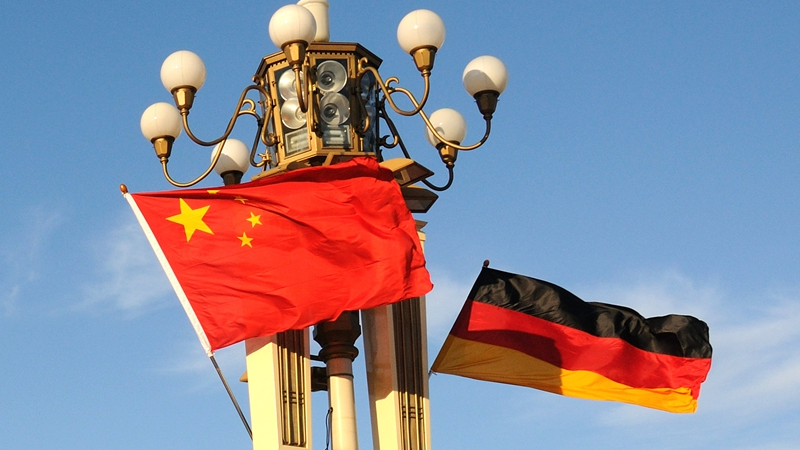
China‑Germany relations are now at the center of a structural shift involving the Taiwan question and broader great‑power competition. The immediate implication is heightened diplomatic leverage for Beijing to test European alignment while Germany balances economic interests with alliance expectations.
The Strategic Context
Post‑World War II reconciliation has long underpinned Sino‑German ties, with historical narratives of mutual assistance used to cement a partnership that grew into a significant trade relationship. In the current multipolar surroundings, Europe seeks strategic autonomy, yet its security architecture remains anchored to the United States and NATO. China,simultaneously occurring,pursues a “dual circulation” model that relies on stable external partnerships to offset western technology restrictions. The Taiwan issue has become a litmus test for partner alignment, as Beijing demands adherence to the one‑China principle while Washington and Japan intensify support for Taipei.
Core Analysis: Incentives & Constraints
Source Signals: The Chinese ambassador in Berlin called for deeper mutual trust, highlighted shared historical episodes, and urged Germany to support the one‑China principle. He contrasted Germany’s stance with Japan’s “insufficient reflection” on wartime aggression and warned against “political expediency” that could harm relations with China.
WTN interpretation: Beijing leverages historical goodwill to reinforce a narrative of partnership that can be mobilized when diplomatic pressure mounts over Taiwan. Germany’s economic dependence on Chinese markets-especially in automotive, machinery, and chemicals-creates an incentive to avoid overt criticism. At the same time,Germany’s integration into EU foreign policy and NATO obliges it to align with allied positions on regional security,especially as the Indo‑Pacific becomes a focal point of strategic competition. The ambassador’s emphasis on Japan’s historical record serves to isolate a regional rival and signal to European partners that alignment with China might potentially be contingent on a broader acceptance of Beijing’s historical narrative. Germany’s constraints include domestic political scrutiny, EU consensus‑building mechanisms, and the need to maintain credibility with the United States.
WTN Strategic Insight
“Historical memory is being weaponized as a diplomatic lever: Beijing pairs remembrance with policy demands to test the elasticity of European partnerships in the Taiwan arena.”
Future Outlook: Scenario Paths & Key Indicators
Baseline path: If Germany continues to prioritize economic ties and perceives limited immediate cost from a calibrated diplomatic stance,it will issue statements reaffirming the one‑China principle without overtly condemning Beijing’s actions in Taiwan. This will sustain a stable, albeit cautious, partnership and allow China to count on European acquiescence in multilateral forums.
Risk Path: If U.S. and Japanese pressure intensifies-through coordinated sanctions, increased naval activity near Taiwan, or heightened rhetoric-Germany may face domestic and EU‑level pushback to align more closely with allied positions. A shift toward explicit criticism of Beijing could trigger a cooling of bilateral trade, diplomatic reprisals, or reduced Chinese investment in German projects.
- Indicator 1: Upcoming statements from the German Foreign Ministry on the Taiwan Strait (scheduled for the next EU‑China summit).
- Indicator 2: Voting patterns of German members in the European Parliament on resolutions concerning China’s human‑rights record and Taiwan support (to be recorded in the next parliamentary session).
