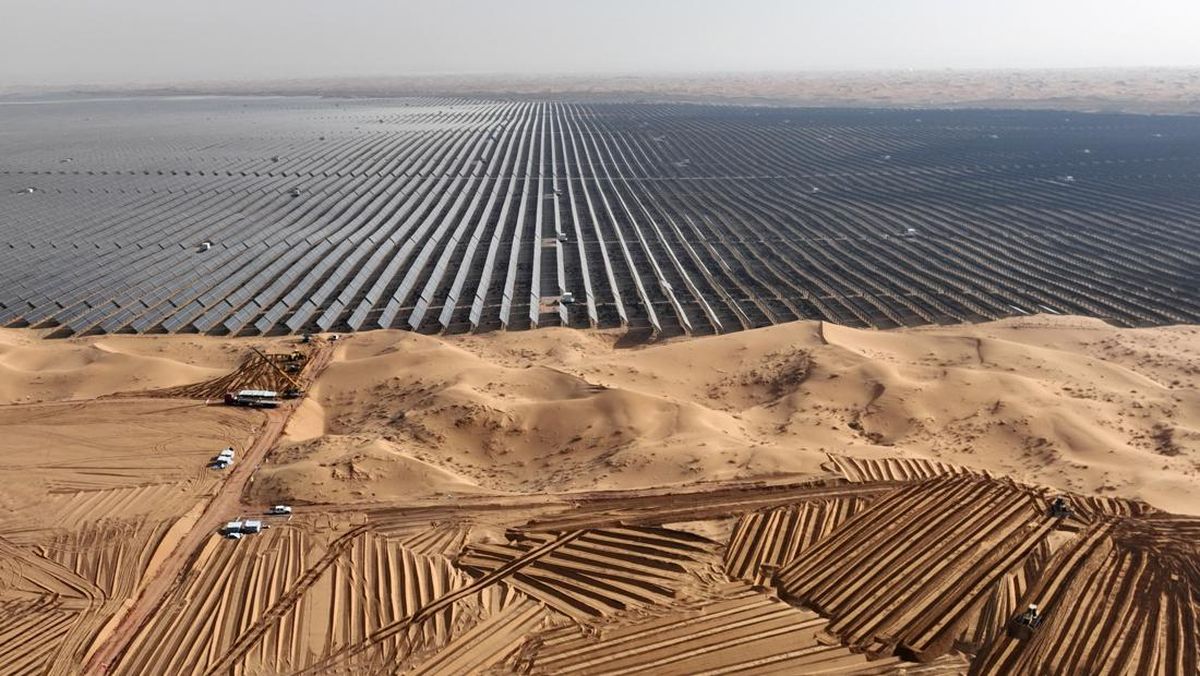
China’s Solar Expansion Linked to Decline in Bird Diversity
A recent study published in the journal Science confirms that China’s rapid expansion of utility-scale solar energy infrastructure is causing a measurable decline in local bird diversity. Researchers analyzed data from 2,344 Chinese counties between 2014 and 2023, finding that for every four-point increase in solar policy intensity, regional bird biodiversity drops by approximately 2 percent.
The Green Dilemma: Renewable Infrastructure vs. Ecological Integrity
China’s aggressive push toward carbon neutrality by 2060 has necessitated a massive transformation of its land use. By 2024, the total surface area covered by solar panels in China reached thousands of square kilometers. According to research led by Huiming Zhang of the Nanjing University of Information Science & Technology, this infrastructure development often prioritizes land availability and economic targets established in national “Five-Year Plans” over the preservation of existing ecosystems.
The study highlights a phenomenon researchers term the “green dilemma”—the friction between the urgent need to mitigate climate change through carbon-free energy and the preservation of natural habitats. While solar energy is projected to contribute 45 percent of China’s total power supply by 2060, the physical footprint of these projects is altering landscapes, particularly by converting agricultural land and grasslands into industrial energy zones.
Quantifying Biodiversity Loss
The research, which utilized data from over 2,300 regions, indicates that the impact is not uniform. Biodiversity loss is most acute in fertile, non-desert regions. While mountain-dwelling species remain largely unaffected due to the geographical limitations of solar installation, both local and migratory bird populations are experiencing significant declines in areas where solar policy is most aggressively implemented.
Yuanning Liang of Peking University notes that birds serve as a primary indicator for broader ecological health, as their population data is more accessible than that of most other wildlife. The study clarifies that the issue is not the transition to renewable energy itself, but the lack of site-specific environmental vetting during the planning phase. Furthermore, the researchers identified instances of “low-quality greening,” where developers attempt to meet environmental requirements by planting monocultures that appear lush but fail to provide the complex habitat structures necessary for diverse avian life.
The Path Forward for Global Energy Projects
The findings from the Science study provide a clear directive for future renewable development: infrastructure must be directed toward low-risk environmental sites. This requires a shift from purely economic or logistical site planning to a more integrated model that incorporates biodiversity mapping at the earliest stages of project design.
The conflict between land-use efficiency and habitat preservation is not limited to solar projects; wind energy and other large-scale renewables face similar scrutiny regarding their ecological footprints.
Ultimately, the objective is to decouple energy production from biodiversity loss. As global demand for renewable energy continues to scale, the successful integration of clean technology into the environment will depend on the ability of governments and corporations to implement more granular, data-driven planning. Those who fail to adapt their strategies now may find themselves facing increased oversight from international regulatory bodies, requiring the expertise of ESG Risk and Strategic Advisory Services to maintain operational continuity in an increasingly transparent global market.