
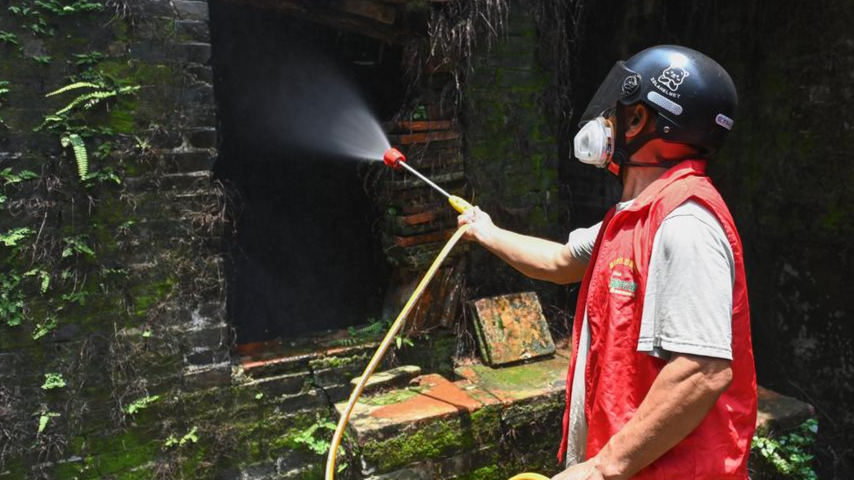
Guangdong Tackles Chikungunya Fever with Vigorous Mosquito Control
Province-wide Efforts Target Mosquito Breeding Sites to Curb Viral Spread
Guangdong province is implementing intensive public health measures, including extensive cleanup operations, to combat the rising incidence of Chikungunya fever. The mosquito-borne viral illness, characterized by fever, rash, and joint pain, has prompted a swift response from local authorities.
Foshan Leads the Charge in Mosquito Eradication
Foshan, the city most affected by the outbreak in Guangdong, reports significant progress in reducing mosquito populations. Data indicates that 78 percent of affected areas have achieved safe mosquito density levels following targeted water cleanup and eradication initiatives. The city, home to over 9 million residents, has designated 53 hospitals as treatment centers and bolstered its capacity with 7,220 mosquito-proof isolation beds.
As of Sunday, Foshan had recorded 5,155 confirmed Chikungunya cases. To address the root cause of transmission, Foshan’s Chancheng district has introduced over 5,000 larva-eating fish into local lakes since last Wednesday, aiming to disrupt the mosquito life cycle.
Innovative Technologies Deployed for Larval Detection
In Chancheng’s Longcun village, an innovative approach using drones is actively identifying accumulated water in difficult-to-access locations like rooftops and storage sheds, common breeding grounds for mosquito larvae. This rapid aerial survey, covering 2.5 square kilometers in just two hours, provides crucial data to guide residents in eliminating potential breeding sites.
Public Urged to Participate in Prevention Efforts
Guangdong province has issued a province-wide appeal, urging residents to actively participate in preventing Chikungunya fever. The call to action includes meticulously inspecting and clearing stagnant water from containers and water-cultured plants. Authorities also recommend using window and door screens and wearing long-sleeved clothing to avoid mosquito bites.
Understanding Chikungunya Fever
Chikungunya fever is an acute viral illness transmitted to humans through the bites of infected mosquitoes. Symptoms typically include fever, characteristic rashes, and debilitating joint pain. While widely dispersed globally, first identified in 1952, it has since been documented in over 110 countries across continents.
“There is no evidence of the human-to-human transmission of Chikungunya.”
—Duan Leilei, Researcher at the Chinese Center for Disease Control and Prevention
The World Health Organization (WHO) has expressed concern regarding the escalating spread of the Chikungunya virus. For instance, in the week of July 20 to July 26, Guangdong province reported 2,940 new local cases, with Foshan accounting for 2,882 of these. Health officials confirm that reported cases have been mild, with no severe or fatal outcomes recorded to date.
Guangzhou Enhances Mosquito Control Campaign
Guangzhou, the provincial capital, has launched a comprehensive week-long mosquito eradication campaign scheduled from July 26 to August 1. These coordinated efforts across the province aim to significantly reduce mosquito populations and prevent further transmission of Chikungunya fever, fostering a healthier environment for all residents.
The Greater Bay Area is collaborating on a unified strategy to combat Chikungunya fever. Recent data from the U.S. Centers for Disease Control and Prevention (CDC) highlights that over 100,000 mosquito control professionals are trained annually in the United States, underscoring the importance of skilled personnel in such public health initiatives (CDC).
