
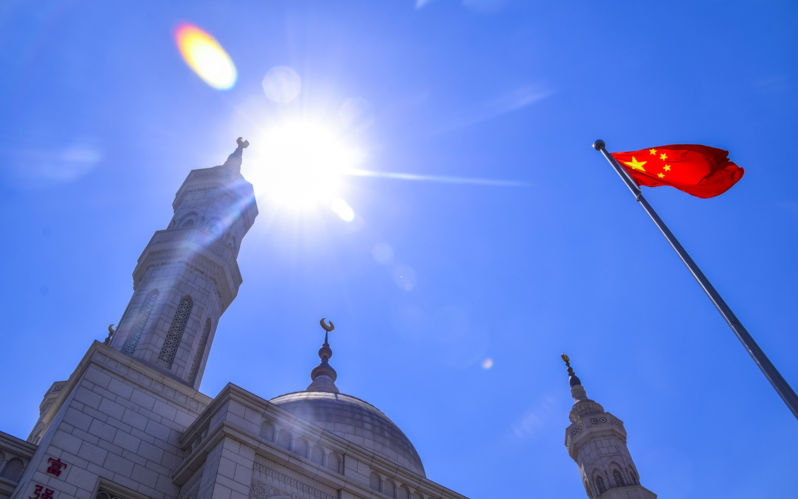
China and the Muslim World: Forging a New Global Alignment
Table of Contents
- China and the Muslim World: Forging a New Global Alignment
As geopolitical tensions rise, a notable shift is occurring: the growing alignment between China and the Muslim world. This partnership, once considered improbable, is now built on mutual respect, sovereign equality, and a shared vision for a global order that moves beyond Western dominance. This realignment comes as the existing international system faces challenges, including the ongoing humanitarian crisis in Gaza, where over 55,000 Palestinians have died, according to recent reports, and millions have been displaced, underscoring the perceived failures of the Western-led order.
Geopolitical Realignment: China’s Strategic Engagement
China’s engagement with the Muslim world is a calculated, long-term strategy. The Belt and Road Initiative (BRI) has been instrumental in this, channeling important investments into infrastructure and logistics across various Muslim-majority nations. Countries such as Pakistan, Egypt, Iran, and Saudi Arabia have become key partners in this initiative, fostering economic cooperation and development.Unlike traditional Western models that have sometimes imposed conditions, China’s approach emphasizes mutual benefit and non-interference, which resonates well with many Muslim states.
Did you Know? As of 2024, the Belt and Road Initiative involves over 150 countries and international organizations, with investments exceeding $932 billion. Council on Foreign Relations
Indonesia: A Model of Confident Engagement
Indonesia, the world’s largest Muslim-majority country, exemplifies this realignment. With its focus on maritime sovereignty, digital innovation, and partnerships with other Global South nations, Jakarta is engaging China confidently without compromising its political autonomy. This model-collaboration without dependency-is increasingly attractive among Muslim-majority nations.
Alternatives to Neoliberal Globalization
The emerging alignment between China and the Muslim world also reflects growing disillusionment with neoliberal globalization. Many Muslim states are facing complex transitions amid urbanization, demographic pressures, climate vulnerability, and inequality.Western-dominated institutions such as the International Monetary Fund and World Bank have at times failed to provide enduring solutions. China, by contrast, offers alternatives in digital finance through the digital yuan, infrastructure via the Asian Infrastructure Investment Bank, and innovation partnerships in artificial intelligence and green energy.
Pro Tip: Diversifying economic partnerships can reduce reliance on traditional Western institutions and open new avenues for growth and development.
China’s Financial and Technological Offerings
China’s financial and technological offerings are notably appealing. The digital yuan presents an option to traditional banking systems, while the Asian Infrastructure Investment Bank (AIIB) provides funding for critical infrastructure projects. Moreover, China’s advancements in artificial intelligence and green energy offer opportunities for collaboration and sustainable development.
Challenges and criticisms
Even so, this relationship is not without its frictions. The Muslim world is deeply diverse. From Turkey’s regional assertiveness to internal rivalries in the Gulf, and from Pakistan’s security dilemmas to North Africa’s political flux, a unified strategy remains elusive.Security ties with the West further complicate cohesion.
China itself faces criticism. Debt-related concerns over the Belt and road Initiative, opaque contractual terms, and, critically, the treatment of Uyghur Muslims in Xinjiang have sparked backlash across Muslim populations.While some governments compartmentalize these issues for economic reasons, public perception-especially in democratic societies-cannot be ignored. For this partnership to endure, China must adopt a more transparent, inclusive, and culturally sensitive diplomacy.
According to a 2024 report by Human Rights Watch, the Chinese government continues to commit widespread and systematic abuses against Uyghurs and other Turkic Muslims in Xinjiang. Human Rights Watch
A Call for Engagement, Not Confrontation
Importantly, the realignment should not be cast as an anti-Western Cold War redux but as a recalibration of influence. Western policymakers would do well to consider engaging with this emerging axis as a potential partner in solving global challenges, including climate change, future pandemics, digital inequality, and food insecurity.
The future offers considerable promise.Joint ventures in Islamic fintech,blockchain-based trust systems,climate-resilient infrastructure,and multilingual educational exchanges can cement deeper cooperation. China’s interest in securing long-term food and energy supply chains aligns with the Muslim world’s pursuit of green growth and agricultural innovation.
Democratizing global Governance
More profoundly, this partnership may help democratize global governance. Reforming the UN Security council, revisiting trade rules under the world Trade Organization, and reshaping development finance will require coalitions grounded in legitimacy and broad representation. The China-Muslim world axis can be such a coalition,not by mimicking current power structures but by offering a new kind of leadership based on shared values and mutual dignity.
We are witnessing the rise of a new center of gravity. As the Western-led order faces growing internal fractures, the partnership between China and the Muslim world is no longer peripheral.It is not a rebellion but rather a renaissance.
| Area of cooperation | Examples | Potential Benefits |
|---|---|---|
| Infrastructure Development | Belt and Road Initiative projects | Improved connectivity, economic growth |
| Digital Finance | Digital Yuan, Fintech collaborations | Financial inclusion, modernized systems |
| Green Energy | Renewable energy projects | Sustainable development, reduced emissions |
| technology | AI partnerships | Innovation, economic diversification |
Evergreen Insights: Background, Context, and Ancient Trends
The relationship between China and the Muslim world has evolved substantially over the past few decades. Historically, trade and cultural exchanges have been the cornerstone of this relationship. Though, in recent years, geopolitical and economic factors have propelled this partnership to new heights. China’s growing economic influence and its willingness to engage with Muslim-majority countries on a basis of mutual respect have fostered closer ties.This alignment is also driven by a shared desire to diversify global power structures and reduce reliance on Western-dominated institutions.
The belt and Road Initiative (BRI) has played a pivotal role in strengthening these ties, providing much-needed infrastructure and investment to Muslim-majority countries. This has not only boosted economic growth but also enhanced China’s diplomatic influence in the region. However, challenges remain, including concerns over debt sustainability and human rights issues. Addressing these challenges through transparent and inclusive dialog is crucial for ensuring the long-term success of this partnership.
Frequently Asked Questions
- What are the key areas of cooperation between China and the Muslim world?
- Key areas include infrastructure development through the Belt and Road Initiative, digital finance initiatives, green energy projects, and technological collaborations in fields like artificial intelligence.
- How does China’s approach differ from traditional Western models of engagement?
- China’s approach emphasizes mutual benefit, non-interference in internal affairs, and a focus on economic development, which contrasts with Western models that often impose political conditions.
- What are the main criticisms leveled against China by the Muslim world?
- Criticisms include concerns over debt sustainability related to the Belt and Road Initiative, lack of transparency in contractual terms, and the treatment of Uyghur Muslims in Xinjiang.
- What steps can China take to improve its relationship with Muslim-majority countries?
- China can enhance its relationship by adopting a more transparent, inclusive, and culturally sensitive diplomacy, addressing human rights concerns, and ensuring equitable economic practices.
- How might the China-Muslim world alignment impact global governance?
- This alignment could contribute to democratizing global governance by advocating for reforms in the UN Security Council, revisiting trade rules under the World Trade Organization, and reshaping development finance.
What are the potential long-term implications of this China-Muslim world alignment for global geopolitics? How can Western nations adapt their strategies to effectively engage with this emerging axis?
Disclaimer: This article provides general details and should not be considered as financial, legal, or health advice. Consult with a professional for specific guidance.
share your thoughts and join the discussion! what are your views on the evolving relationship between China and the Muslim world? Subscribe for more insights on global affairs.
