China Leads Global Humanoid Robot Market With Everyday Household Deployments
Robots leave factory floors for everyday households across China, where manufacturers build bipedal machines capable of folding laundry, sorting clothes, and serving drinks.
More than 200 humanoid robot manufacturers currently operate in China, according to data from two industry associations cited by EL PAÍS. These machines are stepping out of industrial warehouses and into commercial stores, pharmacies, and living rooms.
The state-backed Humanoid Robot Action Plan projects that workplace installations will reach 100,000 units by 2027, up from an estimated 28,000 units currently deployed in jobs. China accounts for approximately 90% of the global market in this emerging category.
The International Data Corporation estimated that the global humanoid market grew to 18,000 units in 2025, marking a 508% increase that represented $440 million in business volume, EL PAÍS reported. Market research identified Chinese firms Unitree and AgiBot as the leading sellers, with each company selling roughly 5,000 units during that period.
Adoption accelerated through 2026. During the Web Summit in Lisbon, AgiBot Europe and Americas President William Shi said that his company had sold more than 20,000 robots in total. Founded just three and a half years ago in early 2023, AgiBot employs 3,000 people and secured 46 medals at China’s recent Robotic Olympics.
The Chinese-made AGIBOT A3 Ultra humanoid robot can climb stairs, squeeze sideways through narrow gaps, and overcome obstacles. It adjusts movements in real time as it autonomously navigates complex 3D environments. #AGIBOT #HumanoidRobot #EmbodiedAI #Robotics #ChinaTech pic.twitter.com/aTxa0AXM6Z
“Now we have more than 1,000 robots working in factories in China,” Shi told EL PAÍS.
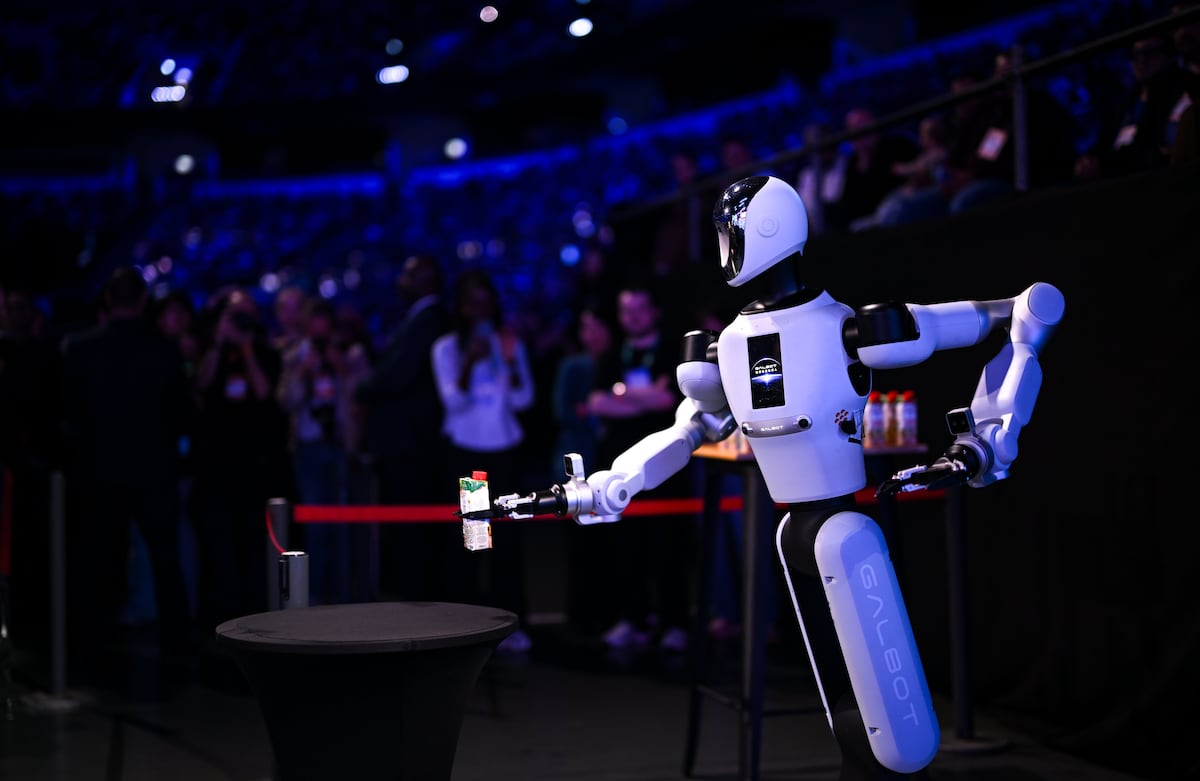
Competitor Galbot, established in 2023, has deployed over 1,200 general-purpose units into operational settings including factories, logistics centers, warehouses, retail shops, and healthcare facilities. Galbot robots operate inside production lines for manufacturing companies like Bosch, Siemens, Toyota, Hyundai, and battery maker CATL, according to El País.
“We make general-purpose robots and the key technology behind it is our foundational physical AI model, AstroBrain,” Yuli Zhao, strategy head at Galbot, told EL PAÍS.
Galbot units operate in roughly 200 stores across nearly 50 Chinese cities, handling routine tasks such as stocking shelves and delivering items to customers. The company’s humanoids also secured three gold medals at the World Humanoid Robot Games in events covering domestic chores.
“The robot has to do many complicated subtasks, including cleaning the room, doing the laundry, hanging up clothes or washing them,” Zhao told EL PAÍS, describing a competition test where machines had to pause tasks to answer the door and collect a courier delivery.
AgiBot relies on a developer ecosystem supported by SDKs and APIs, mirroring smartphone operating systems. Galbot maintains a similar open platform that has attracted over 1,000 developers.
Unitree began producing humanoid robots in 2024, releasing the H1 model in April before following it with the mass-produced G1 in August at a price point of about US$16,000. These developments established the firm as a major seller in the emerging market.
Chinese robotics companies raised approximately $13 billion across 322 deals during the first half of 2026, marking a fivefold increase over the previous year. However, Chinese research firm GGII projects that at least 15% of current humanoid manufacturers will face bankruptcy or acquisition within the next three years due to rapid market consolidation.