
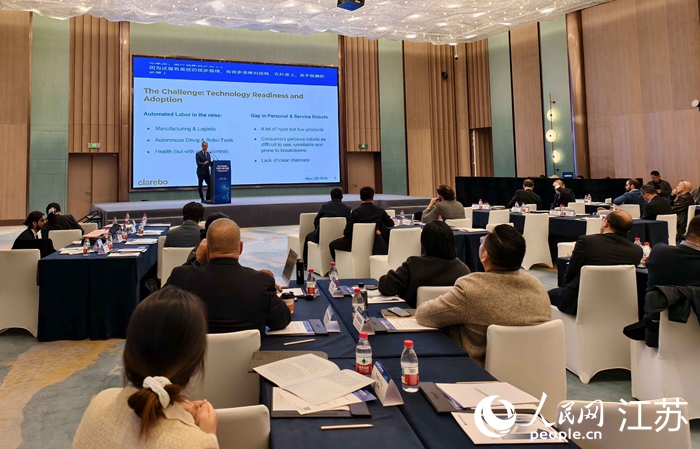
Nanjing Seeks to Strengthen China-Europe Robotics Collaboration
Nanjing,Jiangsu Province – The 2025 China-Europe Robotics Conference,held in Nanjing’s Qixia district on November 19th,brought together representatives from China and europe to explore collaborative opportunities in the rapidly growing robotics sector. The conference featured roadshow presentations from 10 robotics projects originating from the United Kingdom,Spain,Finland,and Russia,sparking discussions with potential partners including local companies like Jiangsu Jitri Clever Manufacturing Technology Research Institute,Nanjing TetraBot electronic Technology,and Yijiahe Technology,alongside investment firms such as CoStone Capital and nanjing Innovation Capital Group.
Nanjing boasts a robust robotics ecosystem, encompassing industrial, specialized, service, and humanoid robots, with a core industry output of 33 billion yuan ($4.64 billion) from January to October this year. Vice Mayor Jiang Min emphasized Nanjing’s unique position as one of the few Chinese cities capable of supporting the entire robotics value chain - from manufacturing to component production and application development. The city is committed to fostering continued resource sharing and strengthened cooperation between Chinese and European robotics companies.
the importance of this collaboration was underscored by Tang Song, Deputy Head of the Investment Promotion Agency of China’s Ministry of Commerce, who stated that China-Europe cooperation in robotics is built on “joint efforts based on innovation, shared standards and mutual benefits.” He encouraged increased European investment in China and welcomed Chinese companies to expand their presence in Europe, aiming to bolster the global robotics supply chain.
Qixia district, with its established relationships with European businesses – including investments from Bosch, ZF Friedrichshafen, Arc, and Danfoss – is positioned to be a leading example of this partnership. Mayor Wang Chengjiang announced plans to build platforms for industrial collaboration, deepen ties between universities and industry, and expand application scenarios to leverage both local strengths and European technological advancements, ultimately aiming to make Qixia a model for China-Europe robotics cooperation.
(Web editor: Hongyu, Liang Jun)
