
“`html
Chikungunya Outbreak Prompts Strict Measures in Guangdong Province, China
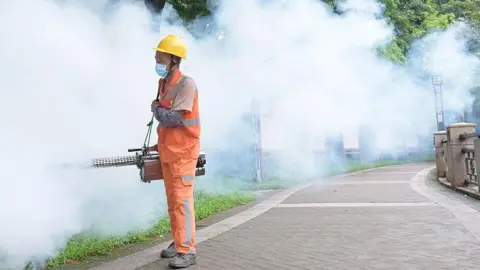
Guangzhou, Guangdong Province – Authorities in Guangdong province, china, are implementing stringent measures to control a recent surge in chikungunya cases, sparking comparisons to the country’s earlier COVID-19 response. The outbreak, concentrated in cities like Foshan, has led to widespread public health initiatives, including mandatory stagnant water removal, biological pest control, and, briefly, travel restrictions.
Officials have urged residents experiencing symptoms – fever, joint pain, and rashes – to seek immediate medical attention for testing.A key component of the response is a crackdown on mosquito breeding grounds.Residents face fines of up to 10,000 yuan (approximately $1,400 USD) for failing to eliminate standing water in containers like flowerpots, coffee machines, and discarded bottles.
Beyond fines, authorities are employing innovative biological control methods. In Foshan, 5,000 mosquito-eating fish (specifically, Gambusia affinis, also known as mosquitofish) were released into city lakes last week. Additionally, officials are deploying giant “elephant mosquitoes” (Toxorhynchites elegans), which prey on chikungunya-carrying mosquitoes, and utilizing drones to identify and address sources of stagnant water. The Foshan Center for Disease Control and Prevention is leading the drone surveillance effort.
initial reactions to the measures have been mixed. Some neighboring cities briefly imposed a 14-day home quarantine on travelers arriving from Foshan, a policy that has since been rescinded following criticism. Public sentiment, expressed on platforms like Weibo, reflects concerns about the intensity of the response, with some questioning its necessity given the relatively low mortality rate of chikungunya.
Understanding Chikungunya: A Global Health Perspective
Chikungunya is a viral disease transmitted to humans through the bite of infected aedes mosquitoes, primarily Aedes aegypti and Aedes albopictus. The name “chikungunya” originates from the Makonde language, meaning “to become bent over,” describing the debilitating joint pain often associated with the illness.
Symptoms typically appear 3-7 days after being bitten by an infected mosquito and include fever, joint pain (often severe and lasting for weeks or months), rash, headache, muscle pain, and swollen joints. While most patients recover within a week, chronic joint pain can persist for months or even years in some cases. Individuals at higher risk of severe illness include newborns, the elderly, and those with pre-existing medical conditions like heart disease or diabetes.
The virus was first identified in Tanzania in 1952 and has since spread to over 110 countries across Africa, Asia, Europe, and the Americas. Major outbreaks have occurred in Africa, india, Southeast Asia, and the Caribbean. The Pan American Health Institution (PAHO) has reported a significant increase in chikungunya cases in the Americas in recent years, particularly in Brazil and the Dominican Republic.
Currently, there is no specific cure for chikungunya. Treatment focuses on relieving symptoms, such as pain and fever. Prevention relies heavily on controlling mosquito populations and preventing mosquito bites. The World Health Organization (WHO) recommends eliminating breeding sites by removing stagnant water, using mosquito repellents, wearing long sleeves and pants, and installing screens on windows and doors.
While fatalities are rare,chikungunya can cause significant morbidity and economic burden due to prolonged illness and disability. Ongoing research is
