
Russia Advances Personalized Melanoma Vaccine Trials
Groundbreaking mRNA Therapy Tailored to Individual Tumors Nears Human Testing
Russia’s Gamaleya National Research Center is poised to launch human clinical trials for a pioneering personalized mRNA-based melanoma vaccine. This innovative therapy, developed by the same institution behind the Sputnik V COVID-19 vaccine, represents a significant stride in oncology and personalized medicine.
Tumor-Specific Immune Response
The vaccine is meticulously designed to target individual patients’ tumors based on their unique genetic profiles. Alexander Gintsburg, director of the Gamaleya Center, confirmed that experimental administration is slated to begin as early as September-October 2025. This collaboration involves leading Russian oncology institutions.
Melanoma, a dangerous skin cancer, originates from melanocytes, the pigment-producing cells in the skin. When these cells undergo uncontrolled growth, they form cancerous tumors that can spread rapidly if not detected and treated promptly.
mRNA, or messenger RNA, functions as a cellular instruction manual. It carries genetic information from DNA to the cell’s protein-manufacturing sites, dictating the creation of specific proteins essential for bodily functions. In vaccine development, mRNA instructs cells to produce a harmless component of a pathogen or cancer, thereby stimulating the immune system to recognize and combat the threat.
AI-Driven Vaccine Development
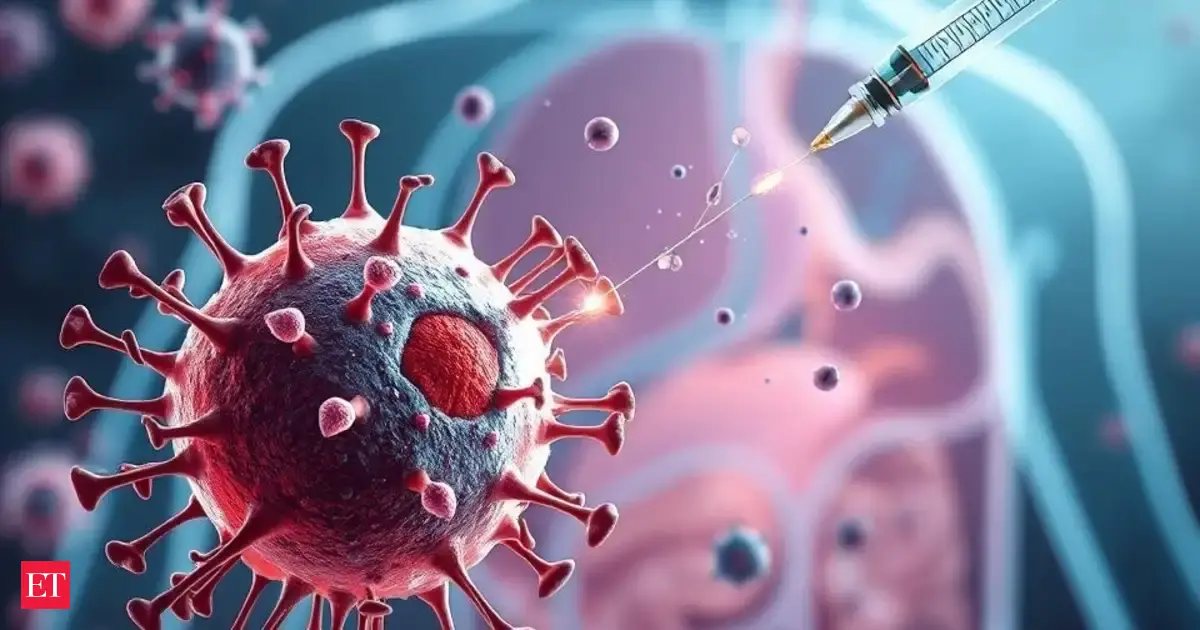
This novel cancer vaccine aims to equip the immune system to identify and destroy melanoma cells. It achieves this by creating a custom mRNA blueprint derived from each patient’s specific tumor mutations. Advanced artificial intelligence algorithms analyze the tumor’s genetic data to generate a molecular template, which is then synthesized at Gamaleya’s facilities.
The resulting tailor-made mRNA encodes proteins that activate a targeted cytotoxic immune response. The goal is to eliminate not only primary tumors but also any metastatic cancer sites.
Alexander Gintsburg highlighted the remarkable speed of this process, stating that the entire vaccine development cycle, from tumor sequencing to production, can be completed in approximately one week. This efficiency is attributed to AI-assisted mathematical modeling and neural network computing, a substantial acceleration compared to traditional personalized cancer therapy timelines.
“Personalized cancer vaccine is a tailored immunotherapy designed to train the patient’s immune system to recognize and attack their specific cancer cells. It uses information from the patient’s tumor genetics to create a unique vaccine that targets tumor-specific mutations, differing from general vaccines.”
—Gamaleya National Research Center
Clinical Trials and Future Outlook
The vaccine model, initiated in mid-2022, has demonstrated promising preclinical efficacy in animal studies, successfully suppressing tumor growth and reducing metastasis. Phase I clinical trials will be conducted at two prominent Russian oncology centers: the Hertsen Research Institute and the N.N. Blokhin National Medical Research Center of Oncology in Moscow.
This personalized vaccine is part of a broader Russian initiative to enhance cancer treatment across various challenging types, including pancreatic, kidney, and non-small-cell lung cancers. The Russian Ministry of Health has established a specialized regulatory pathway for this vaccine, acknowledging its individualized nature.
The state intends to offer this cancer vaccine free of charge to Russian citizens. Government funding is allocated for its production, estimated at approximately 300,000 rubles (about USD 2,869) per dose. Approximately 4 million people in Russia currently live with cancer, with about 625,000 new diagnoses annually, underscoring the critical need for innovative treatments like this.
This vaccine’s potential success could signify a pivotal moment in Russia’s campaign against cancer, bolstering its personalized medicine program. Unlike COVID-19 mRNA vaccines targeting a single viral antigen, this cancer vaccine is engineered to encode multiple neoantigens specific to each patient’s tumor, offering a multi-pronged immune attack.
The development mirrors ongoing global efforts in personalized oncology. For instance, in the United States, Moderna and Merck are collaborating on a personalized mRNA cancer vaccine targeting melanoma, which has shown encouraging results in early trials, reducing the risk of recurrence or death by 44% compared to Keytruda alone in a Phase 2b study (Source: National Cancer Institute, 2024).
