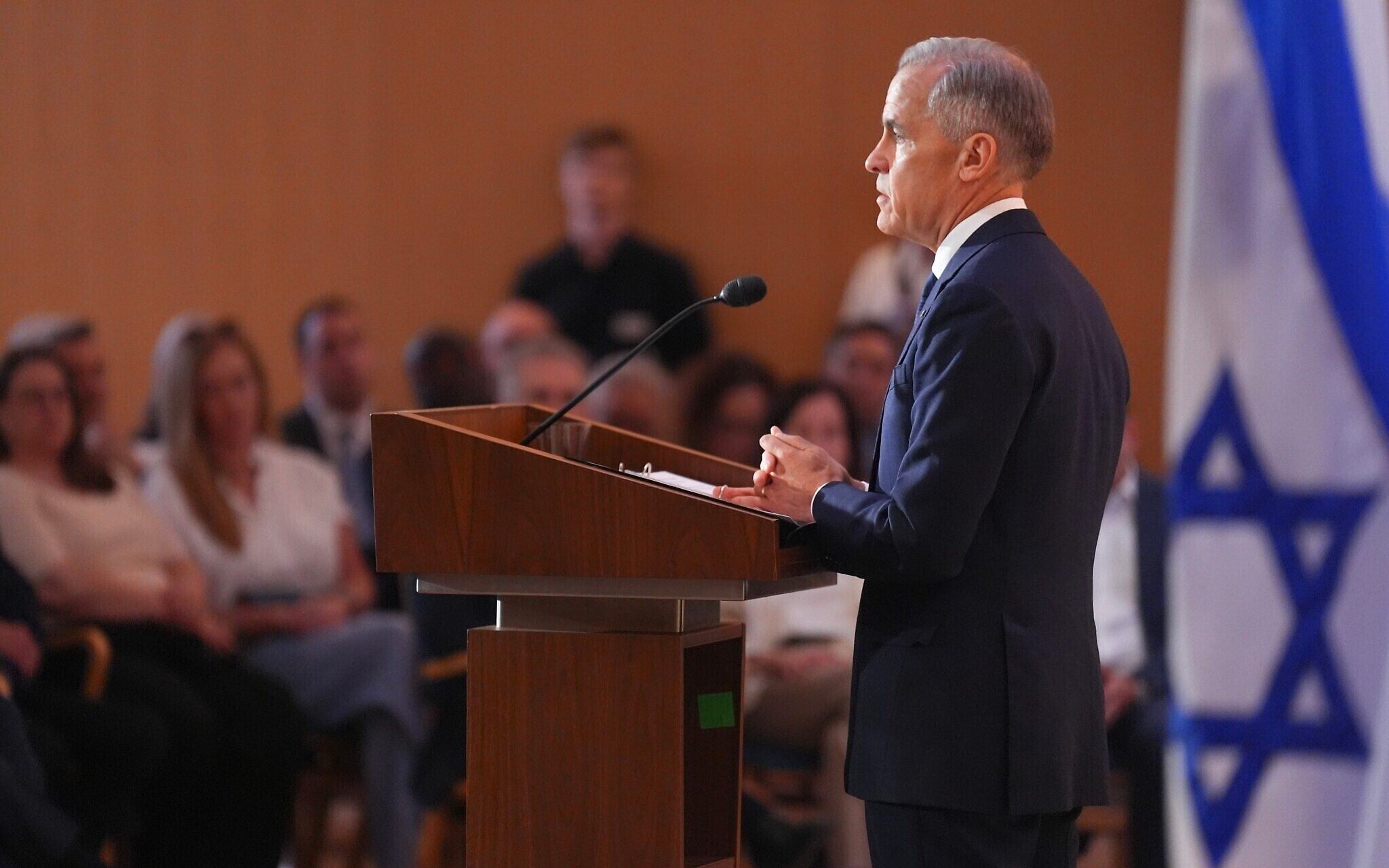
Canada Forms Ministerial Council on Antisemitism Without Restricting Free Speech
Prime Minister Mark Carney of Canada has declared the nation a failure in protecting its Jewish community amid a surge in antisemitism, announcing a new Ministerial Advisory Council on Rights, Equality and Inclusion to address the crisis without restricting free speech. The admission comes as hate incidents targeting Jewish Canadians have risen sharply in recent years, forcing the government to confront systemic gaps in safeguarding minority rights.
The Problem: A Crisis of Trust and Rising Hate
Carney’s remarks mark a turning point in Canada’s approach to antisemitism, a problem that has festered for years beneath the country’s reputation for multiculturalism. The Government of Canada’s own hate crime statistics show a 30% increase in antisemitic incidents between 2022 and 2024, with Ontario and Quebec—home to the largest Jewish populations—reporting the highest concentrations. The surge follows global trends, including the October 2023 Israel-Hamas conflict, which saw Canadian cities like Toronto and Montreal become flashpoints for protests that often devolved into violence.

Yet the crisis extends beyond street-level incidents. A 2025 report by the B’nai Brith Canada found that 42% of Jewish Canadians reported experiencing antisemitic harassment in the past year, with 1 in 5 avoiding public spaces out of fear. The problem is not just statistical—it is structural. Canada’s legal framework, while robust on paper, has struggled to adapt to the digital age, where hate speech spreads virally and anonymously.
“The government’s delay in addressing this has eroded trust in institutions. Jews in Canada are not asking for special treatment—they’re asking for equal protection under the law.”
Geographic Hotspots: Where the Crisis Meets Local Realities
The impact of this crisis is not evenly distributed. Toronto, home to Canada’s largest Jewish community (approximately 250,000 people), has seen a 40% rise in antisemitic incidents since 2023, according to local police data. The city’s diverse neighborhoods—from the historic St. Lawrence Market area to the suburban Jewish enclaves of Thornhill and North York—have become battlegrounds for free speech and safety.
In Montreal, where the Jewish population is concentrated in the Plateau and Côte-des-Neiges neighborhoods, tensions have reached a boiling point. The city’s municipal government has recently allocated CAD 5 million to community safety initiatives, but critics argue the funding is insufficient compared to the scale of the problem. Meanwhile, Quebec’s Bill 21, which restricts religious symbols for public employees, has further alienated Jewish communities by framing religious identity as a political liability.
Smaller cities like Vancouver and Calgary have also reported spikes in hate crimes, though their Jewish populations are less dense. The Vancouver Sun revealed that hate crimes against Jewish individuals in British Columbia rose by 50% in 2025, with many incidents linked to online radicalization campaigns targeting local synagogues.
The Advisory Council: A Step Forward or Too Little, Too Late?
Carney’s new Ministerial Advisory Council on Rights, Equality, and Inclusion will be tasked with examining antisemitism while explicitly stating that its mandate does not include curtailing freedom of speech. This distinction is critical. Canada’s Charter of Rights and Freedoms guarantees free expression, but the line between protected speech and incitement to hatred has become blurred in the digital age. The council’s challenge will be to balance legal protections with community safety—a tightrope walk that has failed Jewish Canadians for too long.
Legal experts warn that without concrete action, the council risks becoming a symbolic gesture. “Words matter, but they mean nothing without enforcement,” says Elias Cohen, a constitutional lawyer specializing in hate speech litigation. “The real test will be whether this council leads to prosecutions, policy changes, and funding for community-led solutions.”
“We’ve seen advisory councils come and go. What we need is a national strategy—one that includes mandatory hate crime training for police, expanded funding for Jewish community centers, and a clear legal definition of antisemitism that courts can enforce.”
The Directory Bridge: Who Can Help?
The problems created by this crisis are immediate and systemic. Jewish Canadians need more than government statements—they need actionable solutions. Here’s how professionals in our directory can step in:

- Legal Defense: Antisemitic harassment cases often require specialized litigation. Firms with experience in hate crime litigation are already seeing a surge in demand. These attorneys help victims navigate civil claims, seek injunctions against repeat offenders, and push for stronger criminal penalties.
- Community Security: Synagogues and Jewish community centers are investing in private security assessments to mitigate risks. Many are partnering with firms that specialize in threat intelligence and emergency response planning for high-risk venues.
- Digital Counter-Speech: Online hate campaigns require rapid response. Organizations offering counter-speech and digital advocacy services are in high demand, helping Jewish communities monitor, document, and counter antisemitic narratives before they escalate.
- Mental Health Support: The psychological toll of antisemitism is severe. Trauma-informed therapists with experience in hate crime recovery are seeing increased referrals from Jewish community organizations.
The Long Game: What Comes Next?
Carney’s admission is a rare moment of candor from a government that has long prided itself on multicultural harmony. But the question now is whether this will translate into lasting change. Historically, Canada has struggled to address hate crimes with the urgency they deserve. The 2001 Commission on Canadian Jewish Life recommended sweeping reforms, but many remain unimplemented.
The new advisory council’s first report is due in 12 months. In that time, Jewish Canadians will continue to grapple with the daily reality of a country that has failed them. The challenge for Carney—and for every Canadian—is to turn this moment of reckoning into a sustained commitment.
The clock is ticking. And the Jewish community is watching.
For verified professionals and organizations addressing antisemitism, hate crime prevention, and community safety, explore our curated Global Directory.