
Turkey Diversifies Energy Sources, But Remains Reliant on Russia
ANKARA, Turkey – October 4, 2025 – While facing international pressure to reduce dependence on Russian energy, Turkey is actively pursuing a strategy of diversification, securing new long-term contracts for liquified natural gas (LNG) from the United States, Australia, Egypt, Algeria, Qatar, and Nigeria. Though, the country remains significantly reliant on Russian energy supplies, particularly for lignite and its first nuclear power plant project.
Kremlin spokesperson Dmitry Peskov recently argued that forcing countries to abandon Russian gas simply drives up costs for consumers, stating it’s “the simplest way is to force the entire world to pay more for American oil and LNG.”
Turkey’s approach, however, appears to be one of broadening its energy portfolio rather then outright abandonment of Russian sources. During a recent visit to the US, Turkey’s state-owned oil and gas company, BOTAS, announced two meaningful LNG contracts. One agreement wiht US firm Mercuria will provide 70 billion cubic meters of LNG over 20 years, beginning in 2026. A second deal with australian company Woodside Energy will deliver 5.8 billion cubic meters of LNG.
“The Turkish government has been making significant efforts recently to diversify its energy sources in order to ensure energy security,” explained Kadri tastan, a senior non-resident fellow with the German Marshall Fund’s Brussels office. “At the same time it’s also been promoting domestic energy sources and renewables.”
Despite these efforts,fossil fuels still dominate Turkey’s energy market,accounting for approximately 84% in 2022,according to a report by the Union of Chambers of Turkish Engineers and Architects,with renewables comprising the remaining 16%.
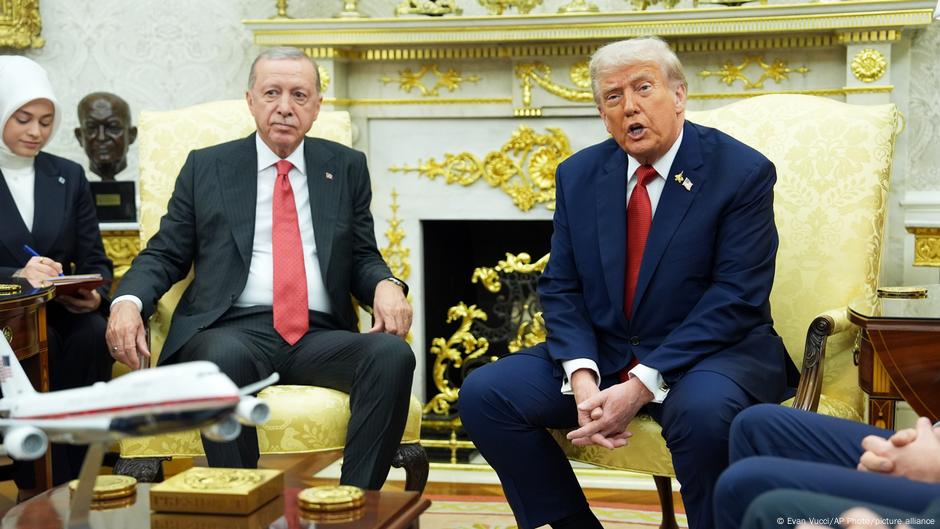
The new agreements with the US also serve a diplomatic purpose, according to Tastan. “President Trump wants to increase US sales of fossil fuels and these new agreements could be used as a tool in negotiations around things like tariffs,” he suggested.
Turkey’s energy relationship with Russia extends beyond natural gas. In 2022, 43% of Turkey’s lignite needs were met through Russian imports. Moreover, the Akkuyu Nuclear Power Plant, Turkey’s first nuclear facility, is under construction with the assistance of Russian atomic power firm Rosatom.
While completion of Akkuyu has been delayed due to sanctions against Russia, Turkish Energy Minister Alparslan Bayraktar anticipates the plant will begin operating next year, with full completion expected by 2028.
Analysts predict Turkey will continue to navigate a complex energy landscape, balancing the need for energy security with its existing relationships and ongoing projects with Russia.
