Can African Economies Follow Japan and South Korea’s Path to Prosperity?
By May 31, 2026, a debate that began quietly in academic circles has now reached the boardrooms of Lagos, Nairobi, and Johannesburg: Can Africa replicate the economic miracles of East Asia? The question isn’t just theoretical—it’s a litmus test for the continent’s next generation of policymakers, investors, and entrepreneurs. While Japan and South Korea transformed from war-torn economies into global powerhouses in decades, Africa’s path is fraught with unique challenges: colonial-era infrastructure gaps, climate vulnerabilities, and a geopolitical landscape where China’s Belt and Road Initiative competes with Western aid models. The stakes? Trillions in potential GDP growth—or the risk of deepening inequality if the “Asian recipe” fails to adapt.
Why the Asian Model Isn’t a Blueprint—And What Africa Must Do Differently
The “Asian recipe” for prosperity—export-led growth, state-directed industrialization, and rapid urbanization—was forged in a specific era, and context. South Korea’s chaebols (conglomerates like Samsung) and Japan’s keiretsu (corporate groups) thrived under protectionist policies that Africa’s WTO commitments forbid. Today, the real question isn’t whether Africa can copy Asia, but whether it can innovate a model that fits its fragmented markets, youth bulge, and digital-first economy.
1. The Infrastructure Paradox: Asia Built Roads; Africa Needs Smart Grids
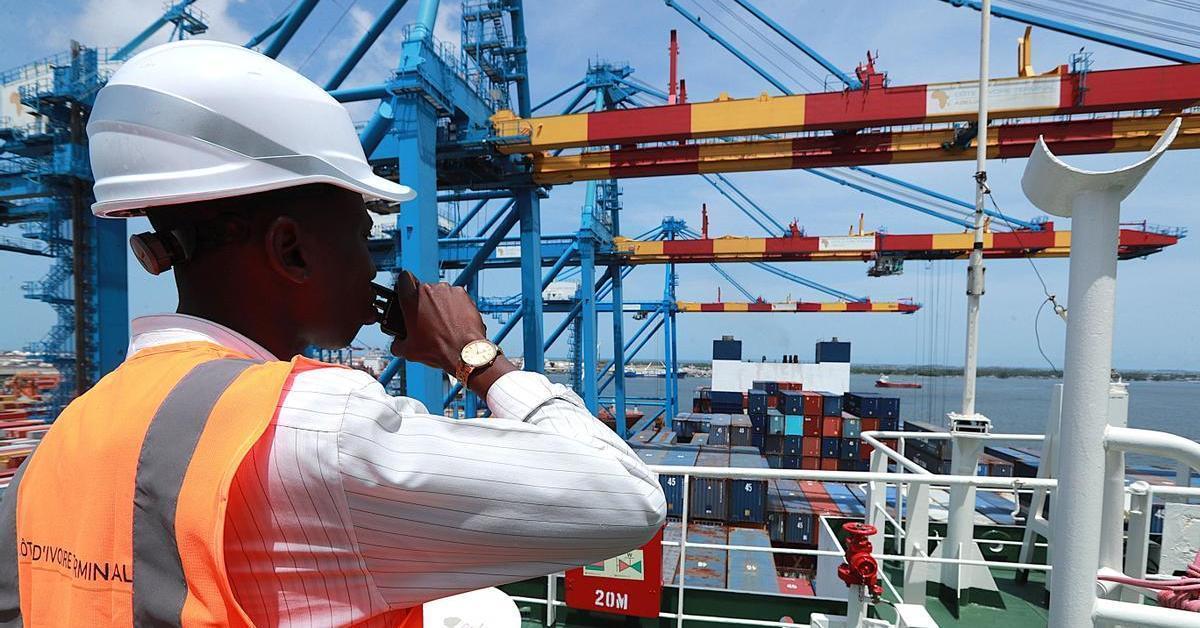
When East Asia industrialized, it invested heavily in physical infrastructure—highways, ports, and factories. Africa’s challenge? Its infrastructure deficit costs the continent $100 billion annually in lost GDP, but the needs are different. While Ethiopia’s Grand Renaissance Dam mirrors China’s Three Gorges in ambition, Rwanda’s Kigali Innovation City proves the future lies in digital infrastructure. The country’s fiber-optic backbone and fintech ecosystem (home to M-Pesa’s African pioneers) show how leapfrogging legacy systems can outpace Asia’s incremental growth.
“We’re not building another Lagos-Ibadan highway. We’re building a smart grid that powers a million startups—not just factories.”
Yet the gap remains stark. In Kenya’s Athi River Basin, where 70% of industrial zones lack reliable power, manufacturers are turning to private renewable energy developers to bypass state-owned utilities. The lesson? Africa’s infrastructure playbook must prioritize adaptive solutions—modular solar microgrids for rural SMEs, not just mega-dams.
2. The Labor Market Time Bomb: Asia’s “Demographic Dividend” Is Africa’s Crisis
East Asia’s growth relied on a surplus of cheap labor feeding export factories. Africa’s 60% youth unemployment rate threatens to become a powder keg. The difference? Asia’s labor force was skilled through vocational training tied to industrial needs. Today, Africa graduates 11 million students annually into a job market where only 30% of roles require higher education.
| Metric | Africa (2026) | East Asia (1970s) |
|---|---|---|
| Youth Unemployment Rate | 28.5% | 5.2% |
| Vocational Training Enrollment | 12% of 15-24 age group | 45%+ (Japan/S. Korea) |
| Manufacturing Job Creation | 1.2 jobs per 1,000 workers | 12.8 jobs per 1,000 workers |
Nigeria’s Lagos State is experimenting with a radical fix: its “Tech Hub” policy offers free coding bootcamps to 50,000 unemployed graduates annually. But scaling this requires specialized ed-tech firms to bridge the curriculum gap between theory and industry needs.
“Our problem isn’t a lack of graduates—it’s a lack of relevant graduates. The Asian model worked because factories needed welders, not Python developers. Today, we need both.”
3. Geopolitics as a Wildcard: China’s Shadow vs. Western Aid
East Asia’s growth was unencumbered by debt diplomacy. Today, Africa’s infrastructure boom is funded by $1.7 trillion in loans from China, Japan, and Western institutions. The risk? Zambia’s 2020 default on Chinese debt revealed how resource-backed loans can strangle sovereignty. Meanwhile, the U.S. And EU are pushing “debt-for-climate” swaps—a model that could either accelerate green growth or deepen dependency.
In Ethiopia’s Addis Ababa, the battle lines are clear: China’s state-owned enterprises dominate construction, while the World Bank funds digital infrastructure. The outcome? A hybrid economy where international arbitration firms are already advising governments on navigating these competing contracts.
The African Adaptation: Where the Asian Model Fails—and Succeeds
Three regions offer clues to Africa’s potential path:
- Rwanda: Used East Asian-style industrial parks (like Kigali’s EPZ) but paired them with digital trade zones to attract fintech and AI firms. Result? GDP growth of 8.6% in 2025, outpacing peers.
- Ghana: Leveraged its cocoa and gold exports to negotiate resource-for-infrastructure deals with China, avoiding debt traps seen in Zambia.
- South Africa: Its manufacturing sector is collapsing under global competition, but Cape Town’s tech corridor is becoming a hub for African AI startups—mirroring South Korea’s shift from shipbuilding to semiconductors.
The common thread? Hybridization. Africa isn’t copying Asia—it’s selectively borrowing:
- Adopting export zones (like Asia) but for digital services, not just textiles.
- Using state-led infrastructure (like Japan’s MITI) but with private sector partnerships to avoid corruption.
- Leveraging youth unemployment as a tech talent pool, not a social crisis.
The Critical Missing Link: Who’s Building Africa’s “Keiretsu”?
East Asia’s success required corporate ecosystems—groups like Japan’s Mitsubishi or South Korea’s Hyundai that dominated sectors for decades. Africa’s equivalent doesn’t exist yet. But in Kenya’s Nairobi, Safaricom (mobile money pioneer) and KCB Bank are forming fintech consortia to compete globally. The challenge? These groups need strategic M&A advisors to scale beyond national borders.
Meanwhile, Nigeria’s Lagos is seeing a rise of Afro-tech conglomerates—companies like Andela (global talent platform) and Paystack (acquired by Stripe). But without patient capital and intellectual property lawyers to protect their innovations, these firms risk being acquired by foreign firms before they can dominate.
The Bottom Line: Africa’s Choice—Copy or Innovate?
By 2030, Africa’s working-age population will grow by 250 million people. The Asian model offers a roadmap—but only if Africa adapts it to its context. The risks? Falling into the middle-income trap (like Brazil) or repeating Asia’s urbanization without planning (see: Lagos’ traffic gridlock).
The solutions? They’re already emerging:
- Smart city architects designing walkable, green cities (like South Africa’s Tshwane).
- Renewable energy cooperatives bypassing state monopolies (e.g., M-KOPA’s solar microgrids).
- Corporate governance lawyers helping African firms navigate cross-border M&A without losing control.
The Asian recipe isn’t a menu—it’s a toolkit. Africa’s task isn’t to replicate it, but to repurpose it. The question for policymakers, investors, and entrepreneurs isn’t whether they can build the next Samsung. It’s whether they can build something better—and faster.
“The Asian miracle was about catching up. Africa’s opportunity is to leapfrog. But leapfrogging requires leaders who see beyond the next election cycle.”
The clock is ticking. By 2040, Africa’s GDP could double—or stagnate. The difference will be made by those who recognize that the “Asian recipe” was never a one-size-fits-all solution. It was a starting point. Now, Africa must write its own.