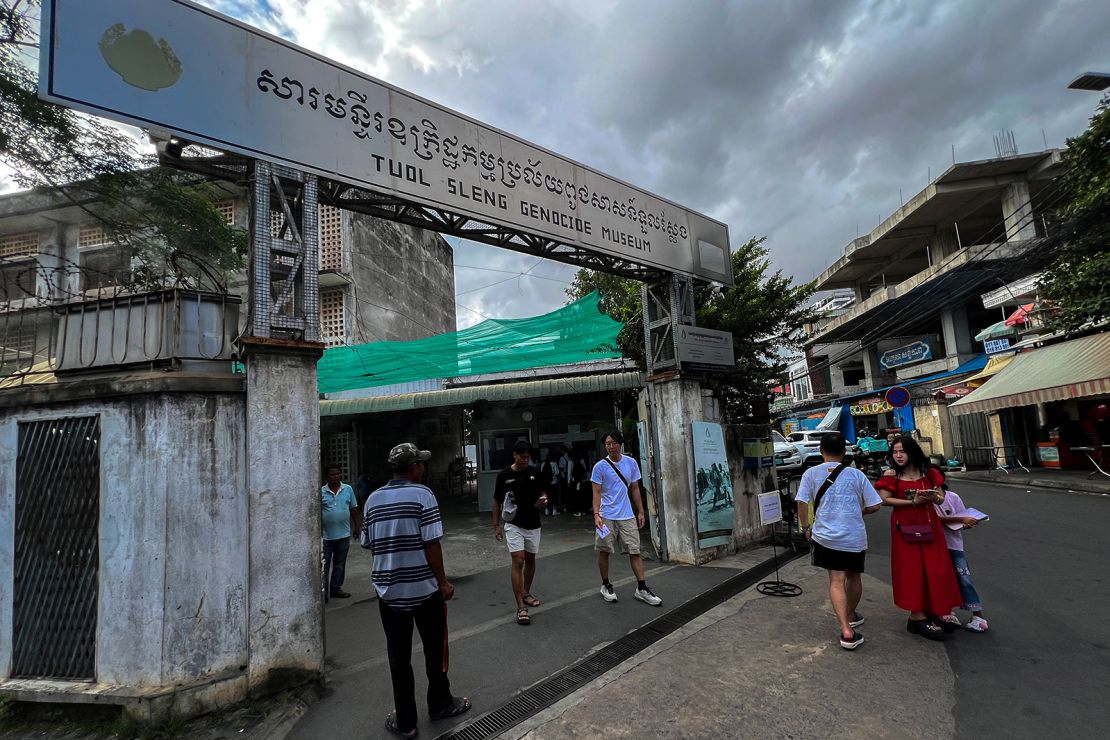
Cambodia’s Dark Past Gains UNESCO World Heritage Status
Sites of Khmer Rouge Atrocities Recognized for Global Significance
Three locations synonymous with the brutal Khmer Rouge regime’s reign of terror have been officially added to the UNESCO World Heritage List, marking a significant moment for Cambodia’s historical remembrance.
Historic Sites of Genocide Recognized
The United Nations cultural agency, UNESCO, inscribed the sites on Friday during its 47th World Heritage Committee session in Paris. The decision aligns with the 50th anniversary of the Khmer Rouge’s ascent to power, a period from 1975 to 1979 that saw the deaths of an estimated 1.7 million Cambodians from starvation, torture, and executions.
UNESCO’s prestigious list, which includes landmarks like the Great Wall of China and the Pyramids of Giza, now features these Cambodian sites, acknowledging their profound historical and humanitarian importance.
Memorials to Inhumanity and Resilience
The newly listed locations include two notorious prisons and a harrowing execution ground, places immortalized in historical accounts and even Hollywood films.
The Tuol Sleng Genocide Museum, formerly a high school in the capital Phnom Penh, operated as the infamous S-21 prison. Approximately 15,000 individuals were incarcerated and subjected to torture within its walls.
In rural Kampong Chhnang province, the M-13 prison stands as another grim testament to the early Khmer Rouge era. Choeung Ek, located south of Phnom Penh, served as a killing field and mass burial site. The atrocities documented there were central to the 1984 film “The Killing Fields.”
The Khmer Rouge seized Phnom Penh on April 17, 1975, forcibly relocating the city’s inhabitants to the countryside. Their oppressive rule ended in 1979 following an invasion by neighboring Vietnam.
The Extraordinary Chambers in the Courts of Cambodia, established to prosecute Khmer Rouge leaders, concluded its operations in September 2022. Over 16 years, the tribunal incurred costs of $337 million and secured convictions for only three individuals.
A Call for Enduring Peace
Cambodian Prime Minister Hun Manet directed citizens to mark the UNESCO listing with simultaneous drumbeats across the nation on Sunday. In a video message, he stated,
“May this inscription serve as a lasting reminder that peace must always be defended. From the darkest chapters of history, we can draw strength to build a better future for humanity.”
—Hun Manet, Prime Minister of Cambodia
The Documentation Center of Cambodia’s executive director, Youk Chhang, commented on the significance of the designation for future generations.
“Though they were the landscape of violence, they too will and can contribute to heal the wounds inflicted during that era that have yet to heal.”
—Youk Chhang, Executive Director, Documentation Center of Cambodia
This UNESCO recognition represents Cambodia’s first nomination for a modern, non-classical archaeological site and is among the initial submissions worldwide for sites associated with recent conflicts, according to Cambodia’s Ministry of Culture and Fine Arts.
Cambodia previously had four archaeological sites inscribed on the UNESCO World Heritage List: Angkor, Preah Vihear, Sambo Prei Kuk, and Koh Ker.
The inclusion of these sites on the World Heritage List is particularly poignant as Cambodia continues to confront the lingering impacts of genocide. In 2023, tourism to Cambodia reached over 4.1 million international visitors, underscoring the global interest in understanding its history and heritage (Source: Cambodia Ministry of Tourism, 2023).