
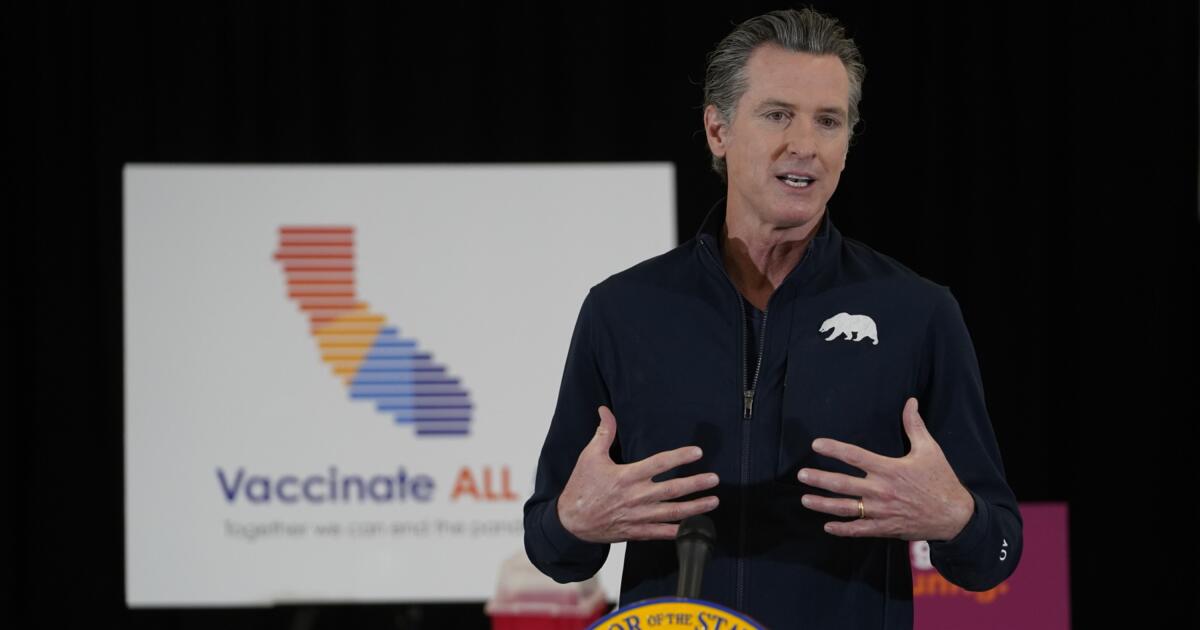
Western States reassert vaccine Review Amid CDC Concerns
California, Oregon, and Washington are reviving a collaborative scientific review process for COVID-19 vaccines, mirroring an initiative frist launched in 2020. This move comes amidst growing concerns about the direction of the Centers for disease Control and Prevention (CDC) under its current director, and a broader national debate over vaccine policy.
The original effort began during President Trump’s first term, fueled by anxieties that the White House, through Operation Warp Speed, might expedite vaccine approvals without sufficient independent scrutiny. Scientists from the California Department of Public Health, along with colleagues in the other states, independently reviewed data for newly FDA-approved COVID-19 vaccines. The group, initially known as California’s scientific safety review, later expanded and was renamed the Western states Scientific Safety Review Workgroup.Their collective assessment ultimately affirmed the safety and effectiveness of the vaccines.
Now, with over 1,000 current and former U.S. Health and Human Services officials publicly calling for the current CDC director’s resignation,the three states are reactivating the workgroup to provide what they deem a credible source of information regarding vaccine safety and efficacy.
The situation is unfolding as the CDC director is scheduled to testify before the Senate Finance Committee on Thursday, facing anticipated bipartisan questioning regarding his approach to vaccine policy. Senator Bill cassidy (R-Louisiana), a committee member, has pledged increased oversight of the agency.
While currently largely symbolic – offering an alternative viewpoint to the CDC – the alliance risks exacerbating existing polarization within healthcare, according to Dr. Peter chin-Hong, an infectious disease expert at UC San Francisco. He emphasized the importance of collaboration across the political spectrum among healthcare professionals. Similar state alliances are also emerging, including one in the Northeast encompassing eight states, and another comprised of healthcare systems in the upper Midwest. Chin-Hong characterized the movement as “people standing up for science” and providing a counter-narrative to the CDC’s messaging.
Though,the revival of independent review raises questions about funding for vaccination programs. Insurance coverage typically aligns with CDC recommendations, and a lack of federal endorsement could create uncertainty regarding vaccine accessibility. the move also occurs against a backdrop of increasing resistance to immunizations, exemplified by Florida’s recent decision to eliminate vaccine mandates in public schools.
Dr. Jake Scott, an infectious disease physician and clinical associate professor at Stanford School of medicine, cautioned that the alliance could invite repercussions from the current management and its supporters, perhaps including reduced federal funding or increased regulatory scrutiny. Despite these risks,Scott argued that the potential consequences of inaction – allowing preventable diseases to spread,eroding public trust in vaccines,and disregarding decades of medical evidence – are far more severe. “these states really don’t have a choice here, regardless of the political fallout,” he stated.
(Rong-Gong Lin of the Los Angeles Times contributed to this report.)
