
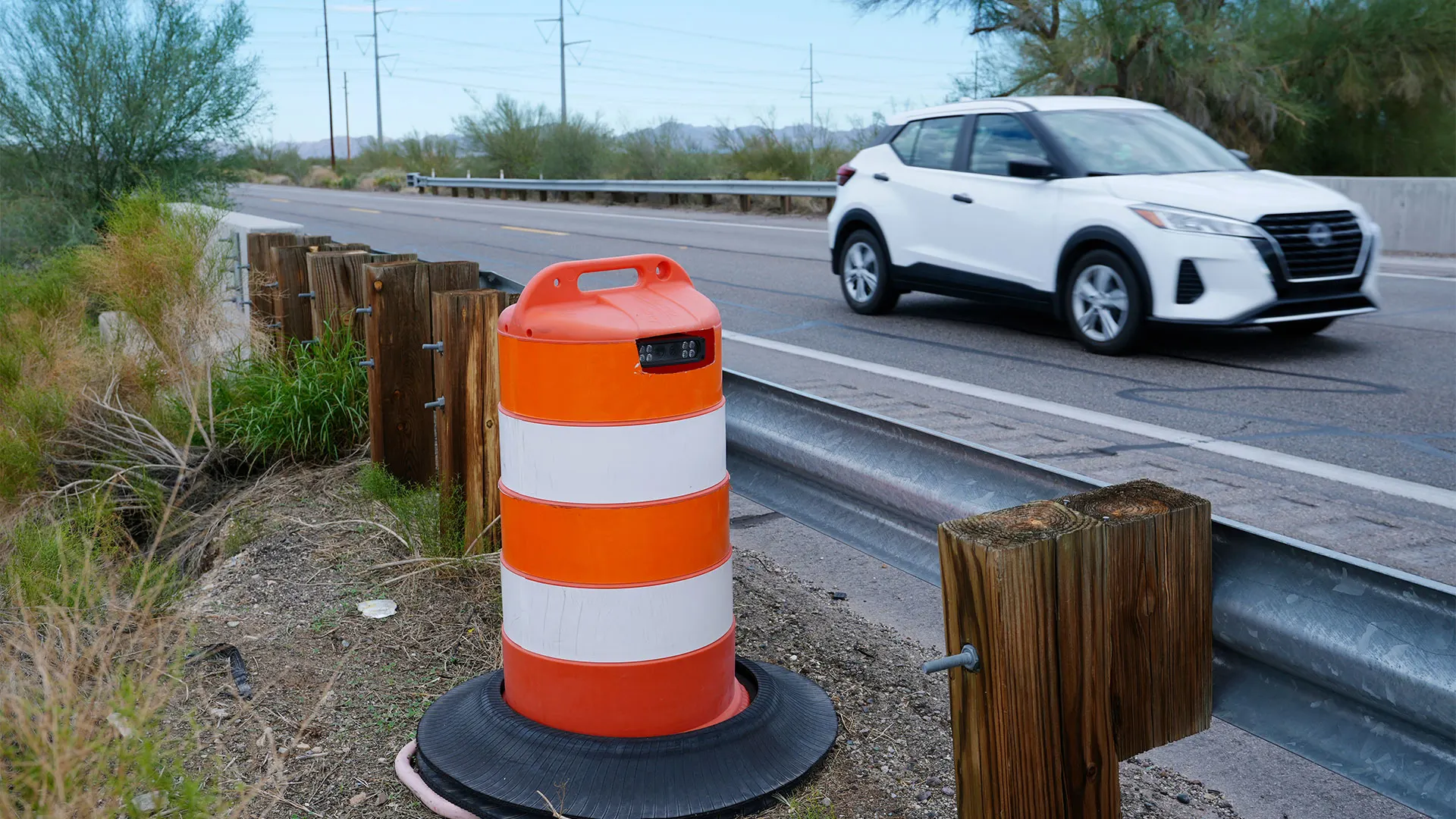
More than two dozen privacy and advocacy organizations are urging California Governor Gavin Newsom to investigate and dismantle a network of concealed license plate readers deployed across Southern California, alleging the devices feed data into a U.S. Border Patrol program used for domestic intelligence gathering. The groups contend the program scans roadways for travel patterns deemed “suspicious.”
In a letter sent Tuesday to Newsom, organizations including the Electronic Frontier Foundation and Imperial Valley Equity and Justice called for a review of permits issued for the readers, their subsequent revocation, and the removal of the devices. Researchers identified approximately 40 license plate readers in San Diego and Imperial counties, both bordering Mexico, with over two dozen hidden within construction barrels, according to the letter.
The call for action follows an Associated Press investigation published in November that revealed the Border Patrol had been secretly installing license plate readers disguised as routine traffic safety equipment. The AP reported the collected data is fed into a predictive intelligence program monitoring millions of American drivers nationwide to identify and detain individuals based on travel patterns considered suspect.
Permits obtained from Arizona by the AP showed the Border Patrol actively concealed its surveillance equipment, camouflaging it within orange and yellow construction barrels along highways. The California groups stated they obtained permits from the California Department of Transportation indicating both the Border Patrol and the Drug Enforcement Administration (DEA) had sought permission to install readers along state highways. Documents show the DEA shares its license plate reader data with the Border Patrol.
The AP investigation detailed how Border Patrol uses a network of cameras to scan and record license plate information, flagging vehicles based on origin, destination, and route. Agents have focused on vehicles making short trips to the border region, suggesting such travel could indicate potential drug or human smuggling. Agents have then referred drivers they deem suspicious to local law enforcement for traffic stops, often citing minor infractions like speeding or lane changes, with drivers unaware they are subjects of a federal intelligence program.
Court documents cited by the AP outline at least two instances in California where residents were caught in the Border Patrol’s surveillance net. In a 2024 case, a Border Patrol agent stopped a Nissan Altima driver after data showed a six-hour travel time for a 50-mile stretch between the U.S.-Mexico border and Oceanside. The agent’s report stated this delay was “a common tactic used by persons involved in illicit smuggling.” In a 2023 case, agents detained a woman traveling between Los Angeles and Phoenix due to a circuitous route, accusing her of smuggling immigrants.
The intelligence program, which has operated under multiple administrations, has drawn increased scrutiny from lawmakers since the AP’s reporting. A spokesperson for the California Department of Transportation stated that state law prioritizes both public safety and privacy. Newsom’s office did not respond to requests for comment.
Although courts have generally upheld license plate reader collection on public roads, they have restricted warrantless government access to other persistent tracking data, such as GPS or cellphone location data. The advocacy groups argued in their letter that the large-scale collection systems, like license plate readers, may violate the Fourth Amendment’s protections against unreasonable searches and seizures.
CBP previously stated its use of plate readers is governed by a “stringent, multi-layered policy framework” and federal law, ensuring responsible application for security purposes. The DEA declined to comment on its investigative tools and techniques.
