
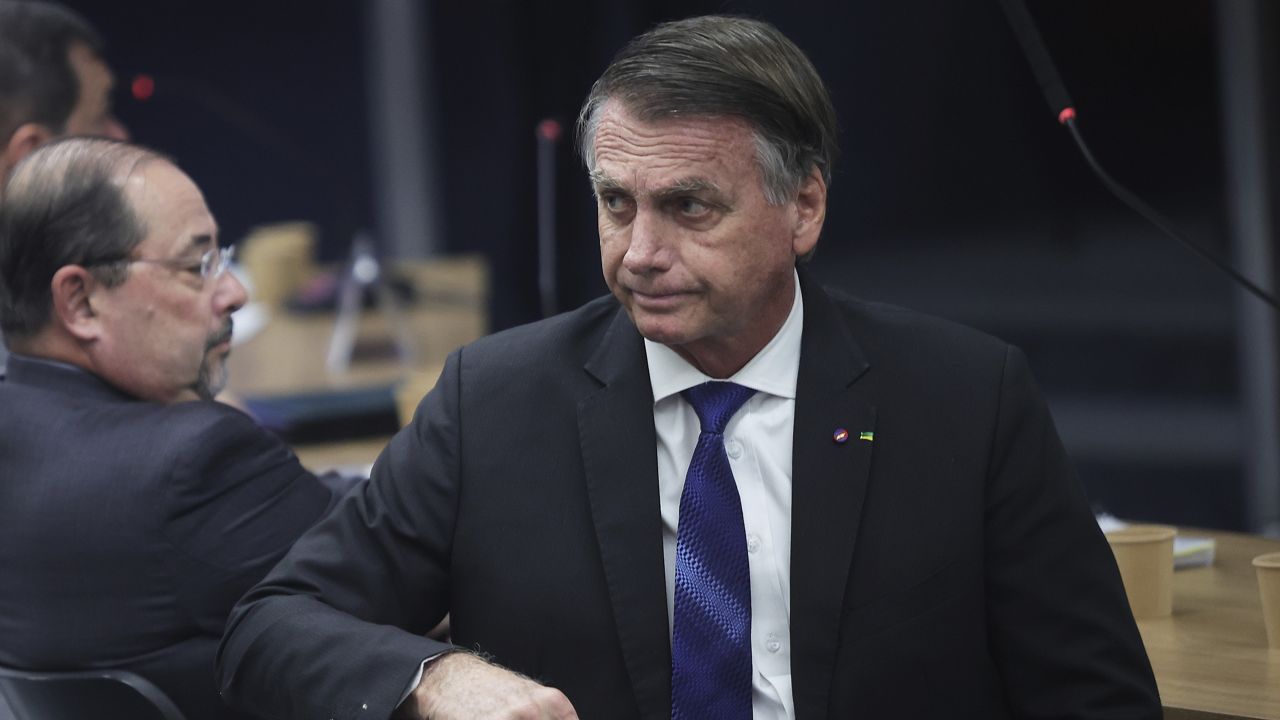
Bolsonaro placed Under house Arrest in Brazil Over Jan. 8th Riot investigation
Brasília, Brazil – Former Brazilian President Jair Bolsonaro has been placed under house arrest by Supreme Court Justice Alexandre de Moraes, escalating a probe into his alleged role in inciting the January 8, 2023, attacks on government buildings in Brasília. The decision, announced Thursday, comes after Bolsonaro addressed supporters in Rio de Janeiro, reportedly via his son’s phone, urging them to seek amnesty for himself and others facing charges related to the riots.
the move marks a significant development in the ongoing fallout from the attacks, wich mirrored the January 6th insurrection in the United States and were carried out by supporters refusing to accept Bolsonaro’s defeat in the 2022 presidential election to current President Luiz Inácio lula da Silva.
Justice de Moraes cited Bolsonaro’s recent communication as a violation of existing court restrictions and evidence of continued attempts to undermine the judiciary. He specifically highlighted Bolsonaro’s dissemination of messages “with a clear content of encouragement and instigation to attacks against the Supreme Court and a blatant support for foreign intervention in the Brazilian Judiciary,” a likely reference to support received from former U.S. President Donald trump. The judge also noted that Bolsonaro’s son, Senator Flávio Bolsonaro, briefly posted the phone address on Instagram before removing it, seemingly to conceal the transgression.
Bolsonaro’s legal team has not yet issued a statement.however, Senator Flávio Bolsonaro responded on X (formerly Twitter), claiming Brazil “is officially in a dictatorship” and accusing Justice de Moraes of “persecution.”
Background: A History of Political Turmoil and Judicial Action
This isn’t an isolated incident of former Brazilian leaders facing legal scrutiny. Brazil has a recent history of high-profile arrests and investigations involving former presidents. Lula da Silva himself was imprisoned for 580 days on corruption charges that were later overturned due to judicial bias. Michel Temer, who succeeded Dilma Rousseff after her impeachment in 2016, was briefly arrested in 2019 during a graft investigation, though ultimately no conviction resulted. More recently, former President Fernando Collor, impeached in 1992, was convicted of money laundering and corruption in 2023 and is currently serving an eight-year sentance.
The current situation is further complicated by recent international scrutiny. Last week, the U.S. Treasury department announced sanctions against Justice de Moraes, citing concerns over “alleged suppression of freedom of expression” related to his handling of the Bolsonaro investigation and the shutdown of certain social media accounts.
Looking Ahead: Political Implications for 2026
Political analyst Creomar de Souza of dharma Political Risk and Strategy believes Bolsonaro’s house arrest will galvanize his supporters and potentially fuel a stronger right-wing opposition movement ahead of the 2026 presidential election. He predicts a deeply polarized political landscape, with one side focused on securing amnesty for those involved in the January 8th attacks and maintaining a strong right-wing presence, while the Lula administration attempts to demonstrate effective governance.Under the terms of the court order, Bolsonaro is subject to ankle monitoring, limited to visits from family and lawyers, and has had his mobile phones confiscated. The investigation continues, and the outcome could have profound implications for the future of Brazilian politics.
