
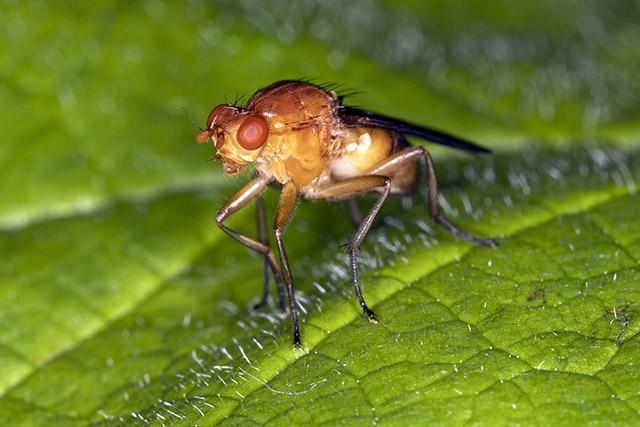
Fruit Fly Research Reveals How Nervous System Balances Stability and Movement
New research from the University of Washington School of Medicine has uncovered a key mechanism in fruit flies that allows their nervous systems to seamlessly switch between maintaining stability and initiating movement. The study, published September 17th in Nature, details how nerve cells responsible for detecting limb movement are actively silenced during walking and grooming.
Led by former postdoctoral fellow Chris Dallmann, and spearheaded by neuroscientist John Tuthill, the research team demonstrated that proprioceptive neurons – those sensing body position and motion – are deactivated when the fly is actively moving. This isn’t a general shutdown of sensory input,but a targeted suppression of feedback related to leg movement.
“Think of it like this,” explains Tuthill, a professor of neurobiology and biophysics. “We use stabilizing reflexes to stay upright on a moving train, but when we walk across uneven ground, we need a different mode that prioritizes dynamic motion.”
The researchers identified a specific neural circuit responsible for this “on-off switch.” This circuit utilizes interneurons – nerve cells that connect sensory and motor neurons – to selectively inhibit the flow of data from the leg’s position-detecting neurons. Importantly, this suppression only occurs during self-initiated movements, not when the fly’s limbs are moved passively.
Further investigation suggests this inhibition may even be predictive, beginning while the leg is at rest, after signals from the brain reach the interneurons, and before movement begins. The researchers traced the specific nerve pathways involved in this leg-specific inhibition.
The team believes this selective suppression of movement feedback could enhance the fly’s responsiveness to unexpected external disturbances. By temporarily reducing the amount of sensory information processed, the nervous system may become more attuned to novel stimuli.
Understanding how proprioception – the sense of body position and motion – is controlled is crucial for advancing our knowlege of sensorimotor function. Tuthill notes that this basic research could ultimately inform the growth of treatments for sensorimotor disorders and improve rehabilitation strategies following injury.
The study utilized cell-type specific calcium imaging to observe the activity of these nerve cells across a range of behaviors. Dallmann is now continuing this research as a Marie Sklodowska-Curie Fellow at the University of wuerzburg in Germany.
This research was supported by funding from the Deutsche Forschungsgemeinschaft (German Research Foundation), the National Institutes of health (NIH), and several prestigious fellowships and awards including the Searle Scholar Award, Klingenstein-Simons Fellowship, Pew Biomedical Scholar Award, McKnight Scholar Award, and Sloan research fellowship, as well as support from the New York Stem Cell Foundation.
