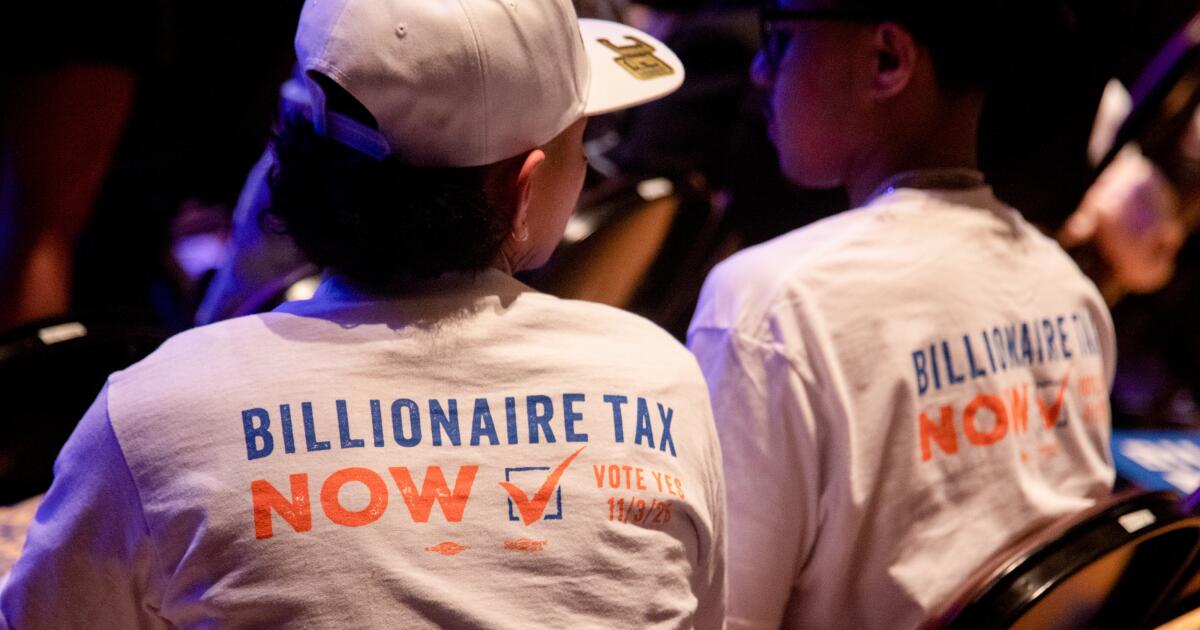
Billionaire Tax Pledge Seeks November Ballot to Fund Federal Healthcare
A California ballot initiative to impose a 1.5% annual tax on billionaires—backed by a coalition of labor unions and progressive advocacy groups—will appear on the November 2026 ballot after proponents secured enough signatures to qualify. The measure, dubbed the “Billionaire Accountability Act,” aims to raise an estimated $10 billion annually to fund Medicaid expansion and close budget gaps in state healthcare programs. The push comes as California faces a projected $22.5 billion deficit in its 2027 fiscal year, according to the state’s Legislative Analyst’s Office.
Why this matters: The proposal marks the first major test of direct democracy in U.S. tax policy since the 1990s, when Colorado voters rejected a similar measure targeting millionaires. Unlike federal efforts—stalled by partisan gridlock—the California initiative bypasses Congress entirely, setting a precedent for state-level wealth taxation that could inspire similar ballot measures in New York, Massachusetts, and Washington.
How the Billionaire Tax Would Work—and Who It Targets
The initiative would impose a 1.5% annual tax on individuals with a net worth exceeding $50 million, rising to 2.5% for those worth over $1 billion. Proponents argue the tax would affect just 2,500 Californians—roughly 0.01% of the state’s population—while generating revenue equivalent to 10% of the state’s general fund. Critics, including the California Chamber of Commerce, warn the tax could spur wealth migration to Texas or Florida, where no such levy exists.

“This isn’t about punishing success—it’s about ensuring every Californian has access to healthcare, no matter their zip code.”
Where the Money Would Go—and Who Stands to Gain
The revenue would flow into the state’s Medicaid program, which serves over 14 million low-income residents. A 2025 analysis by the University of California, Berkeley’s Goldman School of Public Policy projected the tax could reduce the uninsured rate in California by 20% within five years. Healthcare disparities would shrink most sharply in rural counties like Imperial and Fresno, where Medicaid enrollment exceeds 40% of the population.
Yet the proposal faces legal hurdles. A 2023 ruling by the California Supreme Court in Howard Jarvis Taxpayers Association v. State upheld the state’s ability to tax wealth, but the billionaire tax’s constitutionality remains untested. Legal experts warn the measure could trigger a wave of lawsuits from affected individuals, similar to the challenges faced by New York’s 2021 millionaires’ tax.
What Happens Next: The Road to November
- July 2026: The California Attorney General’s office will review the initiative’s language for compliance with Proposition 11, the state’s ballot measure rules. Past initiatives have faced delays here—Proposition 11 in 2010 took 90 days for review.
- September 2026: Opponents, led by the California Chamber of Commerce, are expected to launch a $50 million campaign against the measure, framing it as a “job killer.” Supporters have pledged $20 million in response.
- November 5, 2026: Voters will decide. If approved, California would become the first state to implement a direct wealth tax on billionaires, creating a model for other states to follow—or reject.
The Broader Impact: A Test for Progressive Taxation Nationwide
This initiative isn’t just about California. It’s a referendum on whether wealth taxation can work in a state with the highest concentration of billionaires outside New York. The Forbes Real-Time Billionaires List ranks 120 individuals worth over $1 billion in California—more than in any other state. If the tax passes, it could embolden similar efforts in:

- New York: Where Governor Kathy Hochul has proposed a 1% surcharge on billionaires to fund education.
- Washington State: Where activists are gathering signatures for a “millionaires’ tax” to fund homelessness programs.
- Texas: Where conservative lawmakers have vowed to preempt any local wealth taxes, citing the California example as a cautionary tale.
Economists at the Urban Institute project that even if only half of targeted billionaires leave the state, California could lose $1.2 billion in annual tax revenue—a figure that would offset only 12% of the proposed healthcare funding. “The exodus risk is real,” says Dr. Elena Martinez, a senior fellow at the institute. “But the political pressure to act is even stronger.”
Who Wins and Who Loses: A Breakdown
| Stakeholder | Potential Gain | Potential Risk |
|---|---|---|
| Low-Income Californians | Expanded Medicaid coverage, reduced wait times for healthcare services. | None—direct beneficiaries of the tax revenue. |
| Billionaires & High-Net-Worth Individuals | None. | Annual tax liability of 1.5–2.5%, potential loss of residency if tax laws change. |
| California Businesses | Stable funding for infrastructure and healthcare, reducing long-term costs. | Wealth migration could shrink the tax base, hurting state revenues. |
| Opponent Groups (Chamber of Commerce, Libertarian Advocates) | Legal challenges could delay or block the tax. | Public backlash if wealth migration worsens economic inequality. |
Solving the Problem: Where to Turn for Expertise
The billionaire tax debate will force Californians to navigate complex legal, economic, and political terrain. For those affected—or seeking to mitigate risks—here are the professionals already preparing to assist:

- Wealth Management Firms: High-net-worth individuals may need to restructure assets to minimize tax exposure. Firms specializing in cross-border tax planning are already fielding inquiries.
- Healthcare Advocacy Groups: Organizations like the California Nurses Association will play a key role in monitoring how funds are allocated to Medicaid programs.
- Legal Counsel for Tax Litigation: If the measure faces legal challenges, commercial litigation attorneys with experience in state tax law will be in high demand.
The billionaire tax isn’t just a policy experiment—it’s a stress test for California’s economy, its political system, and its ability to fund essential services without raising traditional taxes. Whatever the outcome, the ripple effects will be felt far beyond Sacramento. For businesses, residents, and policymakers alike, the question isn’t whether this tax will pass—but how the state will adapt if it does.
“This isn’t about raising money. It’s about sending a message: that in California, we don’t accept inequality as inevitable.”
As the clock ticks toward November, the stakes couldn’t be clearer. The World Today News Directory is tracking the fallout—connecting readers to verified professionals who can help navigate the legal, financial, and political challenges ahead. Find a tax attorney or wealth manager today to prepare for what comes next.