Beyond the Ban: How US Schools Are Teaching AI Literacy
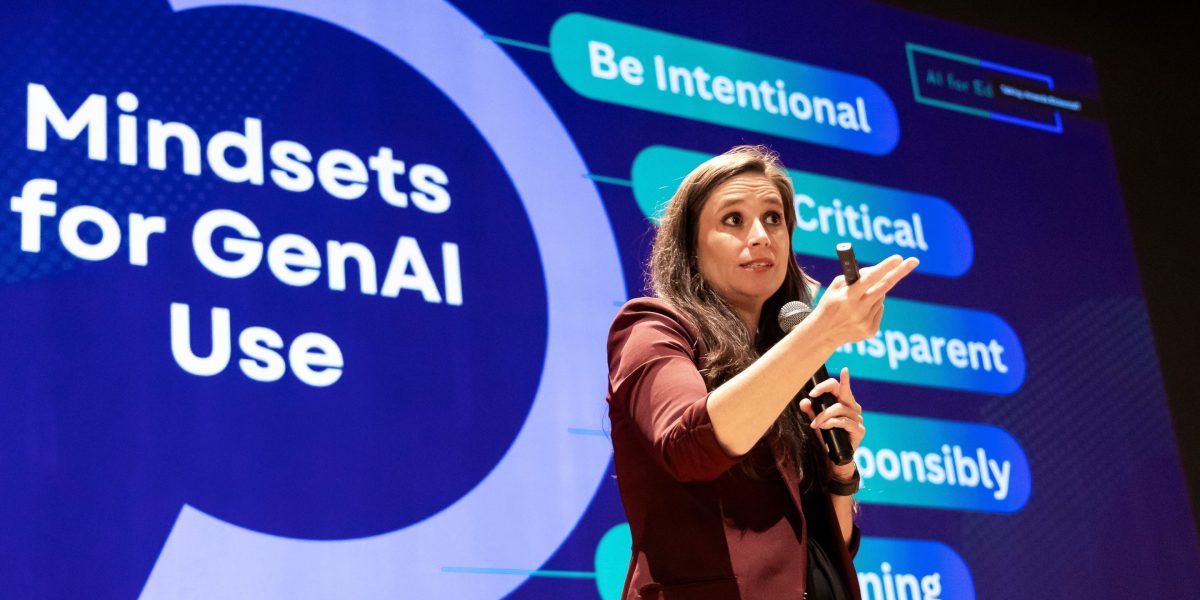
Educators are confronting a critical vulnerability: widespread over-trust in frictionless algorithms. According to AI For Education founder and CEO Amanda Bickerstaff, demonstrating AI hallucinations—such as generating a world map where Mali is spelled “Mail” and Egypt is identified as “Sopth”—serves as a way to show students the shortcomings of the technology.
Companies including Anthropic, Google, and OpenAI provide educational institutions with workshops focused on operating their artificial intelligence products. However, educators are concerned that students may outsource their thinking to chatbots.
The Hidden Costs of Bakelited Interfaces
Modern artificial intelligence systems suffer from what researchers describe as the “Bakelite radio” phenomenon. Just as early 1900s radio manufacturers enclosed complex wiring inside sleek plastic shells to drive consumer adoption, today’s AI developers mask models behind frictionless interfaces, friendly voices, and children’s toys. Research into how kids use smart speakers like Google Home and Alexa, highlighted by MIT researcher and Day of AI founding member Randi Williams, shows that flaws in AI systems expose minors to risks like manipulation, security vulnerabilities, and unintended exposure to harmful material.
Data privacy is a significant concern. Conversations stored on external servers can be used for data training and potentially leaked.
State-Level Blueprints and Standardized Compliance
By naming Matt Winters as its AI education specialist in 2024, Utah set a precedent by becoming the initial U.S. state to establish a dedicated, full-time oversight role for the technology within its school system. Districts in Utah are required by state law to have AI policies in place by July 2027. According to Chris Agnew, director of the Generative AI for Education Hub at Stanford University, top-down coherence is essential when managing large-scale technological transitions.
Under-resourced districts may not get the same attention for extensive AI literacy training due to the steep investment required. In Utah, the state has played a key role in procuring AI tools and negotiating data privacy agreements and discounted prices to allow rural and under-resourced districts to get access.
Operationalizing Skepticism in the Classroom
Mitigating algorithmic dependency requires structural shifts in how students test automated outputs. Training initiatives—such as intentionally feeding incorrect rules into machine learning models to prove that outputs reflect rules written by people rather than magic—offer a way to teach trust and verification. As Kristina Yamada, the state Board of Education’s digital technology specialist in Utah, points out, students must possess the foundational analytical skills required to fix a program when it stops working.

Teachers strive to find equilibrium, preparing pupils for a landscape shaped by artificial intelligence while making sure they do not depend entirely on automated tools for solutions.